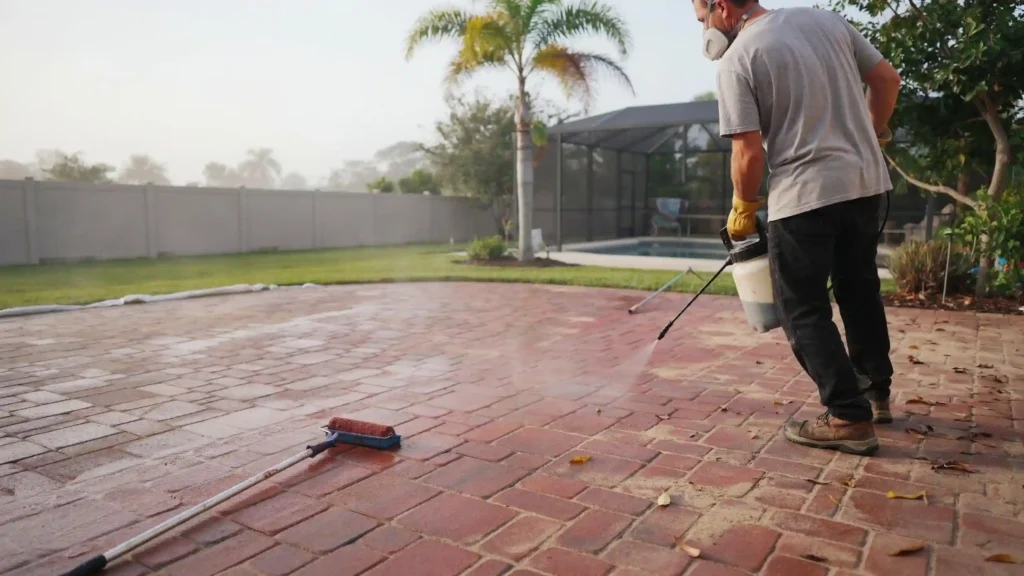
For most jobs, spraying is the better main method. It’s faster and gives a more even coat, especially on big patios and driveways. Rolling gives you more control, so it works well on small areas and edges. Many pros spray first, then back-roll to even out extra sealer. So, is it better to spray or roll paver sealer? Spray first, then roll where needed.
Your final choice still depends on the sealer, the paver surface, and the joint sand. Always read the label first. Below, you’ll see when each method wins, which mistakes to skip, and what to expect in Central Florida.
Spray vs. Roll Paver Sealer: What’s the Difference?
Both methods put a thin, even layer of sealer on your pavers. The difference is speed, control, and how the sealer reaches the joints.
A sprayer moves fast and covers a lot of ground. A roller moves slower, but you steer every stroke. Most homeowners pick based on size. Big area, spray. Small area, roll.
Spraying Paver Sealer
Spraying paver sealer is the quickest way to cover a large surface. A good sprayer lays down a steady, even coat with less effort. That means less bending, less walking, and less sore back.
Spraying also reaches into the joints between pavers. That helps the sealer soak in where water and weeds like to start.
There are trade-offs:
- You need the right sprayer and tip for your product.
- Overspray drifts, so you must cover or wet nearby surfaces.
- A heavy hand leaves puddles.
Rolling Paver Sealer
A roller gives you close control over how much sealer goes where. It works well on small patios, steps, and tight edges. It also helps smooth out sealer that pools in low spots.
Rolling has limits. It’s slow on a big driveway. Hard rolling can also pull loose sand out of the joints, and uneven passes can leave streaks or thick spots.
Is Spraying or Rolling Better for Paver Sealer?
Spraying is usually the better first step on larger surfaces. It saves time and keeps the coat more even. Rolling still has a place, depending on the sealer and the surface.
That’s why many pros use a mix called spray plus back-roll. Here’s how it works:
- Spray a thin, even coat across the section.
- Look for puddles or shiny thick spots.
- Back-roll only where the sealer sits too heavy.
- Keep the coat even from one section to the next.
- Follow the sealer maker’s directions on every step.
The goal is one steady layer with no pools. Too much sealer can turn cloudy or sticky. Thin and even beats thick and fast.
When Should You Spray Paver Sealer?
Spray when the job is big or the surface has lots of joints. Good fits include:
- Large driveways
- Patios and pool decks
- Long walkways
- Textured pavers
- Surfaces with many joints
- Jobs where even coverage matters most
On these jobs, a sprayer saves hours. It also keeps the coat consistent, which helps the finish look the same from one end to the other.
Watch the wind. Overspray can land on house walls, cars, pool screens, plants, and nearby concrete. Sealer on a screen or a car is hard to remove. Pick a calm day. Cover anything you want to protect before you start.
When Is Rolling Paver Sealer the Better Choice?
Roll when the area is small or tight. Good fits include:
- Small patios
- Small repair spots
- Tight edges next to walls or plants
- Areas where overspray is hard to control
- Some rough, deep-texture surfaces
- Sealers that say “apply by roller” on the label
Rolling keeps product exactly where you want it. That helps near windows, cars, and flower beds.
Don’t assume every sealer can be sprayed or rolled. Some products work best one way. Some tell you to use only one tool. The label wins over any rule of thumb, including ours.
Does the Type of Paver Sealer Matter?
Yes, it matters a lot. Different sealers behave in different ways.
Topical sealers sit on the surface and form a thin film. Many can be sprayed or rolled, depending on the product.
Penetrating sealers soak into the paver. Their directions can be very different. Some are made for spray use only, and over-applying can leave a blotchy finish.
Wet-look and color-enhancing sealers need the most care. They show every flaw. Uneven coverage can look like dark patches, streaks, or roller lines. Even application matters more here than anywhere else.
We don’t push one brand in this article. The best sealer is the one that fits your pavers and your goals. Read the technical data sheet before you buy.
What About Joint Sand When Sealing Pavers?
Joint sand holds your pavers in place. It also blocks weeds and slows water from seeping in. If the sand is thin or loose, sealing won’t fix that.
Rolling can drag loose sand out of the joints. Spraying is gentler, and it helps move sealer down into the joints. Even so, the sand must be full and settled first.
Never use sealer to cover up poor prep. Clean the pavers, refill the joints, and let everything dry. Then seal. If you want the full process, read our guide on How to Seal Pavers with Sand. If you’d like a pro to handle it, look at our Sand and Sealing in Winter Springs FL service.
How to Prepare Pavers Before Sealing
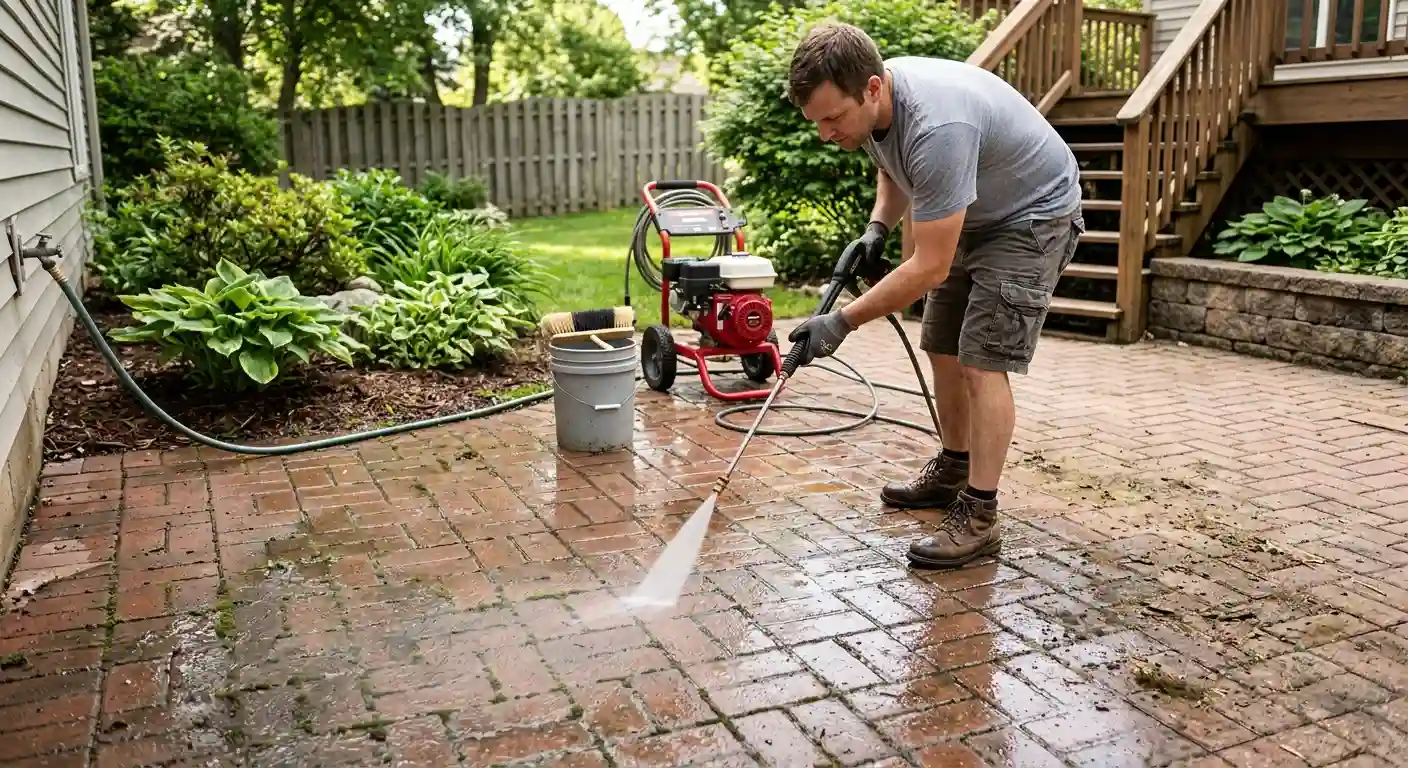
Good sealing starts with prep, not the sprayer or the roller. Here’s how to get ready:
- Clean the pavers. Remove dirt, oil, and grime.
- Remove weeds, algae, and stains where needed.
- Fill the joints with sand. Top off low spots and sweep clean.
- Let the surface dry fully. Damp pavers trap moisture under the sealer.
- Check the weather. You want dry, calm, moderate conditions.
- Test a small hidden area first. Check the color and finish.
- Read the directions. Follow coverage, coats, and dry times.
Skipping cleaning is the most common shortcut. Sealer locks in whatever is on the surface. If you need help, our paver cleaning service is built for this step.
Common Paver Sealing Mistakes to Avoid
Most paver sealing mistakes come from rushing. Watch for these:
- Sealing dirty pavers
- Sealing damp pavers
- Applying too much sealer
- Ignoring the label
- Disturbing joint sand
- Spraying in windy weather
- Letting puddles dry in place
- Skipping the weather check
- Using the wrong sprayer or tip for the product
- Walking or driving on it too soon
Puddles and thick coats cause the worst results. They can turn white, sticky, or glossy in patches. Fixing that often means stripping and redoing the whole surface. Go thin, check often, and wait for the sealer to cure.
What Does It Cost to Spray or Roll Paver Sealer?
These are ballpark figures. Your price depends on size, cleaning needs, sand work, and the sealer you choose.
| Item | Typical range |
| Pump sprayer (DIY) | About $25 to $60 |
| Roller and tray kit (DIY) | About $15 to $30 |
| Sealer, 5-gallon pail | Often $100 to $250 or more |
| Pro cleaning and sealing | Often $1 to $3 per square foot |
By that math, a 400-square-foot patio may run roughly $400 to $1,200 with a pro. Big driveways cost more overall but often less per square foot. Always ask for a written quote that lists cleaning, sand, coats, and cure time.
How to Apply Paver Sealer: Spray or Roll in Florida?
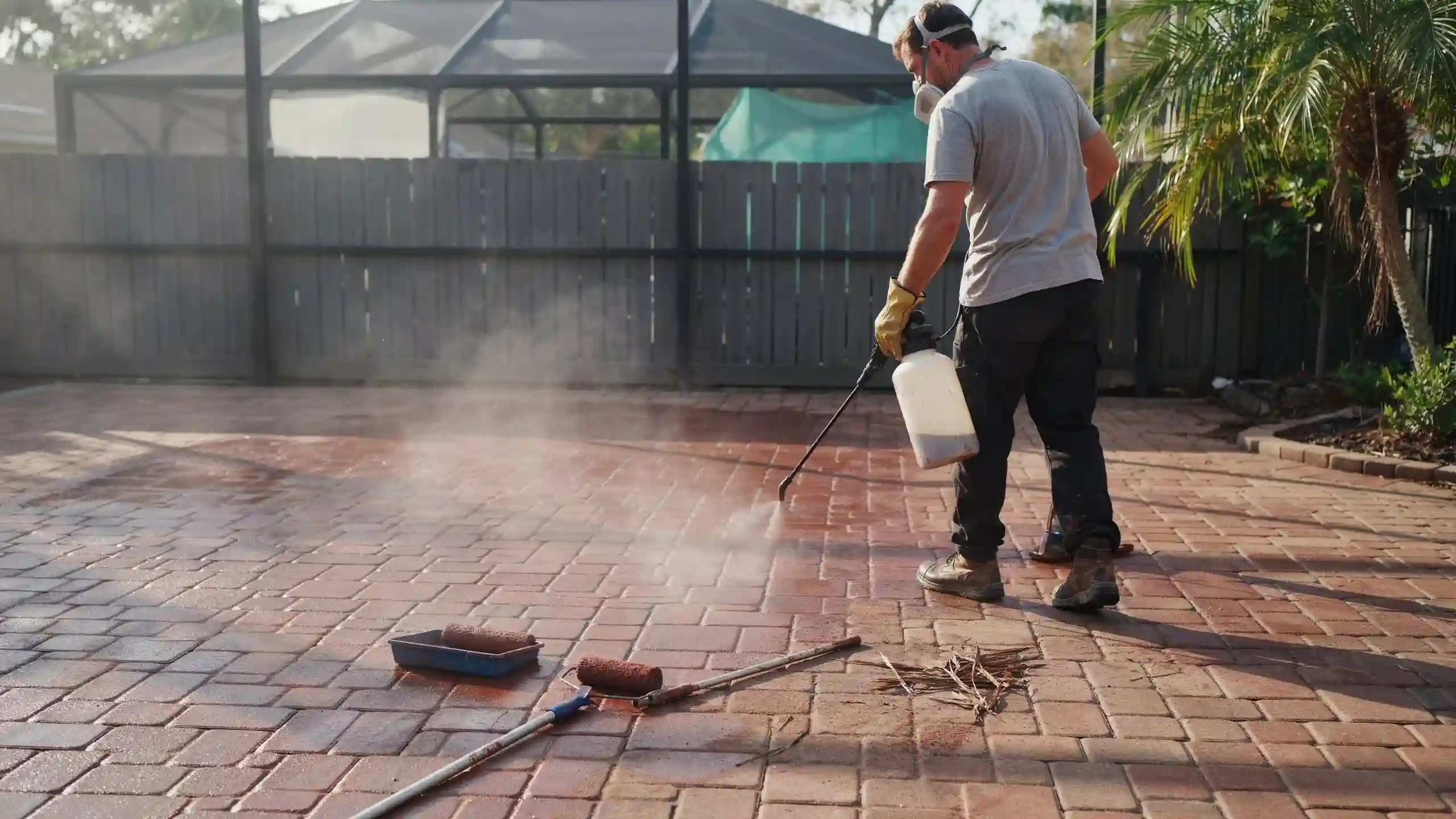
Central Florida is tough on pavers. Strong sun, high humidity, and sudden rain all affect sealing. Shaded areas stay damp longer and grow algae and mildew. Pool decks add water splash to the mix.
Because of this, pavers must be completely dry before you start. Check the forecast for the day and the next day or two. Look at the National Weather Service for local readings at weather.gov.
Spraying works well in our heat because it’s fast. Just stay ahead of the afternoon sun and watch the wind. We work in Winter Springs, Oviedo, Longwood, and nearby Central Florida areas. Local conditions are always part of how we plan a job.
Which Method Should You Choose?
| Situation | Better option |
| Large driveway | Spraying |
| Large patio | Spraying |
| Small area | Rolling |
| Tight edges | Rolling |
| Textured pavers | Spray + back-roll |
| Need controlled application | Rolling |
| Large surface with many joints | Spraying |
| Product requires one method | Follow the manufacturer |
So, is it better to spray or roll paver sealer? It depends on the paver surface, the sealer, the project size, and the finish you want. For most larger jobs, spray first and roll where needed.
Ready to Seal Your Pavers?
If your pavers are looking faded, stained, or worn, proper cleaning and sealing can help bring them back to life and protect the surface. Wondering is it better to spray or roll paver sealer? Ron Hodges Inc can help you choose the right approach for your pavers in Winter Springs and throughout Central Florida. Contact us to discuss your paver sealing needs.
FAQs
Is it better to spray or roll paver sealer?
For most larger jobs, spraying is better because it’s faster and more even. Rolling suits small areas and edges. Many pros do both.
Can you spray paver sealer with a pump sprayer?
Often yes. Many sealers work with a low-pressure pump sprayer. Check the label for the right tip and seal type, since some solvents damage standard seals.
Can you roll paver sealer?
Yes, with many products. Use light passes and the roller type the label suggests. Go easy to avoid pulling sand from the joints.
Should pavers be cleaned before sealing?
Yes. Sealer locks in dirt, stains, and algae. Clean first, refill joint sand, and let the surface dry completely.
Can you spray and then back-roll paver sealer?
Yes. Spray a thin coat, then roll over spots where sealer pools. This evens the finish and keeps coverage consistent.