
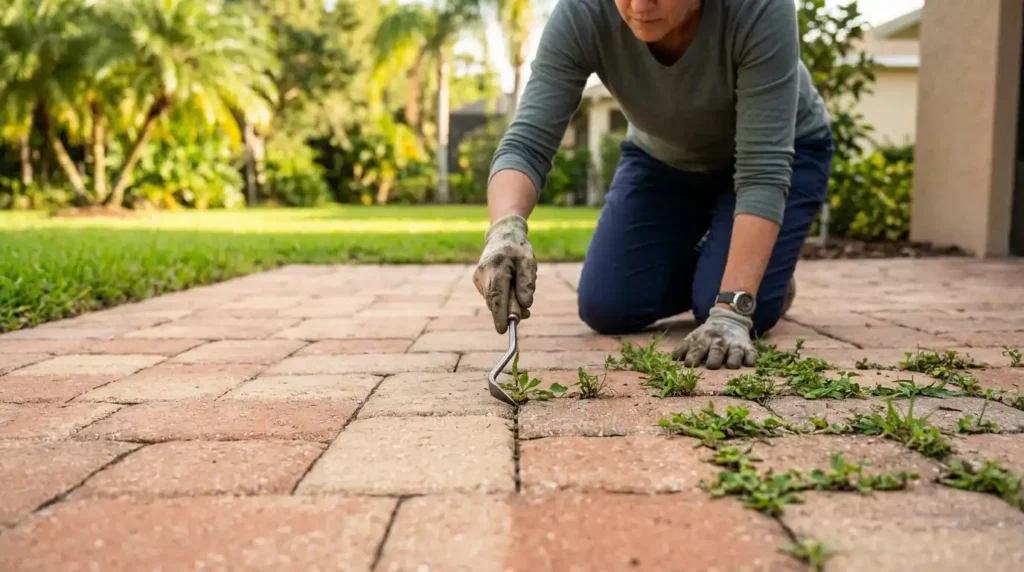
A fresh paver patio looks sharp until green shoots start poking through the joints. Here is how to stop weeds from growing between pavers: clear the joints, refill them with the right sand, activate it in dry weather, and keep them full. The method works, but the details matter.
With more than 30 years of paver work, Ron Hodges Inc has seen why weeds come back and what keeps them away. This guide covers causes, removal, safe killers, joint materials, and a local plan for Winter Springs.
Why Weeds Grow Between Your Pavers
Weeds do not root in the soil under your patio. They root in the sand and debris sitting in the joints, as the Interlocking Concrete Pavement Institute (ICPI) explains in its care guidance. Wind drops seeds into the joints, and dust and leaf bits turn into a small seedbed.
If you keep asking why are weeds growing between my pavers, check these causes:
- Joint sand has washed out, leaving shallow joints.
- Debris has built up and holds moisture.
- Settled pavers or loose edge restraint have opened gaps.
- Water sits in the base, or shade keeps joints damp.
- Lawn runners creep in from the edge.
Fabric under the base does not help here, because seeds land on top.
How to Remove Weeds Between Pavers Without Lifting Them
Pull the whole weed, roots included. A crack weeder or similar hand tool reaches into narrow joints. Sedge needs extra care, since leftover tubers regrow.
Next, scrape out failed sand to depth. Manufacturers often cite 1.5 to 2 inches, so check your bag. Vacuum or blow out the debris and let the joints dry fully.
Gentle washing is fine: low pressure, a fan tip, and an angled spray. High pressure strips joint sand and opens the joints to new seeds.
Can You Clear Old Sand Without Lifting Pavers?
Yes, in most cases. Scraping and vacuuming to depth cleans the joints. Lifting is only needed if pavers have settled or the base has failed.
Killing Weeds Between Pavers
Hand removal carries the lowest risk. Other methods rank like this:
- Flame torch and boiling water: Contact only. They scorch top growth, and perennials return. Keep flame away from dry mulch.
- Vinegar: Household strength is weak. It burns leaves, not roots.
- Salt and baking soda: Both can harm soil and nearby plants. Extension sources do not back them.
- Herbicides: Contact types burn what they touch. Systemic types travel to the roots. Non-selective types kill any plant. Pre-emergent types stop seeds from sprouting.
Read the label to confirm it allows use on paver joints. Follow restricted-entry times and keep pets and children off treated areas. Block overspray onto lawns, and keep runoff away from storm drains and pools.
Does Vinegar or Salt Hurt Your Pavers?
Research is thin, so nobody can promise either way. Test a small hidden spot first and rinse it off.
What to Put Between Pavers to Stop Weeds
Loose sand washes out and invites weeds. Polymeric sand to stop weeds between pavers hardens when activated, and manufacturers say it deters and reduces growth. Compare your options:
| Option | What It Does | Best For | Watch For |
| Regular jointing sand | Fills joints cheaply | Low-traffic areas | Washes out, lets weeds in |
| Polymeric sand | Hardens to block seeds | Most patios, walks, driveways | Needs dry weather, can haze |
| Stabilizing sealer over regular sand | Locks sand in place | Heavily textured pavers | Needs careful application |
| Permeable aggregate | Drains well | Permeable paver systems | May block weeds less |
UF/IFAS notes that polymeric sand is not porous, so plan drainage separately.
How to Apply Polymeric Sand So It Actually Works
Step by Step
- Start with dry, clean joints. Moisture makes sand clump.
- Check joint depth and width against the data sheet. Shallow or very wide joints cannot hold it.
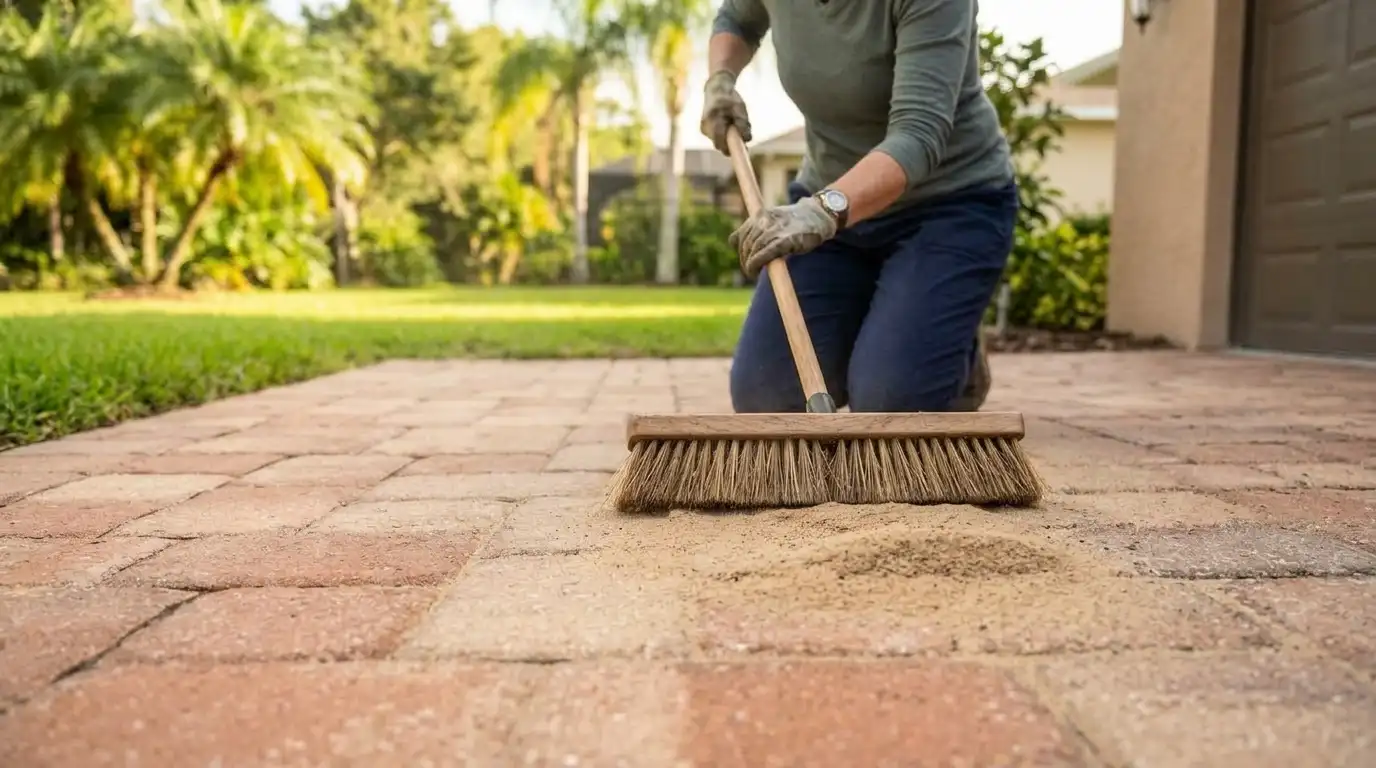
- Sweep sand in and fill to about 1/8 inch below the paver edge. This leaves room to settle.
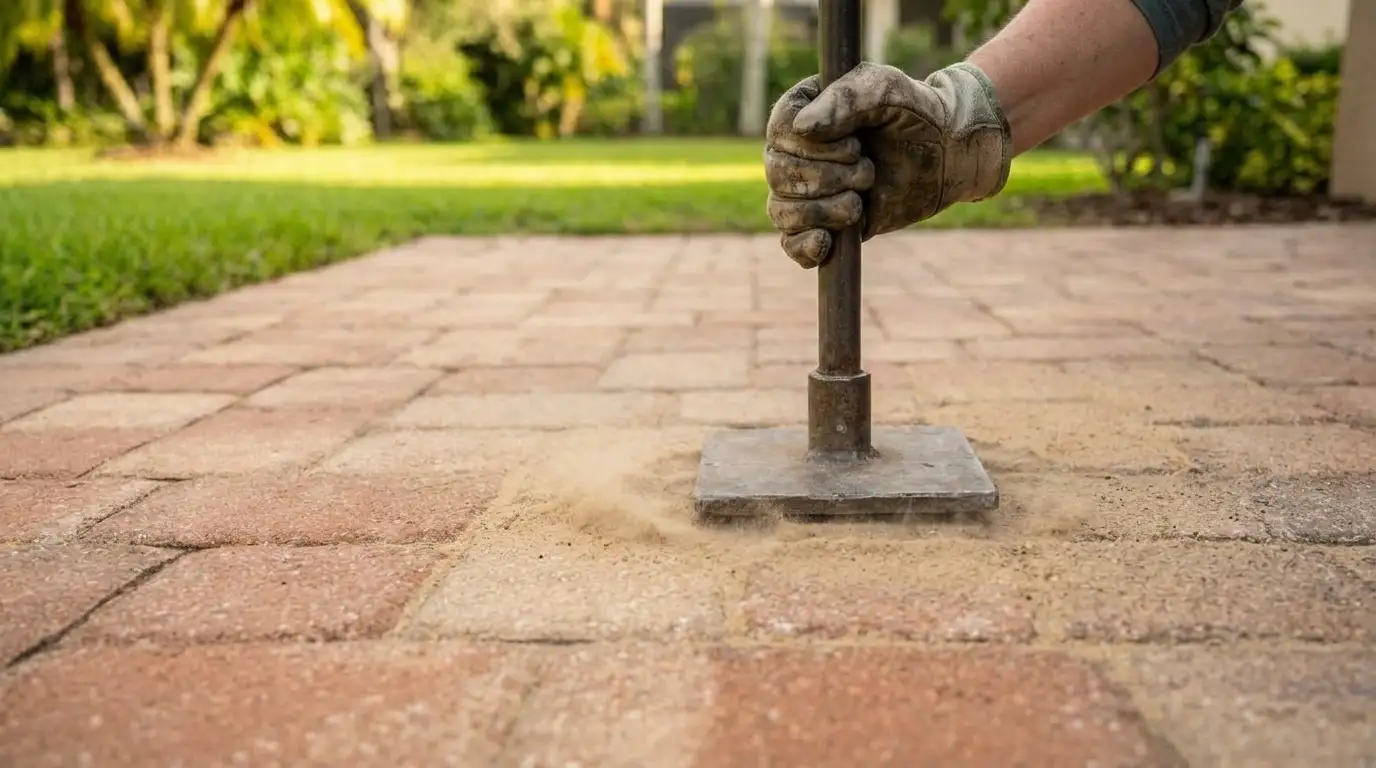
- Tamp or run a plate compactor over the pavers. This packs the sand down.
- Refill, then blow every grain off the paver faces. Leftover sand stains and hazes.
- Mist on a shower setting. Do not flood it, because heavy water washes out the binder.
- Keep off rain, sprinklers, and traffic for the cure time on the bag. Wait before sealing.
The bag governs. Cure times, depth limits, and temperature ranges differ by product.
Why Polymeric Sand Fails
Most failures trace back to a few causes: a wet surface, sand left on the paver face, too much water, shallow or uneven fill, rain too soon, old roots left behind, and poor drainage.
Weed Control Between Pavers in Winter Springs and Central Florida
UF/IFAS ties dollarweed and sedge to wet, compacted, or poorly drained ground. Fix drainage and irrigation along with removal. Crabgrass and spurge also show up in joints, and moss and algae love shaded, damp patios and pool decks. Warm weather keeps growth going year-round.
Sand products need real dry windows, often 24 to 72 hours, and one product’s install range tops out at 95°F. Across Winter Springs, Oviedo, Casselberry, and the rest of Seminole County, summer afternoon storms make that window the hardest part of the job. Sprinkler overspray can also wash out sand and feed seedlings. We suggest checking joints once a year after the rainy season.
Lawn pre-emergent timing is not paver advice. Skip it unless the label allows use in joints.
Keeping Joints Weed-Free Long Term
A simple routine prevents most regrowth. Sweep or blow debris away, pull seedlings early, top up thin joints, and check edges and drainage. That is how to prevent weeds between pavers year after year.
Sealing can help block seeds, but let the sand cure first and pick a dry window. Sealers need reapplying every few years. Our Sand and Sealing service covers this.
If You’re Planning New Pavers
Good installs keep joints narrow and full. ICPI ranges make a handy reference: a 4 to 6 inch base for walks, 6 to 8 inches for driveways, 1 to 1.5 inches of bedding sand, and joints of 1/16 to 3/16 inch. Our guide How Much Sand Do You Need Under Pavers has more. If your joints, base, or edging have failed, Ron Hodges Inc can find the cause.
Final Thoughts
Learning how to stop weeds from growing between pavers comes down to clean joints, full sand, correct activation, and yearly checks. Hand removal is safest, polymeric sand helps most, and Florida weather sets your schedule.
If your joints keep failing, Ron Hodges Inc can fix the cause, not just the weeds. Contact us today at (407) 947-8843 to book a visit in Winter Springs.
FAQs
Does vinegar kill weeds between pavers?
It burns top growth, but roots of established weeds often survive. Expect regrowth.
Is weed killer safe to use on pavers?
Only if the label allows use on paver joints. Check for overspray, pets, and runoff rules.
Can I pressure wash weeds out of my pavers?
Use low pressure only. High pressure strips joint sand and opens the joints.
Can I put polymeric sand over old sand?
No. Remove failed sand to the depth on the bag first, or the new sand will not bond.
How often should I check my joints?
Check once a year after the rainy season. Top up any joint that looks thin.