A cracked and uneven walkway is unsightly and hazardous to walk on‚ collecting water and indicating general neglect of your front yard․ If you’re wondering how to remodel walkway? Options for improving walkway surfaces include repair‚ resurfacing‚ or replacement‚ depending on the condition of your current walkway․
This article from Ron Hodges Inc outlines repair and treatment options and other considerations‚ the repair process‚ and materials and other factors that can affect repair costs․
What Does It Mean to Remodel a Walkway?
To renovate a pathway means to repair or rebuild all or portions of it for safety and appearance․ Minor repairs to a pathway may include fixing cracks․ Resurfacing a pathway means adding a new layer to an otherwise intact pathway․ Full replacement of a pathway includes demolishing the old pathway and constructing a new one․
Most asphalt damage results from soil issues․ Tree roots heave an asphalt sidewalk‚ washed-out soil leaves voids‚ and unstable soil can cause the sidewalk to settle․ Tips for repairing an old sidewalk include identifying the cause of the damage․ Tips for repairing a sidewalk depend on the cause of the damage․
Should You Repair, Resurface, or Replace Your Walkway?
Match the damage to the fix. Surface flaws can be patched. Base problems cannot.
| Condition | Best Fix |
| Hairline cracks under 1/4 inch, no movement | Repair: clean and fill with flexible crack filler |
| Faded, stained, or flaking surface on a solid slab | Resurface: overlay, or stain and seal |
| Cracks wider than 1/4 inch with one side higher | Replace the damaged section |
| Sunken or tilted sections | Replace and rebuild the failed base |
| Water pooling or running toward the house | Replace with a corrected grade |
| Lips or edges over 1/4 inch (trip hazards) | Replace the section |
If damage shows up all over the path, replace the whole thing. Patching one spot at a time just moves the problem down the walkway.
How to Remodel a Walkway Step by Step
Here is how to remodel walkway projects from start to finish, using the full replacement route.
Step 1: Plan the Layout, Width, and Slope
Mark the path with string or spray paint. Aim for at least 36 inches wide. At 48 inches, two people can walk side by side. Plan a 2% grade (about 1/4 inch of drop per foot) so water runs off the sides and away from the house.
Step 2: Remove the Old Walkway
Break old concrete into pieces with a jackhammer or sledgehammer, or lift pavers by hand. Line up concrete disposal before you start.
Skipping demolition buries old problems under a new surface. That’s how to redo a concrete walkway the right way: all the way down.
Step 3: Fix the Grade and Drainage
Watch where water goes in a heavy rain. Regrade low spots, move downspout outlets, and clear roots or irrigation lines that sit in the way. The finished path must shed water away from your foundation.
Step 4: Excavate and Compact the Base
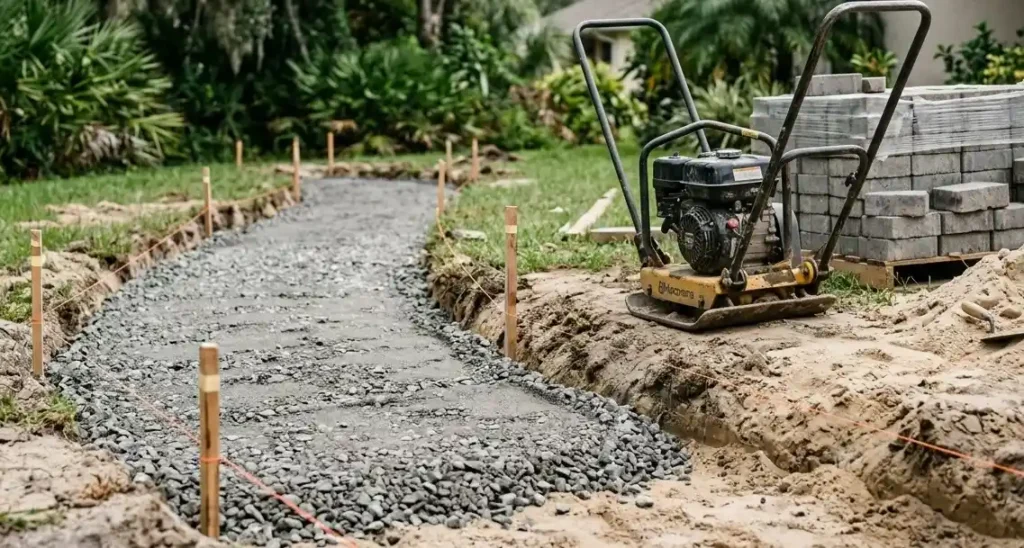
Dig out soft soil and any leftover rubble. Add about 4 inches of gravel base in thin layers and run a plate compactor over each one. Pavers also need about 1 inch of bedding sand on top. Our guide on How to Excavate Lawn for Walkway covers depth and digging in detail.
Step 5: Install the New Surface
For pavers, screed the sand flat, lay your pattern, and cut edge pieces with a wet saw. For concrete, set forms, pour, level, and finish with a broom texture for grip. Walk on new concrete after about 24 to 48 hours. Want to see what that work involves?
Step 6: Set Edging, Fill Joints, and Seal
Install edge restraints so pavers can’t spread. Sweep polymeric sand into the joints, compact, and mist lightly. Once the surface has cured, apply sealer to protect the color and slow stains.
Best Walkway Materials for a Remodel
These walkway replacement ideas cover the five materials homeowners ask about most.
| Material | Look | Durability | Upkeep | Cost level |
| Poured concrete | Clean and simple | Strong, but can crack | Seal, fill cracks | Low to medium |
| Stamped concrete | Mimics brick or stone | Strong, color can fade | Reseal often | Medium |
| Interlocking pavers | Many colors and patterns | Strong, flexes with shifting soil | Re-sand joints, wash, seal | Medium to high |
| Natural stone | Rich and one of a kind | Very durable | Moderate | High |
| Gravel | Casual and loose | Stones migrate | Rake and top up | Low |
Pavers do well on Florida soil because each unit can move and be reset. A cracked paver gets swapped. A cracked slab needs a section replaced. If budget leads your decision, read What Is the Cheapest Type of Walkway.
Walkway Remodel Ideas That Boost Curb Appeal
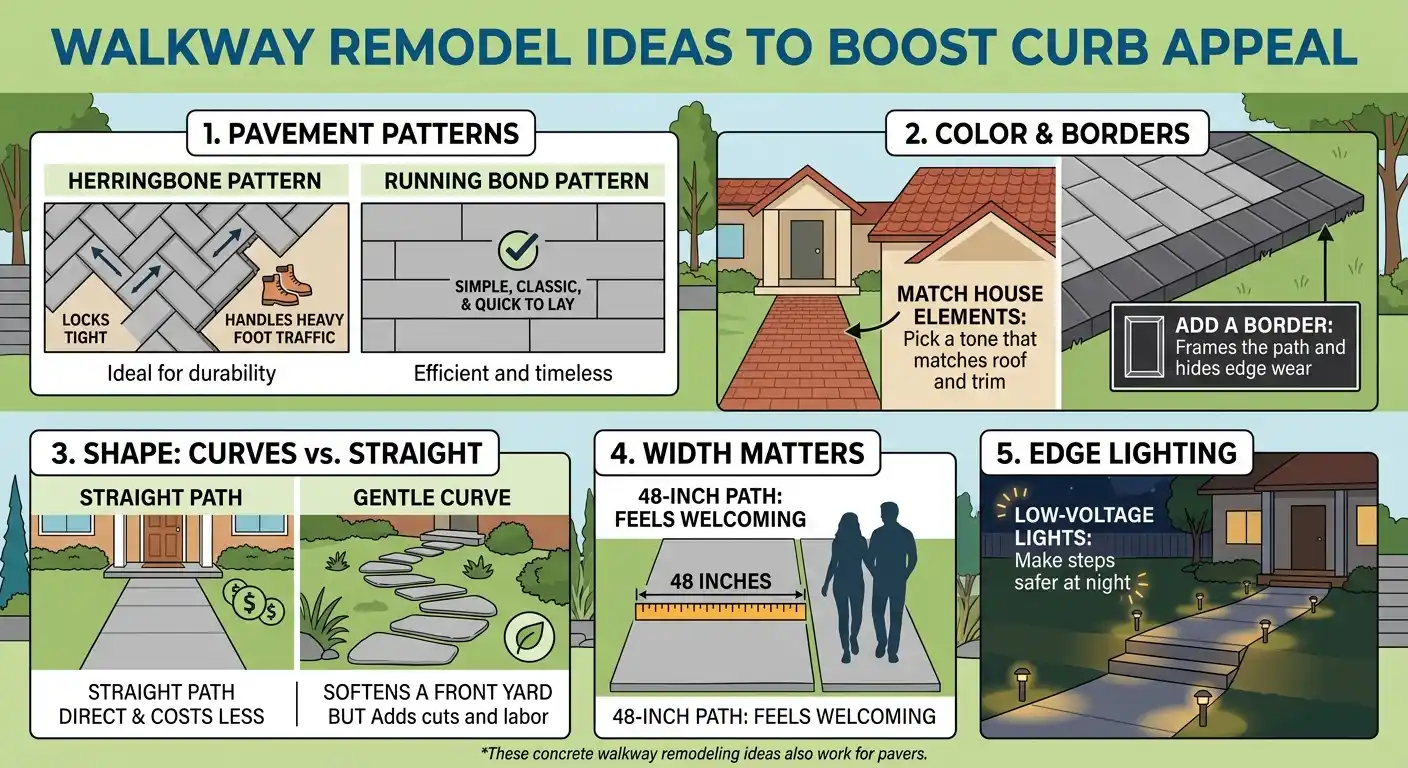
These concrete walkway remodeling ideas also work for pavers.
Patterns
Herringbone locks tight and handles heavy foot traffic. Running bond is simple, classic, and quick to lay.
Colors and Borders
Pick a tone that matches your roof and trim. A darker border frames the path and hides edge wear.
Curves vs Straight Paths
A straight path is direct and costs less. A gentle curve softens a front yard but adds cuts and labor.
Width and Lighting
A 48-inch path feels welcoming. Low-voltage lights along the edges make steps safer at night.
How Much Does It Cost to Remodel a Walkway?
Cost depends on how big the path is, how much comes out, and what goes back in. These are the main factors:
| Factor | Pushes Cost Up | Keeps Cost Down |
| Square footage | Long, wide path | Short, narrow path |
| Demolition | Thick or reinforced concrete | Simple lift-out of pavers |
| Base prep | Soft soil, drainage fixes | Firm, level ground |
| Material tier | Natural stone, stamped finishes | Plain concrete, gravel |
| Labor | Curves, patterns, borders | Straight runs |
| Site access | Tight gates, no equipment room | Open yard, easy delivery |
We don’t print per-square-foot prices here because they swing with each site. An on-site quote gives you a real number for your yard.
Remodeling a Walkway in Central Florida
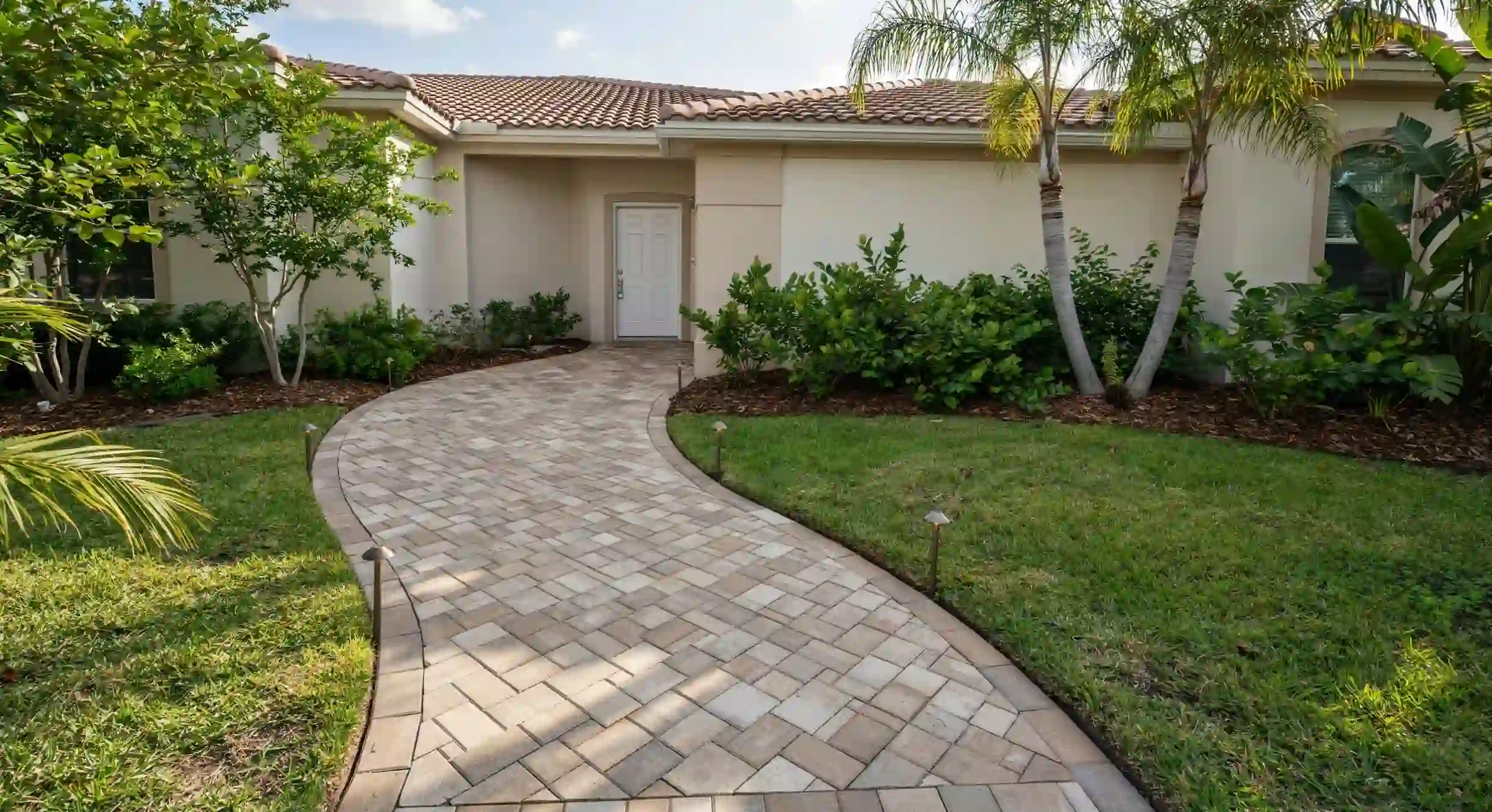
Our weather is hard on walkways. Heavy summer rain pushes water under slabs and washes out sandy soil. A compacted base and a firm slope matter more here than almost anywhere.
Humidity grows algae on shaded pavers, so plan to clean and seal. Tree roots lift slabs, and leaking irrigation heads soften the base.
DIY or Hire a Contractor?
DIY works for a short, straight paver path. Hire a pro for concrete, long runs, or drainage trouble.
Excavation is heavy work. A plate compactor rental adds cost, and one weak spot in the base shows up as a dip within a season. A weekend job can drag on for weeks, and fixing mistakes costs more than doing it right. Ron Hodges Inc has built walkways in Winter Springs for over 30 years. Our Concrete Walkways in Winter Springs FL page, or call (407) 947-8843 for a quote.
Common Walkway Remodel Mistakes
- Weak base: Skipping the gravel or compaction leads to sinking.
- No edge restraint: Pavers drift apart without it.
- Wrong slope: Flat paths hold water, and steep ones feel unsafe.
- Skipping demolition: New material over a failed slab fails too.
- Wrong material for the climate: Choose what handles rain and shifting soil.
Final Thoughts
Pick your fix by the damage. Hairline cracks get repaired, worn surfaces get resurfaced, and failed bases mean replacement. Knowing how to remodel walkway problems at the source, instead of covering them up, keeps the new path flat for years.
Ron Hodges Inc has the experience to rebuild it right the first time. Contact us today for a walkway quote in Winter Springs, Oviedo, Longwood, and nearby areas.
FAQs
How long does a walkway remodel take?
A typical walkway takes a few days from demolition to finish. Concrete needs extra days to cure before regular use, and rain can add time.
Can you remodel a walkway without removing the old one?
Yes, if the slab is sound. A thin overlay or stain can cover surface wear. Cracks, sinking, or drainage problems mean the old walkway has to go.
What is the cheapest way to remodel a walkway?
Repairing cracks and resurfacing a sound slab costs the least. Gravel is the lowest-cost new surface. Full replacement costs more but fixes the cause.
Is it better to use pavers or concrete?
Pavers handle shifting Florida soil and are easier to repair. Concrete often costs less up front and suits a clean, simple look.
How wide should a walkway be?
Make it at least 36 inches wide. A 48-inch width is more comfortable and lets two people walk side by side.