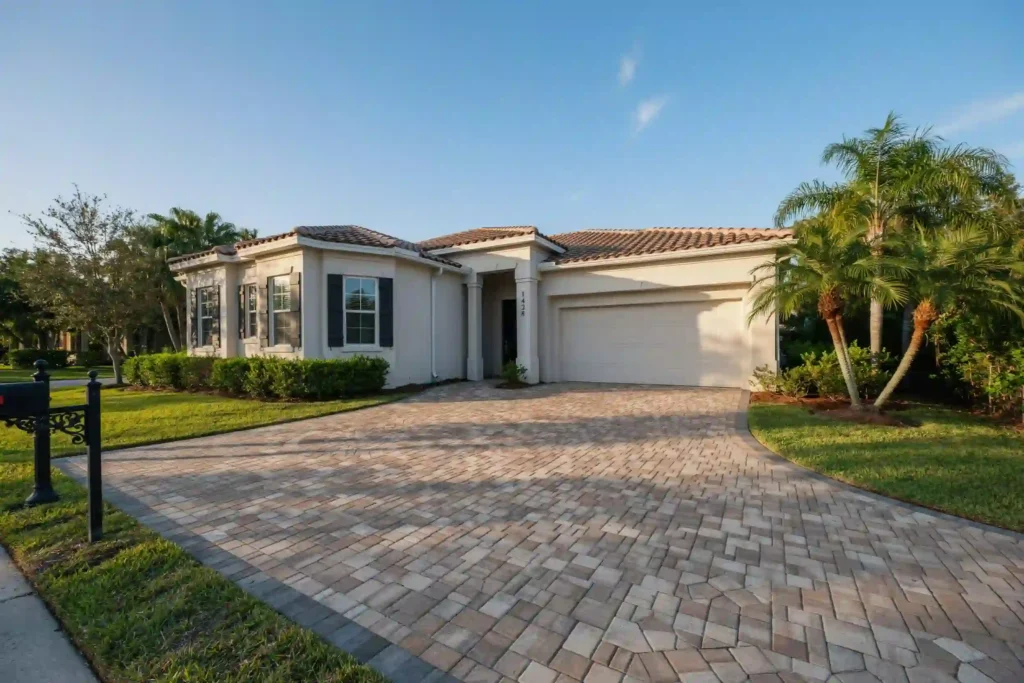
Your pavers cover a big part of your yard, so the pattern you pick shapes how your whole home looks. If you are learning how to choose the right paver pattern for your home, start with your house style, then match the pattern to how you will use the space.
At Ron Hodges Inc, we have laid pavers across Winter Springs for more than 30 years. Pattern is one of the choices homeowners ask about most, and it affects strength, cost, and looks all at once. This guide gives you a simple way to decide.
What to Consider Before Choosing a Paver Pattern
Five things decide which pattern works best: your home style, how you use the space, your budget, your climate, and upkeep. Check each one before you look at samples.
- Home style: Modern homes suit clean, straight lines. Traditional and Mediterranean homes suit woven, curved, or mixed layouts.
- Use: Driveways carry vehicle weight. Patios and walkways mostly carry foot traffic.
- Budget: Simple patterns need fewer cuts, so labor and waste stay lower.
- Central Florida climate: Heavy summer rain and sandy soil can shift weak layouts, so interlocking patterns help.
- Upkeep: Busy patterns hide stains and worn joint sand better than plain ones.
Walk your property before you shop. Note your roof color, your siding or brick, and any curves in the path. Those details narrow your options fast.
5 Popular Paver Patterns and Their Best Uses
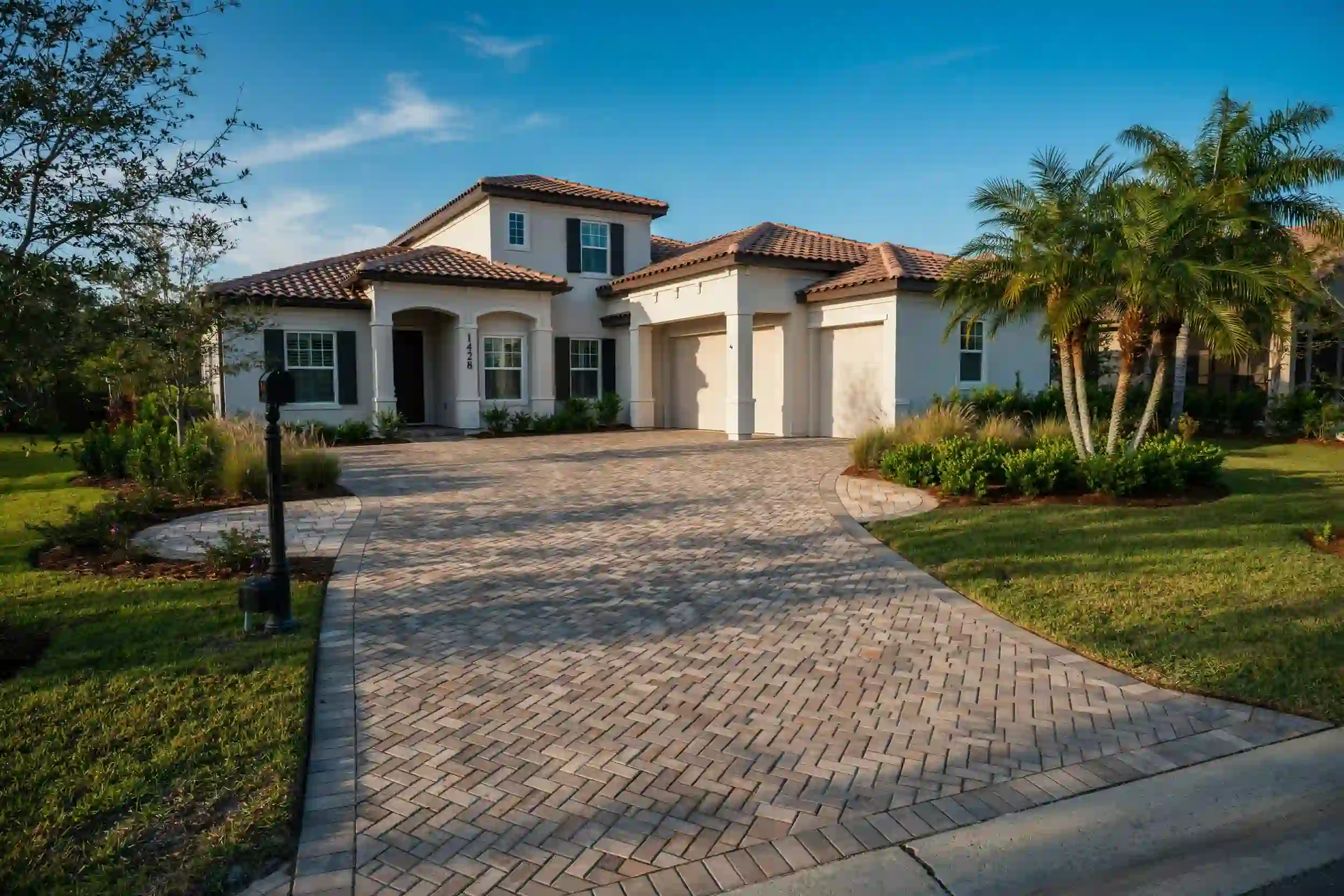
There are many different types of paver patterns, but five cover most homes. Here is what each one does best.
Herringbone
Rectangular pavers sit at an angle and lock together, either at 45 or 90 degrees. It is the strongest option and the top choice anywhere a vehicle will roll.
Running Bond
Pavers sit in offset rows, like bricks in a wall. The look is clean and classic, and installation is simple.
Basket Weave
Pairs of pavers alternate direction to form small squares. It gives a traditional look that suits patios and short walkways.
Stack Bond
Pavers line up in a straight grid with no offset. The look is modern, but the joints line up, so it is weaker under load.
Random (Ashlar)
Different sizes mix in an irregular layout that copies natural stone. It hides wear well and fits rustic or Mediterranean homes.
Use this quick comparison to match each pattern to your project:
| Pattern | Look | Best for | Vehicle traffic |
| Herringbone | Detailed, classic | Driveways, patios, walkways | Best |
| Running bond | Clean, simple | Walkways, patios | Fair |
| Basket weave | Traditional | Patios, short walkways | Light only |
| Stack bond | Modern, grid-like | Patios | Not ideal |
| Random (ashlar) | Natural, rustic | Patios, pool decks | Fair |
How to Choose a Paver Pattern for Driveways, Patios, and Walkways
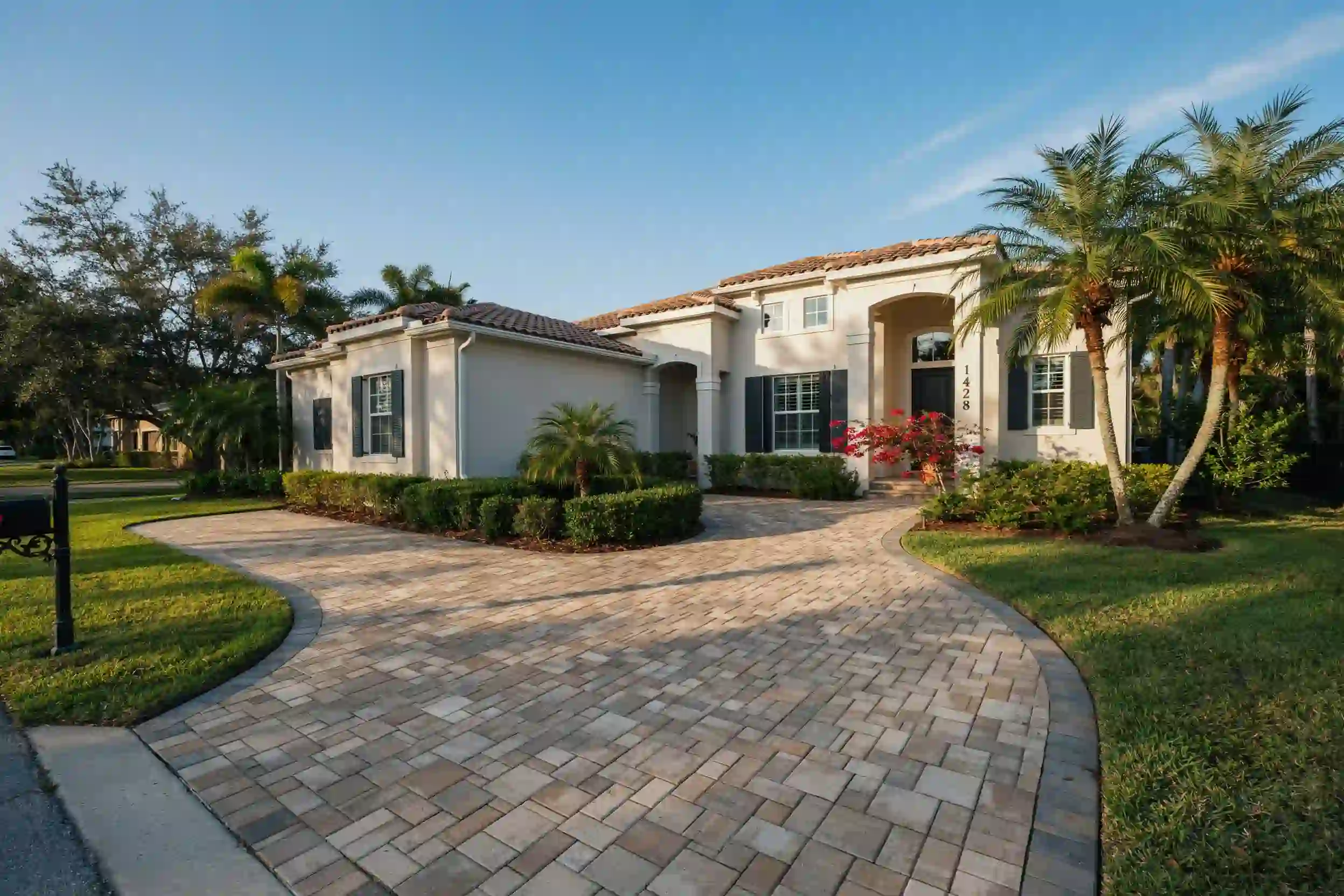
Match the pattern to the load. Heavier use needs a tighter interlock.
Driveways
When you compare paver patterns for driveways, herringbone wins on strength. The angled pieces resist shifting under tires and braking. Avoid stack bond here, because straight joints can spread under weight.
Patios
Patios give you the most freedom. Basket weave, running bond, and random layouts all work, so choose by style and size. On a large patio, add a border or inlay to break up the open space.
Think about furniture too. Large pavers leave fewer joints under chair and table legs, which keeps seating steady.
Walkways
The best paver patterns for walkways are running bond and herringbone. The long lines of running bond guide the eye along the path, while herringbone adds more detail. Keep joints narrow so heels and wheels roll smoothly.
Whatever pattern you pick, the base matters most. Our Paver Installation crew builds it the same careful way for every layout.
How Paver Color, Size, and Borders Affect the Final Look
If you wonder how to match pavers to your home, pull colors from fixed features like your roof, trim, and front door.
- Color: Earth tones suit most Florida homes. Light pavers stay cooler underfoot, which helps around pools, while dark colors can fade in strong sun.
- Size: Large pavers look modern and fit open patios. Small pavers suit tight curves and classic homes.
- Borders: A contrasting border frames the space and locks the edge in place.
- Mix: Stick to two or three colors so the design stays calm.
Test your colors in real light. A paver that looks tan indoors can look pink or gray in full Florida sun.
Common Mistakes to Avoid When Selecting a Paver Pattern
These mistakes show up again and again:
- Using stack bond on a driveway.
- Choosing from a tiny sample instead of a full-size layout.
- Mixing too many colors and patterns in one space.
- Fighting your home style, like a rustic layout on a sleek modern house.
- Ignoring cost. Complex layouts need more cuts, more material, and more labor.
- Skipping base prep. Even the best pattern fails on a weak base. Read How to Build a Paver Patio Without Digging for one way to keep base work simple.
How to Make Your Final Paver Pattern Decision
Knowing how to choose the right paver pattern for your home comes down to five steps.
- List how you will use the space.
- Pick two patterns that suit your home style.
- Look at full-size samples outside, in morning and afternoon light.
- Compare upkeep and installation cost for each pattern.
- Ask your contractor what base each pattern needs.
Pavers stay in your yard for many years, so a few extra days of planning pays off.
Final Thoughts
Now you know how to choose the right paver pattern for your home: match your use, your style, and your climate. Herringbone leads for driveways, running bond keeps walkways clean, and basket weave, stack bond, or random layouts shine on patios.
Pair your pattern with colors pulled from your home and a solid base. Ron Hodges Inc can walk your property, talk through samples, and give you a clear quote. Contact us today for paver and concrete installation and repair.
FAQs
What is the strongest paver pattern for a driveway?
Herringbone is the strongest. Its angled pieces lock together and resist shifting under vehicle weight.
Which paver pattern costs the least?
Running bond usually costs the least. It needs fewer cuts, so labor and waste stay lower.
Can I mix two paver patterns?
Yes, you can. Use a border or inlay in a second pattern and keep the main field simple.
Does the pattern affect how long pavers last?
Yes, interlocking patterns hold up better under load. A strong base still matters most.
What pattern works best for a Florida pool deck?
Running bond or random layouts in light colors work well. Light pavers stay cooler underfoot.