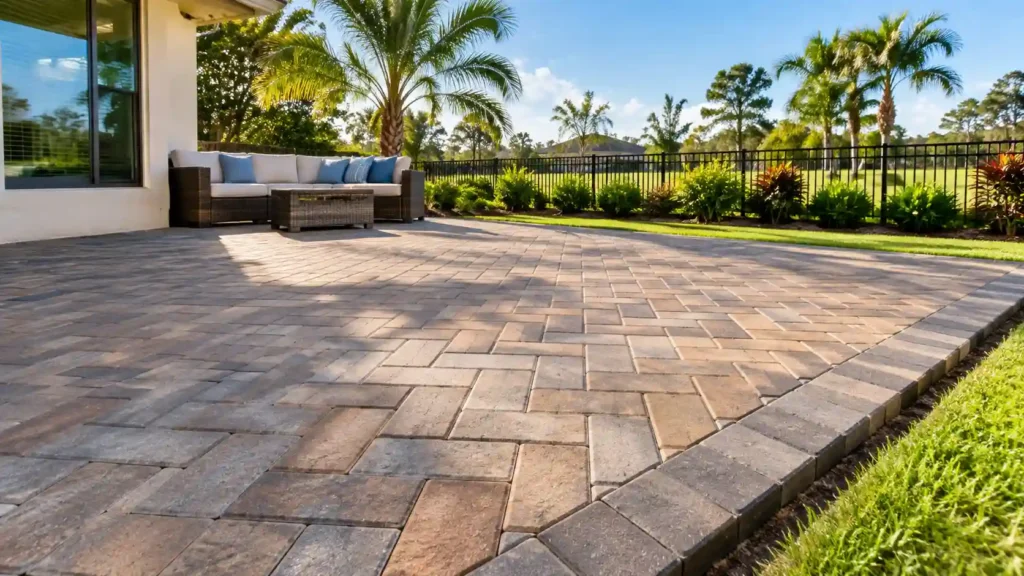
Is it possible to construct a paver patio without digging? Yes, but only under certain circumstances. Just a compacted foundation placed on top of the dirt is sufficient for a modest, light-use patio on level, hard ground.
Excavation is still necessary to ensure the long-term stability of a big entertainment area or one that can accommodate heavy furniture, a barbecue, or a fire pit. To help you choose the way that best suits your garden, this guide guides you through both.
Why Homeowners Ask This Question
Before almost every patio quotation at Ron Hodges Inc, we are asked a variation of the question, How to Build a Paver Patio Without Digging? It makes sense. Most people are afraid of the phase of the process that involves removing six to eight inches of dirt, transporting it away, and compacting a new foundation. It is labor-intensive, time-consuming, and may make a weekend job take two weeks to complete.
Written from over 30 years of practical paver and concrete construction experience in Central Florida, this article explains how to construct a paver patio without digging. My name is Ron Bradley, and I have installed patios on almost every kind of soil in our state, from the clay pockets found further inland to the sandy backyards of Winter Springs.
Because Florida ground reacts differently from the clay-heavy soil featured in most internet guidelines developed for other regions of the nation, that expertise is important. The idea of “skipping the dig” for your project is altered by the fact that sandy soil drains quickly but lacks the clay-like ability to retain form.
Can You Really Build a Paver Patio Without Digging?
The short answer is yes. Modern methods let you build a patio on top of the existing ground instead of digging it out first. The most common approaches are:
- Sand bed method. A layer of coarse sand spread and leveled directly over compacted soil. Fast and cheap, but best for small, light-use areas.
- Crushed stone pad. A shallow layer of crushed stone or paver base material laid over the ground, tamped down, then topped with a thin sand layer. This is the most durable no-dig patio option for Florida yards.
- Raised paver patio system. Pedestal or grid systems that hold pavers slightly above the ground. Common for rooftop decks or areas where the ground is too uneven to work with directly.
- Rubber patio blocks. Interlocking rubber pads, mostly used for play areas or temporary setups rather than a finished outdoor living space.
Here is how those four methods compare side by side.
| Method | Base Material | Best For | Typical Lifespan | Pros and Cons |
| Sand bed | Coarse sand | Small paths, decorative areas | 3 to 6 years | Cheap and quick, but shifts in heavy rain |
| Crushed stone pad | ¾ inch crushed stone | Small to mid-size patios | 8 to 12 years | Good drainage, holds up well in Florida rain |
| Raised paver system | Pedestal or grid | Uneven ground, rooftops, decks | 10 to 15 years | Stable, but higher material cost |
| Rubber blocks | Recycled rubber | Play areas, temporary use | 3 to 5 years | Flexible and easy to install, limited style options |
Knowing how to build a paver patio without digging the right way starts with picking the method that matches how you actually plan to use the space, not just the one that requires the least work up front.
Read more How to Install a Brick Patio
When No-Dig Actually Works
Can you lay pavers without digging and expect a good result? In some cases, yes. A no-dig approach tends to work well for:
- Garden paths or stepping stone areas with light foot traffic
- Small decorative patios that will not hold heavy furniture
- Firm, well-drained soil that already sits fairly level
Florida’s sandy soil is a mixed blessing here. It drains water quickly, which helps avoid pooling, but it also shifts more easily under weight than the dense clay soils found in the Midwest or Northeast. That means a no-dig patio built on Florida sand may need re-leveling sooner than the same setup built somewhere with heavier clay soil. If your project is small and low-traffic, that is a fair trade for the time saved.
When You Should Still Dig, Even a Little
A shallow two to three-inch base cut into the top layer of grass and topsoil, followed by a proper gravel and sand layer, gives you most of the time savings of a no-dig approach with much better long-term stability.
This is especially important during Central Florida’s rainy season, when heavy storms can wash out a shallow base, cause pooling under the pavers, and lead to sand washing out from between the joints. A little extra prep now saves a full rebuild later.
Step-by-Step: Build a No-Dig Paver Patio
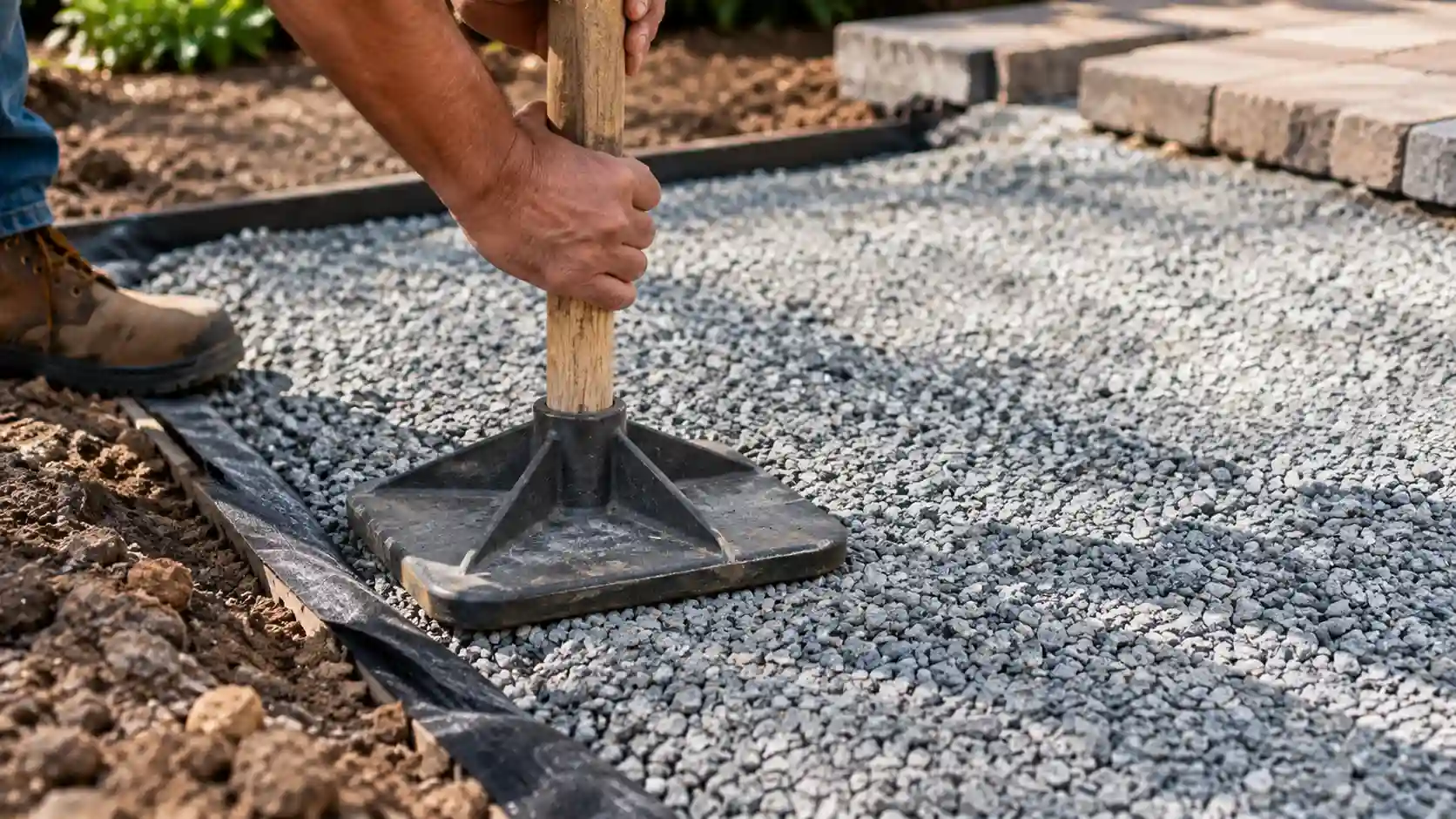
Once you have decided a no-dig approach fits your project, here is the process we recommend, whether you are doing it yourself or want to understand what a contractor should be doing.
- Plan and mark the layout. Measure your space and mark the outline with stakes and string. Set a slight slope of 1/8 to 1/4 inch per foot, sloping away from your house, so water has somewhere to go.
- Clear the area. Remove grass, roots, rocks, and any debris from the surface.
- Lay landscape fabric under pavers. This separates the soil from your base material and helps cut down on weed growth over time.
- Add a crushed gravel base. Even for a no-dig patio, a two to three inch layer of crushed stone gives you far better stability than pavers laid directly on bare soil.
- Compact the base. Use a hand tamper or plate compactor to firm up the gravel layer until it feels solid underfoot.
- Screed a sand bed. Spread and level about one inch of paver sand over the compacted base using a straight board.
- Lay the pavers. A herringbone pattern locks pavers together well and holds up better under foot traffic than a simple grid layout.
- Cut border pavers as needed. Most patios need a few cut pieces along the edges for a clean, finished look.
- Install paver edge restraints. Plastic, metal, or concrete restraints around the perimeter keep pavers from spreading apart over time.
- Fill joints with polymeric sand for pavers. Sweep it into the gaps, then lightly mist with water to help it set and lock everything in place.
Tools and Materials Checklist
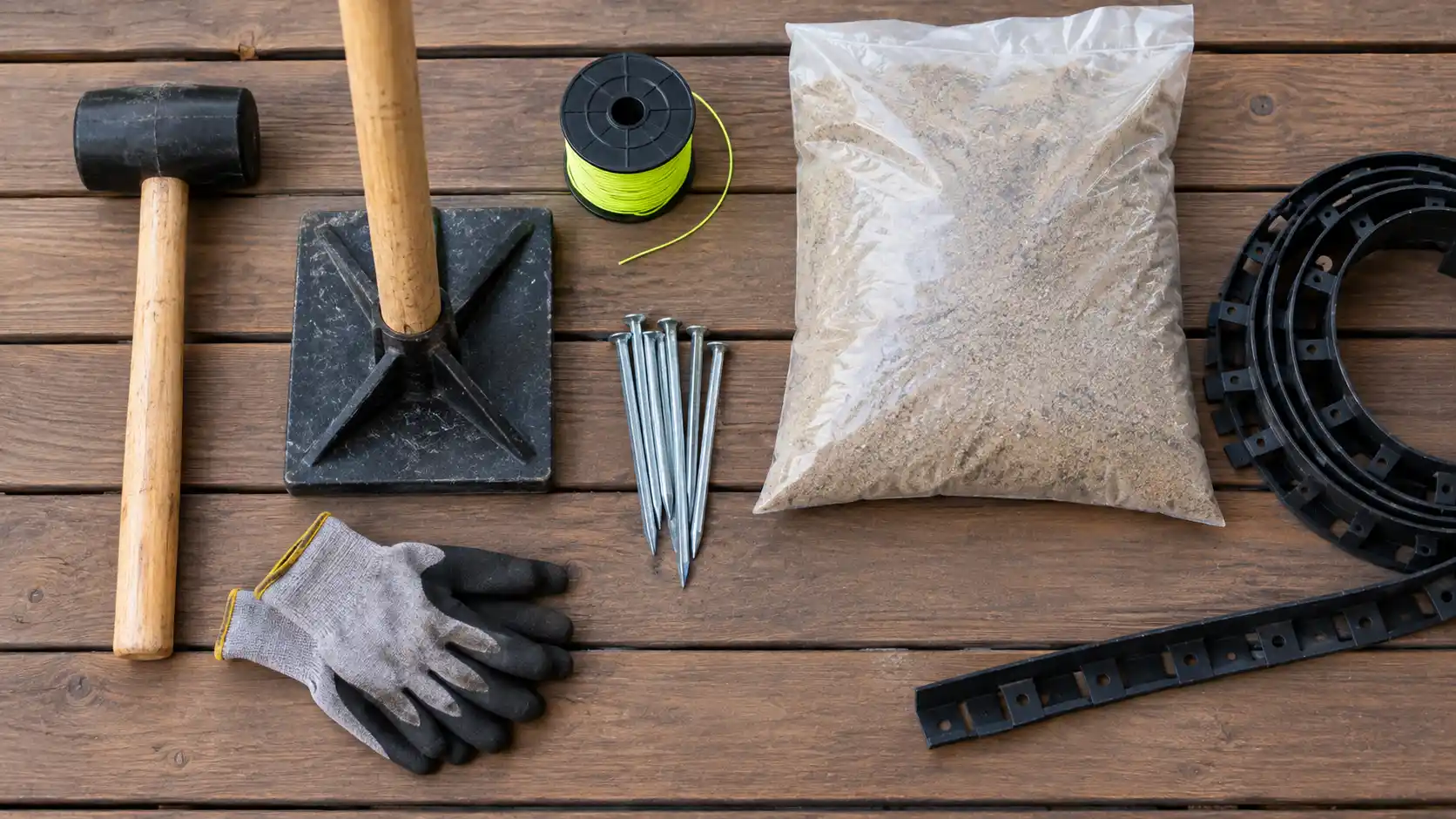
Before you start, gather what you need so you are not making trips to the hardware store mid-project.
Layout tools: measuring tape, string line, stakes, spray paint, a line level
Base work: landscape fabric, crushed gravel or paver base material, a hand tamper or plate compactor
Paver work: your chosen pavers, a rubber mallet, a straight 2×4 board for scree ding, paver edge restraints, spikes
Finishing: polymeric sand, a push broom, a garden hose with a spray nozzle
No-Dig vs. Traditional Excavated Patio
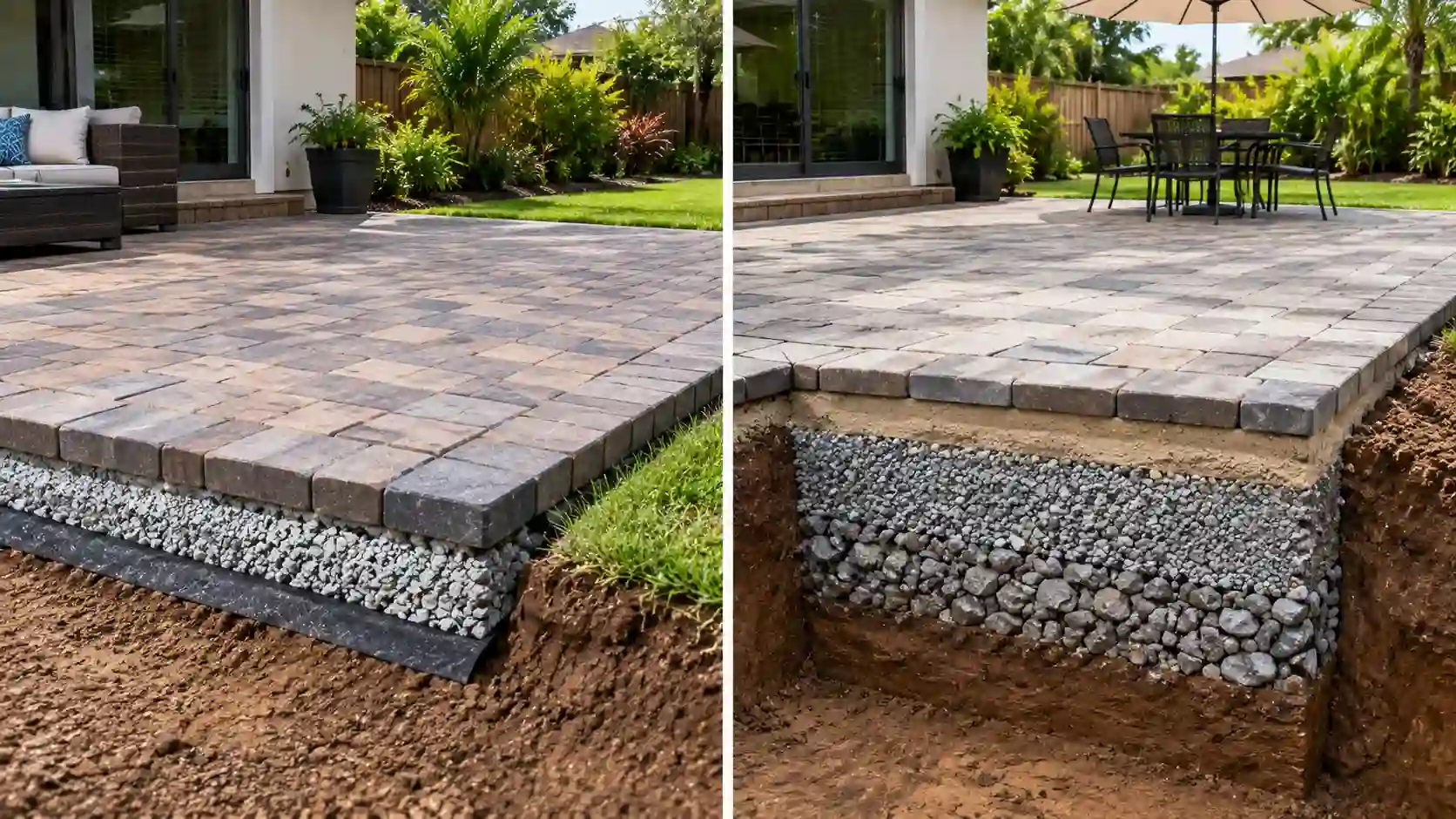
Choosing between the two comes down to how the space will be used and how long you want it to last.
| Factor | No-Dig Patio | Traditional Excavated Patio |
| Upfront cost | Lower | Higher, due to excavation labor |
| Time to complete | 1 to 2 days for small areas | Several days to a week |
| Durability | Good for light use, 8 to 12 years | Best long-term, 20+ years with proper care |
| Best for | Paths, small patios, temporary setups | Entertaining spaces, fire pits, heavy furniture |
A paver patio without excavation can absolutely be the right call for the right project. It is simply worth being honest about which category your project falls into before you commit to a method.
Common Mistakes That Ruin No-Dig Patios
Most no-dig patio failures come down to a handful of avoidable mistakes.
- Skipping compaction. Loose base material shifts and settles unevenly within the first year.
- Ignoring the slope. Without proper drainage slope, water pools on the surface or seeps toward your home’s foundation.
- Leaving off edge restraints. Pavers slowly spread apart at the edges without something holding the border in place.
- Using pavers that are too thin. Thin pavers crack under weight much faster, especially on a shallow base.
- Ignoring your soil type. Clay, sand, and loam all behave differently under a patio, and the wrong base thickness for your soil type leads to problems within a season or two.
Is a No-Dig Patio Right for Your Florida Yard?
Every yard is a little different, and this is where local experience matters most. Sandy soil, heavy summer storms, and the drainage patterns common in Winter Springs, Oviedo, and Longwood all play a role in whether a no-dig approach will hold up on your property. Some neighborhoods also have HOA guidelines around patio size, height, and materials worth checking before you start.
If you are not sure which way to go, a free on-site assessment is the easiest way to get a straight answer before you buy materials or commit a weekend to the project.
Final Thoughts
Learning how to build a paver patio without digging comes down to matching the method to the project. A small path or light-use patio on firm ground is a great candidate for skipping excavation. A full entertaining space, a fire pit area, or anything meant to last for decades deserves at least a shallow, properly compacted base.
If you are weighing your options and want a second opinion before you start digging, or not digging, Ron Hodges Inc offers free, no-obligation estimates for homeowners across Orange and Seminole County. Reach out today and we will help you figure out the right approach for your yard.
FAQs
For a no-dig patio, how deep should the foundation be?
For most small Florida patios, a layer of two to three inches of compacted crushed stone with an inch or so of sand on top works nicely.
Can a fire pit or grill be installed on a no-dig patio?
A grill may be supported by a sturdy foundation made of crushed stone. A deeper, more conventional foundation and heat-resistant materials below are often required for fire pits.
What is the lifespan of a no-dig paver patio?
A crushed stone no-dig patio should last 8 to 12 years with adequate foundation preparation and upkeep, whereas a fully dug patio might last up to 20 years.
Does Orange or Seminole County need a permit?
Larger renovations or those connected to drainage modifications may need a permit, although most modest residential patios need not. To be sure, give your local building department a brief call.
Which foundation is ideal for the sandy soil in Florida?
On Florida soil, crushed stone often performs better than a simple sand bed because it compacts more firmly and drains equally effectively.
Can I eventually convert a no-dig patio to a fully dug one?
Indeed. When they’re ready to invest in something more permanent, many homeowners begin with a no-dig patio and then have the pavers removed, the space dug, and a suitable foundation erected.