Ask ten homeowners what a patio is and you’ll get ten slightly different answers. Some picture a brick courtyard, others a plain concrete slab with a grill parked on it. So what does a patio mean? It’s a paved spot on the ground outside your house where you can sit, eat, and hang out.
At Ron Hodges Inc, we’ve been pouring slabs and setting pavers around Winter Springs, Oviedo, and Longwood for over 30 years. Here’s the plain-English version of what a patio is, what it’s for, and how to pick one that fits your yard.
What Does a Patio Mean?
A patio is a paved area on the ground, right next to your home, usually with no roof. That’s it. No raised floor, no walls.
The word is Spanish. It first meant an inner courtyard, the open-air space in the middle of a house. Over time, Americans stretched it to cover just about any paved spot out back. If it sits on the ground and it isn’t wood, call it a patio and nobody will argue.
What Is a Patio Used For?
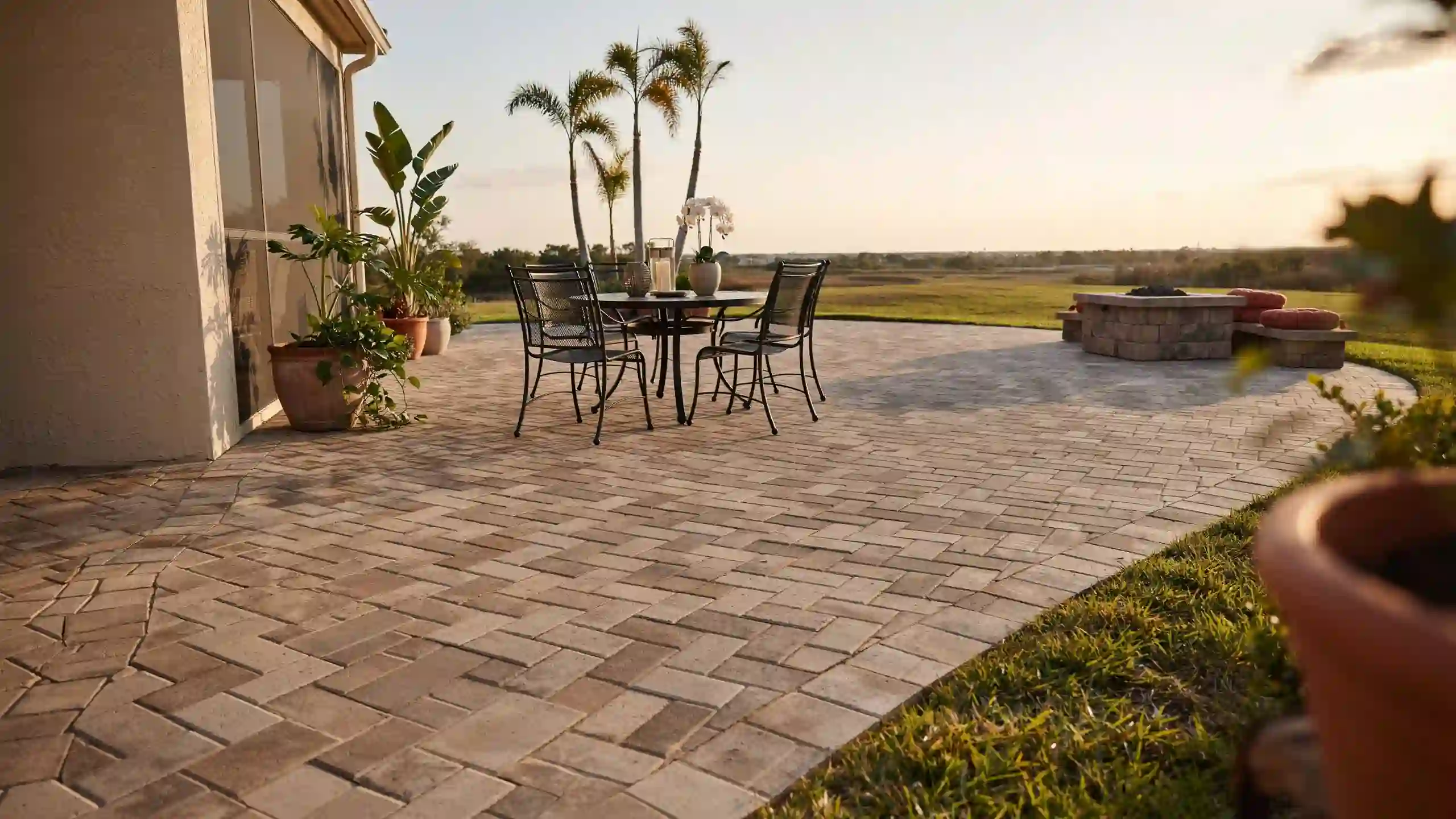
Mostly eating and sitting around. In our experience the grill goes out first and the furniture follows. But a good patio ends up doing a lot more:
- A fire pit corner with a few chairs
- A dinner table under an umbrella or pergola
- Pots and herbs close to the kitchen door
- A flat spot where kids can ride bikes or draw with chalk
- A place to park a hot tub or a couple of loungers by the pool
What Is the Purpose of a Patio?
Think of it as the bridge between kitchen and your yard. Without one, you’re dragging chairs across grass that never sits flat, and your shoes carry in whatever the lawn is holding.
A patio gives you a firm, level place to stand. In Central Florida it also gives you somewhere dry after a summer downpour, when the lawn acts like a sponge.
What Are the Different Types of Patios?
Most patios get their name from what’s under your feet. Here’s a quick tour:
- Concrete: One poured slab. Plain, stamped, or colored.
- Pavers: Individual pieces set on sand. Picture a puzzle you can fix one piece at a time.
- Brick: The classic. Herringbone looks great but takes patience to lay.
- Natural stone: Flagstone and its cousins. Every piece is different.
- Gravel: Loose stone over a compacted base. Quick to install, though chair legs wobble on it.
- Covered or screened: Any of the above, plus a roof or screen. In Florida, the screened version is often called a lanai.
- Courtyard: A patio hemmed in by walls on a couple of sides.
What Is a Concrete Patio?
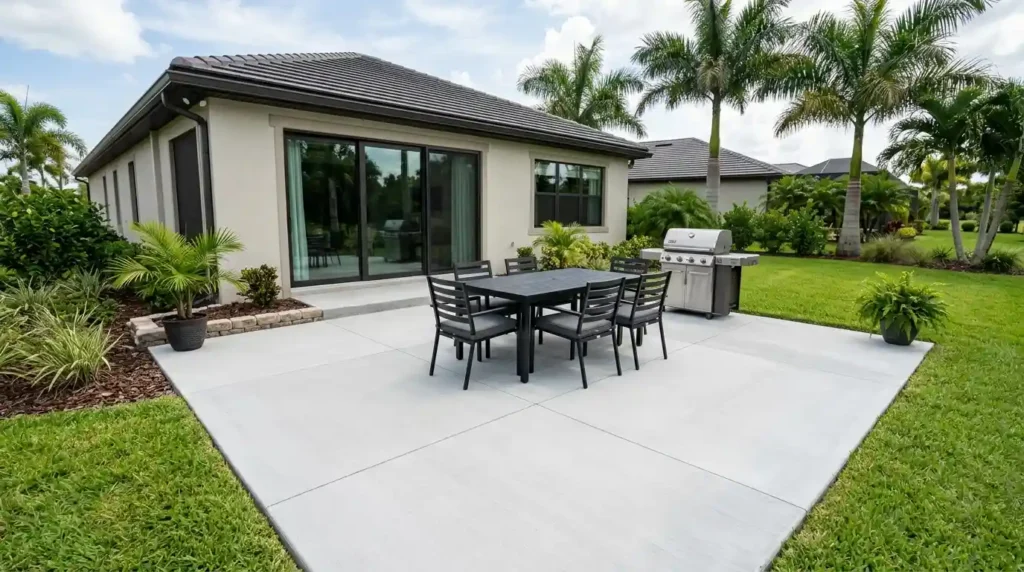
A concrete patio is a slab poured in place over a prepared base. One piece, one surface, done.
Here’s why people like it. It usually costs less than paver, it’s smooth enough to roll a cart across, and you can color or stamp it to mimic stone. The catch is cracks. Concrete doesn’t bend, so if the ground underneath move, the slab can split. A solid base and well-placed control joints help a lot. No slab is crack-proof, though.
How Is a Concrete Patio Built?
- Mark out the shape and dig the area down.
- Lay and compact a gravel base. This is the step people skip, and it shows a few years later.
- Build the forms and add reinforcement.
- Pour, level, and finish the surface.
- Cut control joints and let the slab cure.
How deep should the slab be? That depends on how you’ll use it, and we break it down in How Thick Should a Concrete Patio Be. If you’d rather hand the whole job off, that’s what our concrete patio installation crew does.
What Is a Paver Patio?
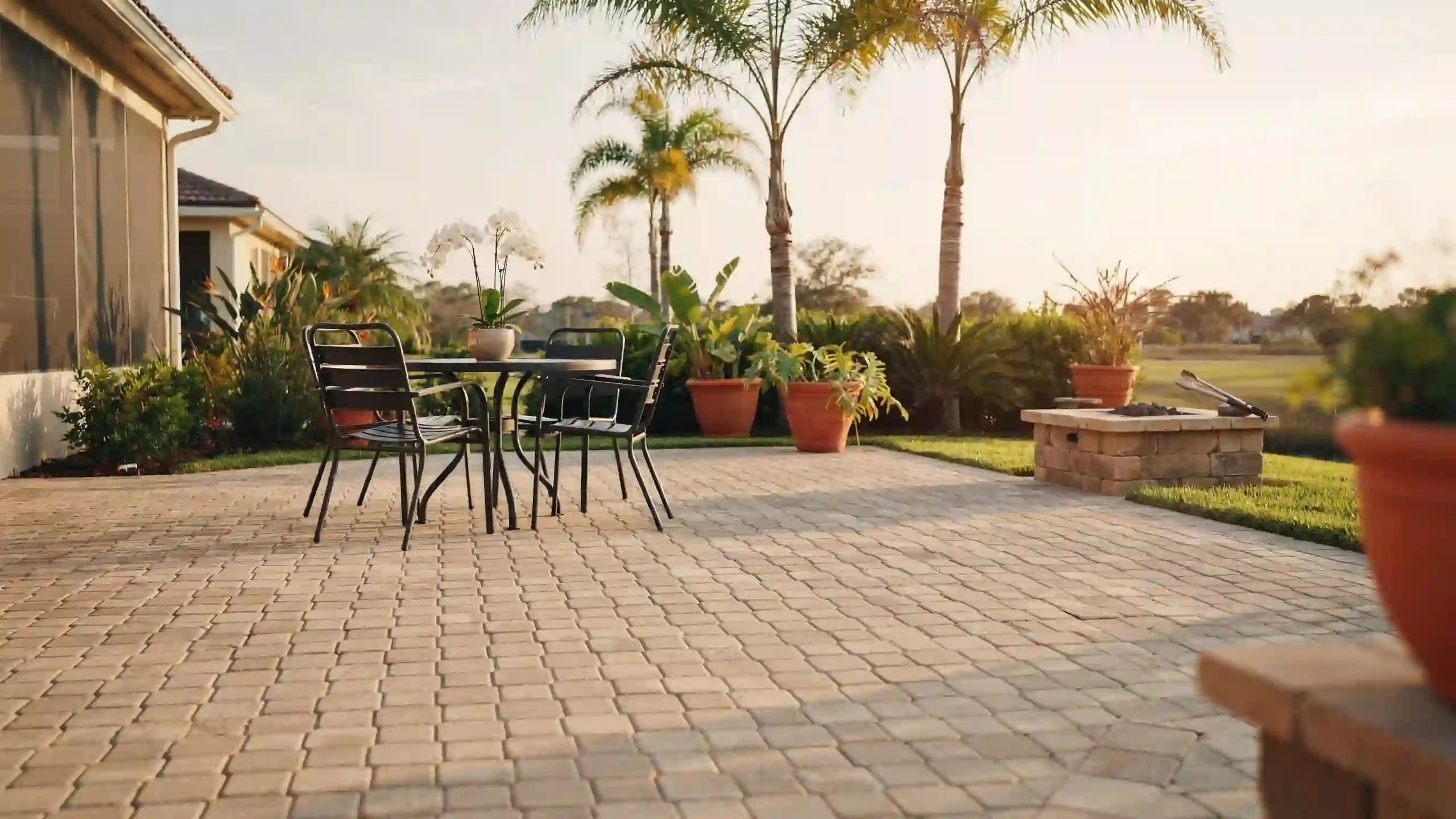
A paver patio is built from individual units, usually concrete, brick, or stone, set over compacted base and a bed of sand. More sand gets swept into the joints to lock everything together.
Pavers make sense around here for a simple reason. Florida soil is sandy, and sandy soil shifts. Pavers can move with it a little. If one stains or sinks, you lift it out, fix the base, and drop it back in. Try doing that with a slab.
They do want more attention, though. Joint sand washes out. Weeds find loose joints. And Florida humidity grows green stuff on anything damp. Regular cleaning keeps them looking sharp, and our guide on How to Clean a Paver Patio shows how to do it without wrecking the surface.
What Materials Are Used to Build a Patio?
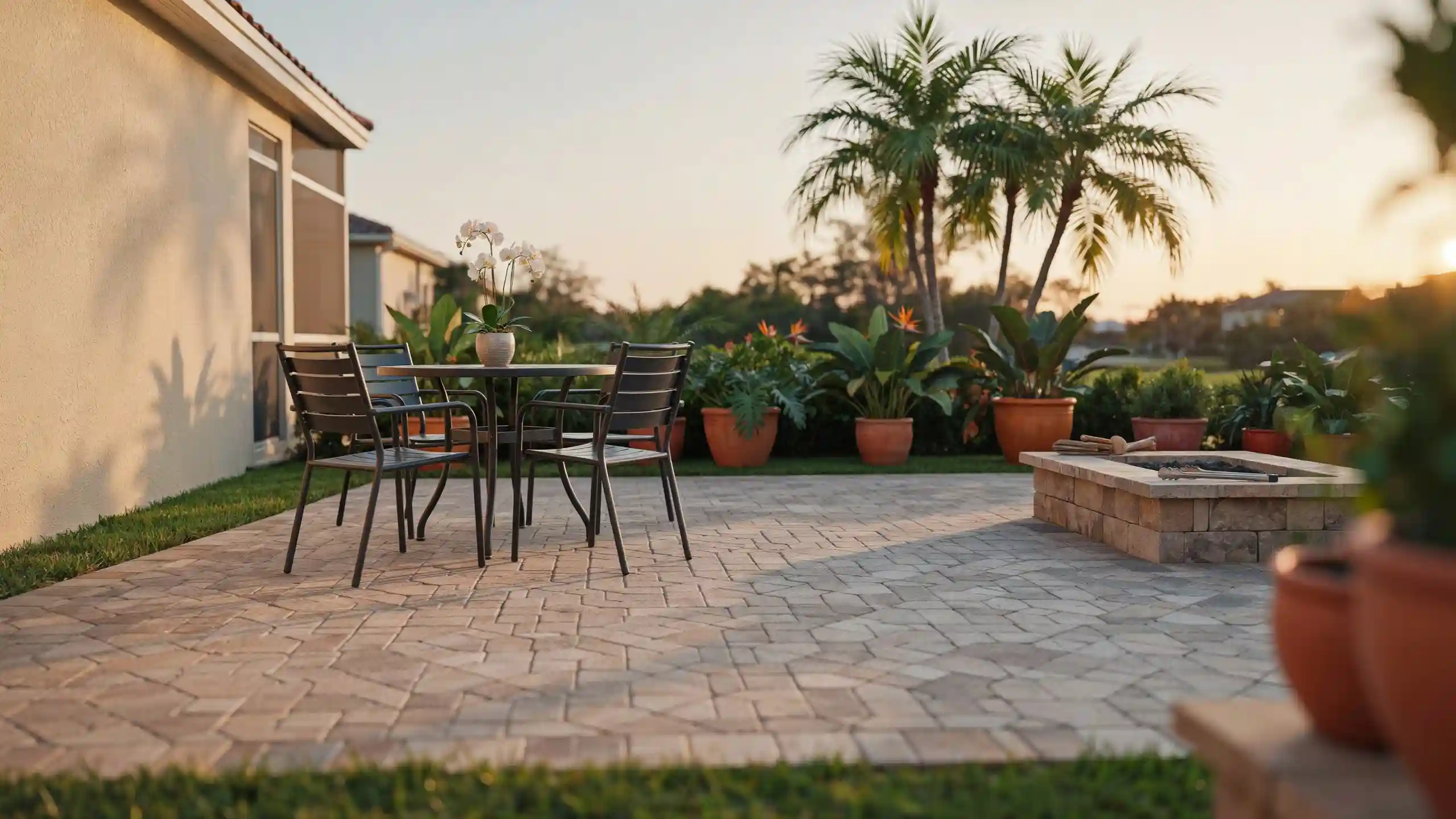
Pick a material based on the look you want, the upkeep you’ll put up with, and your budget.
| Material | Look and feel | Upkeep | Good fit |
| Poured concrete | Smooth, can be stamped or colored | Seal now and then, repair cracks | Large areas, tight budgets |
| Concrete pavers | Many shapes, colors, and patterns | Refill joint sand, clean, reseal | Sandy soil, easy repairs |
| Brick | Warm, classic look | Watch joints and moss | Traditional homes |
| Natural stone | Rich, uneven texture | Occasional cleaning and sealing | High-end looks |
| Gravel | Loose and casual | Rake and top up stone | Fire pit areas, simple spaces |
Whatever you choose, put your attention on what’s underneath. A good patio sits on well-compacted ground with a slight slope away from the house, so rain runs off instead of pooling by your back door. And if you’ll be out there barefoot, go with a lighter color. Dark surfaces get hot in July.
What Is the Difference Between a Patio and a Deck?
A patio sits on the ground. A deck is raised, built from wood or composite, and attached to the house.
Decks earn their keep on sloped lots, or when your back door sits well above the yard. On level ground, a patio is usually the easier call. No boards to stain, and no rot to watch for in humid weather.
What Is the Difference Between a Patio and a Porch or Terrace?
A porch has a roof and attaches to the house, usually at an entry. A terrace is a leveled or raised platform, often cut into a slope or built on an upper level. A patio is the ground-level paved space you step out onto.
| Space | Floor | Roof | Where it sits |
| Patio | Paved, at ground level | Usually none | Beside or behind the house |
| Deck | Wood or composite, raised | Usually none | Attached to the house |
| Porch | Solid floor | Yes | Attached, often at an entry |
| Terrace | Paved or built-up platform | Sometimes | Raised, leveled, or on a slope |
What Are the Benefits of Having a Patio?
You get more room without building an addition. That’s the big one. A few more perks:
- No mowing, staining, or repainting
- Less mud tracked into the house
- Plenty of patio weather, thanks to Florida’s long warm season
- A yard that looks finished instead of half-done
Final Thoughts
A patio is a simple idea: a hard, flat spot outside where everyday life happens. Concrete costs less and gives you a clean look. Pavers usually cost more, but they forgive shifting soil and let you repair one piece at a time. Either beats a muddy lawn.
If you’re ready to plan yours, Ron Hodges Inc can look at your yard and tell you what will hold up. Contact us today.
FAQs
Is a patio the same as a deck?
No. A patio sits on the ground and is paved, while a deck is a raised platform made of wood or composite.
Does a patio need a roof?
No. Most patios are open to the sky, but you can add a pergola, awning, or screen enclosure for shade.
Which patio material works best in Florida?
Both concrete and pavers work well. Concrete costs less up front, and pavers handle shifting sandy soil and spot repairs better.
Do I need a permit to build a patio?
Rules vary by city and lot size, so call your local building department before you start digging.
How long should I wait to seal new pavers?
Many installers wait 30 to 60 days so salts can work out of the pavers first.