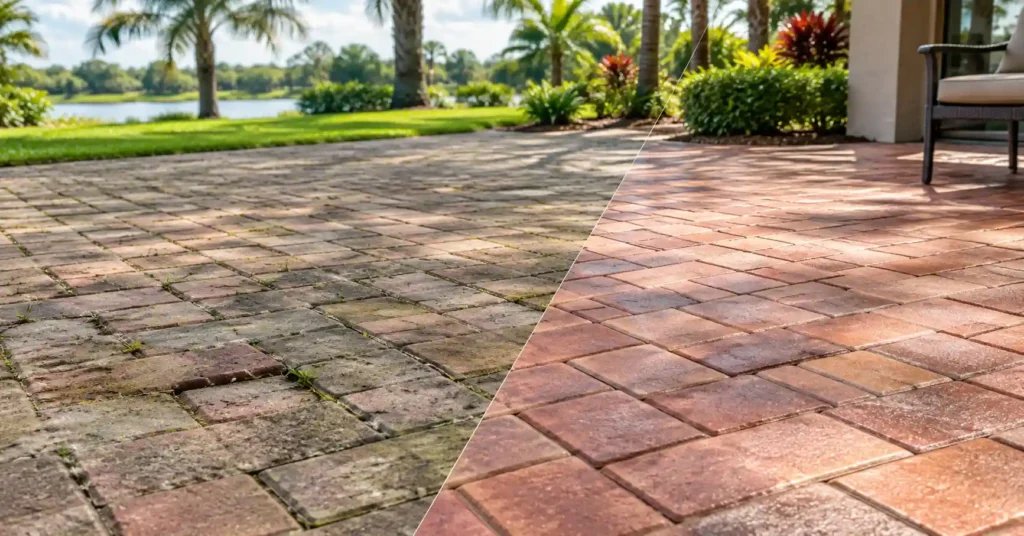
How do you make pavers look new again? Deep clean, level uneven units, replace seams with polymeric sand, and seal the surface to give dull pavers a brand-new appearance. First, remove dirt, algae, and weeds using a power washer and speciality cleanser. Then, use new masonry sand to level the ground under any sunken units, pry them up, and tap them back into position. After the patio has dried fully, use a leaf blower to remove any remaining dust, brush polymeric joint sand into the gaps, and gently spritz the area with water to seal the sand.
Lastly, apply a thin, uniform coating of acrylic paver sealer to the whole surface to protect it from future stains and UV radiation. Before sealing, use a paver stain to bring back the rich colour tones of your pavers if they have been severely bleached by the sun.
What Makes Pavers Look Old?
Pavers look old because of surface buildup, empty joints, and sun damage. Most of it is not permanent.
Here are the usual causes:
- Dirt and grime from foot traffic and rain
- Algae and mildew in shady, damp spots
- Rust and oil stains from furniture, tools, and cars
- Efflorescence, a white powder that rises from inside the paver
- Lost joint sand, which lets weeds and moss move in
- UV fading from years of direct sun
- Settling, which leaves sunken or uneven spots
Check which of these you have before you buy anything. The fix depends on the cause.
What Are Your Pavers Made Of?
Most pavers are made of precast concrete, which is cast and cured in a factory before being shipped to a site. Unlike plain concrete (which has no steel reinforcement and is used for sidewalks) or reinforced concrete (which contains steel bars for heavy-duty driveways and beams), precast concrete is dense and pressed.
This dense structure means pavers absorb stain and sealer differently than rough, porous concrete. Because every material including clay brick, travertine, and natural stone follows its own unique rules for absorption and maintenance, you should always check the specific product label before applying any treatments.
How Do You Make Pavers Look New Again? Step by Step
Start with the least harsh fix and move up only if you need to. Many patios only need steps 1, 2, and 5.
Check What Is Wrong First
Walk the whole surface. Look for dirt, green growth, stains, white haze, weeds, and loose joints. Press on the pavers with your foot. Look for rocking, dips, and cracks.
Take photos. Mark each problem with chalk. This tells you if you need a cleaner, a color fix, or a repair.
Deep Clean the Surface
Cleaning is the biggest change you can make. A clean paver often looks years younger.
Sweep first. Pull weeds by the root. Then wash with a cleaner made for your paver type. Use a mild soap for dirt. Use an algae treatment for green or black growth. Treat rust and oil as spot jobs, with a product made for that stain.
A pressure washer works fast, but it can hurt pavers. Too much pressure strips the surface and blasts out joint sand. Use a wide tip, stay a foot or more away, and keep the wand moving. A surface cleaner attachment helps keep results even.
Want the full method? Read our guide on How to Clean a Paver Patio. No pressure washer? See How to Clean Pavers Without a Pressure Washer.
Let the pavers dry fully before the next step. In Florida humidity, that can take a day or two.
Bring Back the Color
If the pavers are clean and still look pale, you may have real color loss. You have four options:
- Color-enhancing sealer. This deepens the tone and adds a little richness. It is the gentlest option.
- Regular paver sealer. This protects the surface and gives a natural or wet-look finish.
- Concrete stain or color treatment. This adds pigment back to faded concrete pavers. Use it only when it suits your paver.
- Professional restoration. This is the best route for badly faded surfaces.
Test a small spot first. Pick a corner that people rarely see. Let it dry, then judge the color in sun and shade. Stain is not the answer for every paver. Some pavers only need a clean and a good sealer.
One paver stain maker lists coverage at about 200 square feet per gallon for two coats.
Reset or Replace Damaged Pavers
Sealer cannot fix a structural problem. If the base is bad, the surface will keep failing.
Look for these:
- Sunken pavers. The base has shifted or washed out.
- Uneven areas. Water may be pooling or settling.
- Loose pavers. The bedding sand has moved.
- Cracked or broken units. They need new pavers.
To reset a paver, lift it out, fix the base and sand, and set it back level. Replace any broken unit with a matching one. Fix these before you seal. Sealing over a dip locks in the problem.
Refill the Joints and Seal the Pavers
Sweep fresh joint sand into every gap. Many pros use polymeric sand, which hardens a bit when wet. Follow the label so it sets right and does not leave a haze.
Then seal. A good sealer can:
- Make the color look richer
- Block oil, dirt, and spills
- Cut down on weeds and moss
- Shield the surface from rain and sun
You can pick a natural look or an enhanced, wet-look finish. Wet-look is shinier and can feel slick when it is damp. Water-based sealers breathe better. Solvent-based ones give more shine. Check that your sealer fits your paver material.
Seal only when the surface is clean, dry, and repaired. Sealer on damp pavers can turn cloudy. Follow the maker’s instructions for coats and dry time. The method matters less than the prep.
Can You Make Faded Pavers Look New Without Replacing Them?
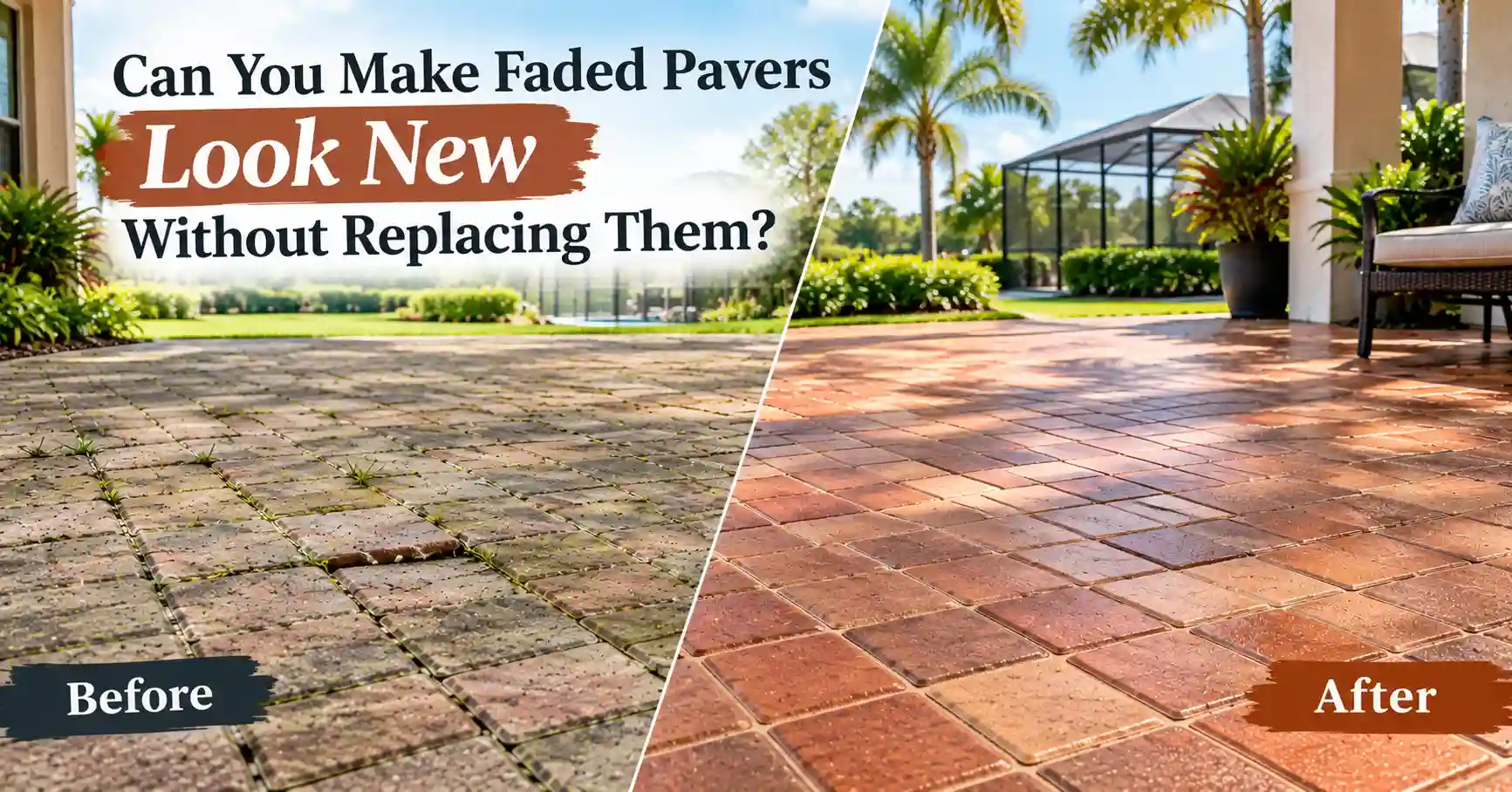
Often, yes. It depends on whether the problem is surface buildup or real color loss.
Many “faded” pavers are just dirty. A deep clean can bring back most of the color. If the color is truly gone, a color-enhancing sealer or stain can help. Use this table to match the problem to the fix:
| Condition | Typical approach |
| Dirt and grime | Deep cleaning |
| Algae and mildew | Cleaning plus the right treatment |
| Oil and rust | Spot treatment |
| Missing joint sand | Re-sanding |
| Mild color loss | Sealer or color enhancement |
| Severe fading | Color treatment or professional restoration |
| Sunken pavers | Lift and reset |
| Broken pavers | Replace |
What Should You Do After Restoring Your Pavers?
Good habits keep the work looking fresh. Here is a simple routine:
- Sweep often to remove dirt and leaves.
- Wipe up spills and stains early.
- Pull weeds as soon as they show.
- Skip aggressive pressure washing.
- Check joint sand each season and top it off.
- Reseal when the product and surface call for it.
- Fix drainage or settling problems quickly.
Central Florida makes this routine matter. Warm, humid weather feeds algae and other growth. Heavy summer rain can wash out joint sand. Keep the surface clean, and fix wet spots fast. Restored pavers stay cleaner longer that way.
When Should You Restore Pavers Instead of Replacing Them?
Restore your pavers when:
- They are structurally sound
- The color is faded
- The surface is dirty
- The joints need attention
- Weeds or moss are growing
- You have a few isolated stains
Think about replacement when:
- Cracking is widespread
- Settling keeps getting worse
- Drainage problems are severe
- Many pavers are damaged
- The base has failed
Not sure which group you fall in? A quick look from a pro can settle it. Our team offers Paver Cleaning in Winter Springs FL and can tell you if restoration will work before you spend a dime on it.
How Long Does a Paver Restoration Last?
No one can promise an exact number of years. How long it lasts depends on:
- The condition of the pavers before you start
- How well the cleaning was done
- The type of sealer
- Foot and vehicle traffic
- Sun exposure
- Moisture and shade
- How well you maintain it
- The state of the joint sand
A shaded patio with light traffic ages differently than a sunny driveway. Watch your own surface. When water stops beading and stains start to soak in, it is time to look at resealing.
Ready to Bring Your Pavers Back?
How do you make pavers look new again? For expert paver cleaning, re-sanding, repair and sealing services you can trust Ron Hodges Inc to make your surfaces seem like new in Winter Springs, Oviedo and Longwood. They remove deeply ingrained dirt, level up rough spots, refill joint sand and cover with a quality protective sealant to keep out weeds, stains and weather.
Contact us and skip the hard work. Show us what your driveway, patio or pool deck looks like right now and our professionals will give you the straight talk you need on whether you need a clean, a seal or a complete restoration.
FAQs
Can you restore faded pavers?
Yes, in many cases. Clean them first, since dirt often hides the real color. If color is truly lost, a color-enhancing sealer, stain, or professional restoration can bring it back.
Does pressure washing make pavers look new again?
It helps a lot, but it is not enough alone. It removes grime and growth. It can also strip joint sand and scar the surface if you use too much pressure. Re-sand and seal afterward.
Does sealing make old pavers look new?
Sealing improves color and protects the surface. It works best on clean, repaired pavers. It will not fix sunken, loose, or cracked units.
Can you make old pavers look new without replacing them?
Usually, yes. Cleaning, re-sanding, resetting a few pavers, and sealing handle most age problems. Replace only broken or failed sections.
Should you re-sand pavers after cleaning?
Yes. Cleaning often removes joint sand. Refill the gaps before sealing so the pavers stay locked and weeds stay out.
How often should pavers be cleaned and sealed?
Sweep and spot-clean as needed. Do a deeper clean once a year in Central Florida’s humid weather. Reseal when the product and surface call for it, which many sealer labels place every few years.