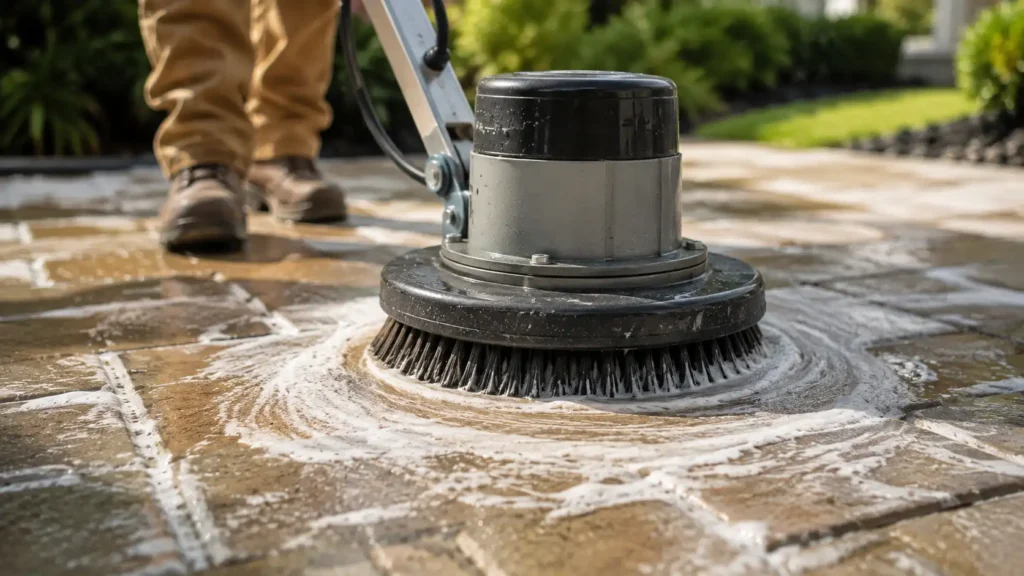
Grabbing a pressure washer feels like the obvious move when your patio looks dingy. It’s fast and satisfying to watch, but here’s the problem: that high-pressure blast can etch the surface, fade the color, and strip sand right out from between the joints. Once the joint sand disappears, weeds and ants show up within a week or two. So if you’ve been searching for how to clean pavers without pressure washer damage, you’re already asking the right question.
This guide covers a method that actually works, using stuff you probably already have around the house. We’ll get into stain removal, how different paver materials behave, and a few things worth knowing if you live in Central Florida. And if the project grows bigger than a Saturday afternoon, Ron Hodges Inc handles professional paver cleaning throughout Winter Springs, FL.
Why Skip the Pressure Washer?
Before you drag the equipment out of the garage, it’s worth understanding what that machine is actually doing to your pavers.
- High PSI wears down the surface of concrete pavers over time, leaving it dull and washed out.
- Those strong water jets blast joint sand loose, which opens the door to weeds and ants.
- Trapped moisture from an overly aggressive wash job increases the odds of chalky, white efflorescence forming on top.
- Overspray and runoff aren’t kind to nearby grass, flower beds, or pool decks.
Honestly, pressure washer damage to pavers is one of the most common complaints we hear from homeowners who power wash every spring without thinking twice. A gentler approach protects both the paver material and the sand holding it all together.
Know Your Paver Type First
Not all pavers respond the same way to soap, water, or a brush. Matching your method to the material is part of doing this right, and it’s a piece of concrete paver cleaning tips many guides skip entirely.
| Paver Type | Recommended Method | Avoid |
| Concrete Pavers | Mild detergent, warm water, stiff brush | Wire brushes, harsh acids |
| Natural Stone (limestone, travertine) | Gentle, pH-neutral paver cleaner | Bleach, strong acids |
| Porcelain | Dish soap and warm water | Abrasive scrubbers |
Natural stone paver care calls for a lighter touch than concrete. Stone is more porous, so it soaks up chemicals faster and scratches more easily.
What You’ll Need
Good news here: you don’t need anything fancy. Most of this is already sitting in a garage or under a kitchen sink somewhere.
- A stiff bristle brush or push broom
- Garden hose with a fan spray nozzle
- Two buckets
- Mild dish soap or a pH-neutral paver cleaner
- White vinegar and baking soda for spot stains
- Rubber gloves and eye protection
- Polymeric sand for joint touch-ups
Step-by-Step: How to Clean Pavers Without Pressure Washer
Work through these in order. Jumping ahead usually means going back and redoing a step you skipped.
Step 1: Clear the Area and Dry Sweep
Move furniture, planters, and grills out of the way first. Then sweep away loose dirt, leaves, and grit with a stiff broom before you introduce any water at all.
Step 2: Pre-Wet the Surface
Give the pavers a light mist with the hose. This protects the color and keeps whatever cleaning solution you use from soaking in too fast and streaking.
Step 3: Mix and Apply a DIY Paver Cleaning Solution
A basic dish soap and warm water method takes care of most everyday grime. Mix a few drops of dish soap into a bucket of warm water and you’ve got a simple paver cleaning services ready to go. For tougher buildup, try a white vinegar cleaning solution made from equal parts vinegar and water. Spread it across the surface and give it five to ten minutes to sit before you move on.
Step 4: Scrub With a Stiff Brush
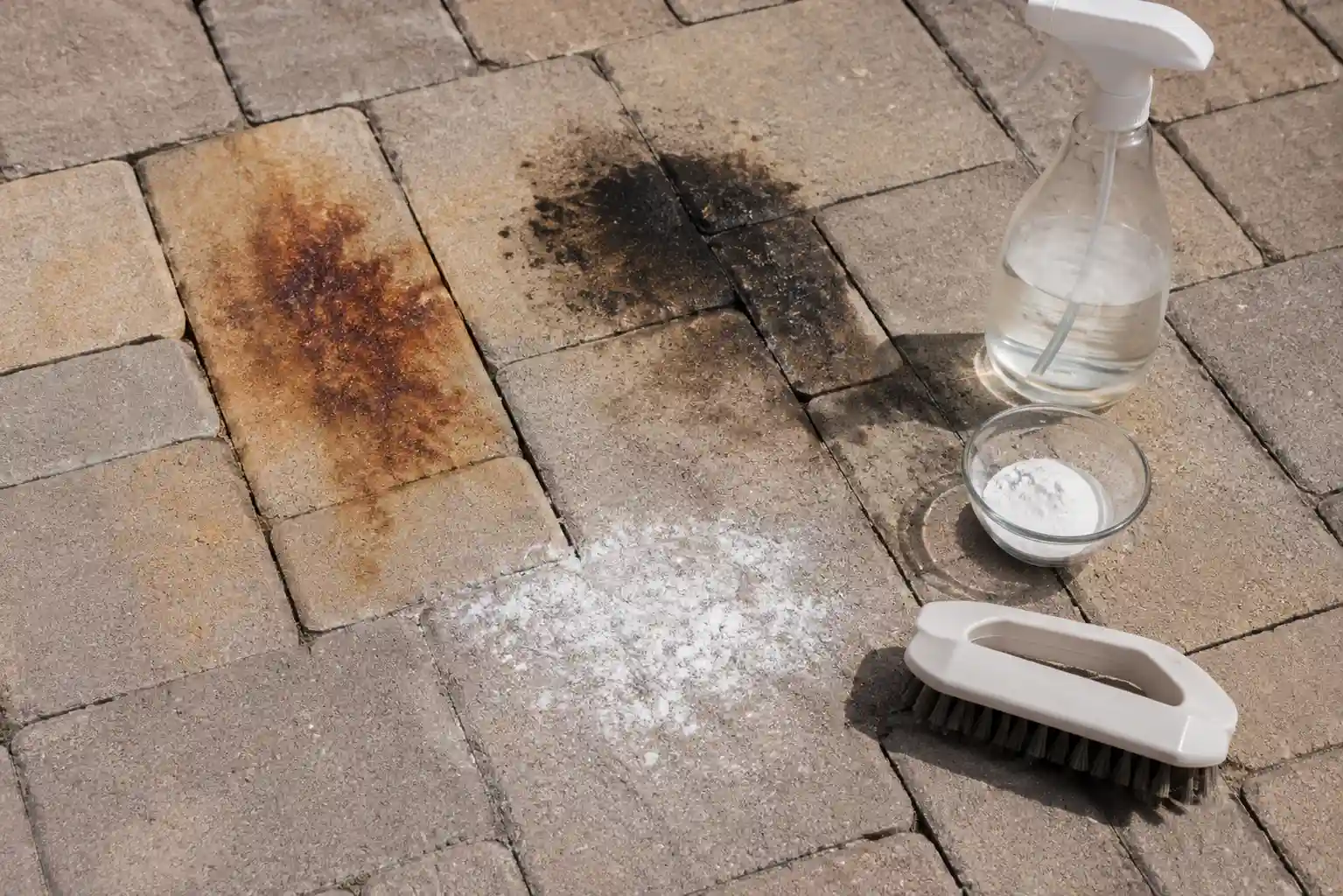
Scrub in small circles to lift dirt without grinding down the surface underneath. Whatever you do, don’t reach for metal bristles. Wire brush damage leaves scratches that no sealer on earth will fix later.
Step 5: Rinse With a Garden Hose
A soft fan spray beats a direct jet every time here. Rinse from the top of the slope down, and try not to aim water straight into the joints since that’s exactly what displaces the sand.
Step 6: Re-Sand the Joints
Once everything dries, take a look at the paver joint sand and see where it’s gotten thin or gapped out. Sweep in fresh polymeric sand and follow whatever misting instructions came with the bag for proper joint sand replacement. Skip this and the whole patio starts feeling loose within a season.
Step 7: Optional Sealing
You don’t have to seal your pavers, but a good paver sealer genuinely helps. Sealing pavers protects against future stains, sun fading, and moisture problems down the line. Apply it in a thin, even coat once the surface is bone dry.
How to Remove Specific Stains From Pavers
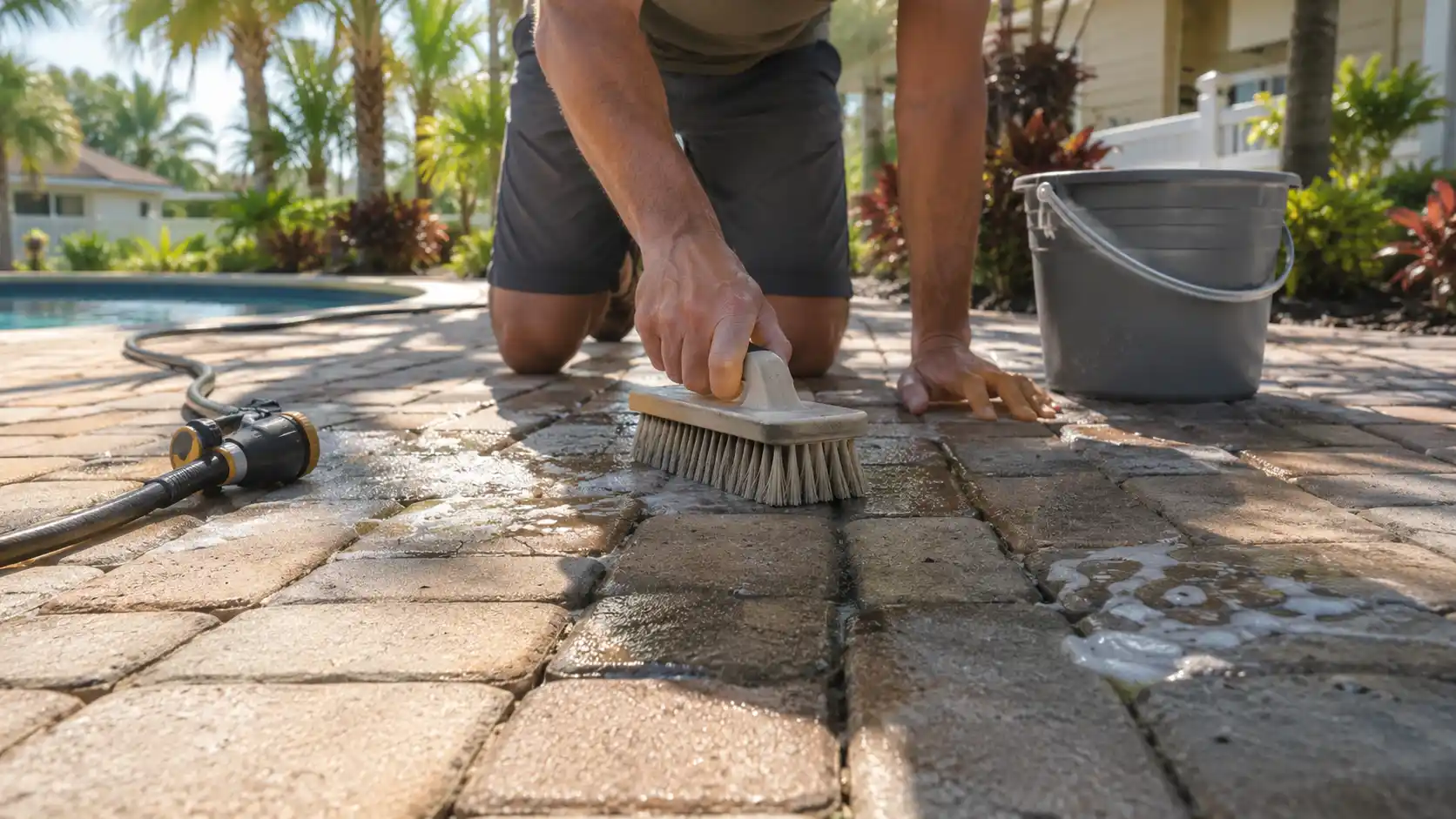
Figuring out how to remove stains from pavers without a pressure washer really just comes down to matching the treatment to whatever’s causing the mark. Here’s what actually works for the usual suspects.
Rust Stains
Rust stains on pavers typically trace back to metal furniture, tools left out in the rain, or fertilizer overspray. A masonry-safe rust remover is your best bet. Bleach won’t touch rust, and it might discolor the surrounding concrete instead.
Oil and Grease Stains
Oil and grease stain removal starts with something absorbent. Sprinkle baking soda or even cat litter over a fresh spill, let it sit for about half an hour, then scrub with dish soap and rinse it away.
Moss, Algae, and Mildew
Moss and algae on pavers love shaded, damp corners of the yard. An oxygenated cleaner breaks all that organic buildup down without bleaching out the paver color. Scrub it, rinse it, and let the sun handle the rest of the drying.
Tannin and Leaf Stains
Leaf stains leave those brownish outlines that soak into porous concrete surfaces. The same oxygenated cleaner used for algae handles this too, paired with a bit of light scrubbing.
Efflorescence
That white, chalky film is what efflorescence removal is all about. A manufacturer-approved remover, used after pre-wetting the surface, clears it up without harming the paver finish underneath.
| Stain Type | Method | Avoid |
| Rust | Masonry rust remover | Bleach |
| Oil/Grease | Baking soda, then dish soap | High-pressure blasting |
| Moss/Algae | Oxygenated cleaner | Undiluted bleach |
| Efflorescence | Approved efflorescence remover | Random acid mixes |
Finding the best paver cleaner for stains usually means keeping two or three different products on hand rather than betting everything on one bottle.
Common Mistakes to Avoid
A handful of habits cause more damage than the original dirt ever did.
- Reaching for a wire brush on any paver surface, ever.
- Skipping the re-sanding step because it feels optional.
- Applying bleach or muriatic acid to natural stone.
- Cleaning under direct, hot Florida sun, which dries your solution before it has time to do anything useful.
Florida-Specific Maintenance Tips for Winter Springs Homeowners
Central Florida weather changes how often pavers actually need attention. Humidity and near-daily summer rain speed up moss and algae growth compared to drier climates. Sandy soil common around Winter Springs, Oviedo, and Longwood also means more grit gets tracked onto driveways and patios all year long.
A seasonal schedule beats a once-a-year deep clean by a wide margin. Light cleaning every few months, plus one full scrub before rainy season kicks in, keeps stains from ever getting the chance to set. These paver patio maintenance tips hold up whether you’re dealing with a small walkway or a full concrete driveway.
Simple Routine Maintenance Checklist
- Sweep weekly so dirt doesn’t get a chance to build up.
- Spot-clean spills the same day, not the same week.
- Stay on top of how to remove weeds between pavers before the roots dig in deep.
- Run a seasonal deep clean twice a year.
- Check joint sand and top it off when needed.
Staying consistent with basic paver driveway cleaning habits saves hours of scrubbing down the road.
DIY vs. Calling a Professional
DIY works fine for light dirt, a smaller patio, or general upkeep between deep cleans. It’s cheap and, done right, perfectly safe.
Call in help for deep-set stains, a large driveway or patio, pavers that have started sinking or shifting, or joints that need a full sand and seal pavers service. A real paver patio deep clean from an experienced crew often catches things a DIY pass misses, like settling pavers or drainage problems near a walkway.
Ron Hodges Inc works on Concrete Driveways, Concrete Patios, Concrete Walkways, and full paver cleaning and sand and seal service across Winter Springs, Oviedo, and Longwood, FL. If your project has grown past what one weekend can handle, we’re happy to take it from here.
Conclusion
You really don’t need a pressure washer or a cabinet full of harsh chemicals to get pavers looking clean again. A stiff brush, some mild soap, and a bit of patience go a long way toward protecting what you’ve already invested in. Knowing how to clean pavers without damaging them now can save you from a much bigger repair bill later, whether it’s a walkway, a patio, or a full concrete driveway.
Need a deeper clean or a full sand and seal service in Winter Springs, Oviedo, or Longwood? Contact Ron Hodges Inc today and let our team take it from here.
FAQs
Can I use vinegar on pavers?
Yes, diluted white vinegar is fine on most concrete pavers. Just don’t use it repeatedly on natural stone, since the acid can etch softer surfaces over time.
Does dish soap damage pavers?
Not at all. Mild dish soap mixed with warm water is one of the safest cleaners you can grab, and it works across nearly every paver type.
How often should I clean pavers?
Most homeowners see good results with a light clean every few months and a deeper scrub once or twice a year, depending on how much shade and foot traffic the area gets.
Is sealing necessary after cleaning?
It’s optional, but worth doing. Sealing protects against future stains and honestly makes the best way to clean pavers naturally even easier the next time around, since dirt sits on top of the sealer instead of soaking straight into the stone.
Can I use a garden hose instead of a pressure washer?
Yes, and for most routine cleaning it rinses just as well. A hose with a fan nozzle skips the risks that come with high-pressure equipment entirely. That’s the safest route if you’re figuring out how to clean pavers without power washing your driveway or patio.