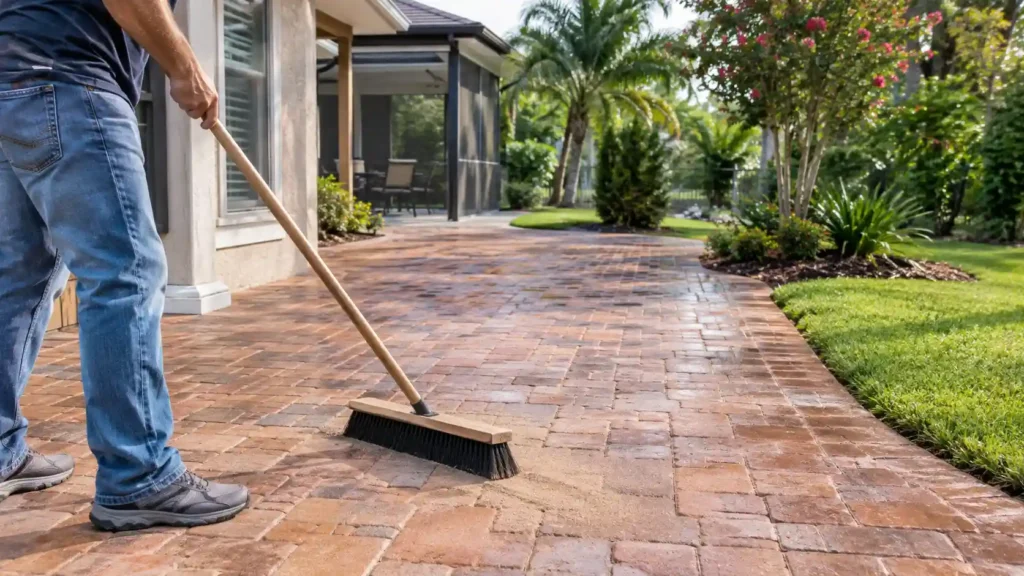
Do pavers need maintenance? Yes, pavers require regular maintenance to prevent shifting stones, deep-rooted weeds, and ugly stains. In a climate like Central Florida, 50 inches of annual rainfall, thick humidity, and intense UV rays accelerate algae growth and wash away joint sand much faster than in milder regions.
To maintain your hardscape, clear debris weekly with a broom or leaf blower to prevent moisture buildup, and inspect joint sand regularly, topping off empty gaps with polymeric sand to lock the stones in place and block weeds.
Why Pavers Need Maintenance Over Time
A paver surface is hundreds of stones held in place by sand and a base. That makes repairs easy. It also means the surface shifts a little with weather and use.
Dirt, Algae, and Organic Growth
Water is behind most of it. A shady corner never fully dries out, so algae moves in. Add leaves, pollen, and washed-over mulch, and you get that green or black film. It gets slick, too. Pool decks and shady walkways turn first.
Joint Sand Can Wash Away
The sand in the gaps keeps stones from shifting and blocks weeds and ants. Summer storms pull some of it out. A pressure washer held too close pulls out a lot more, fast.
Once joints run low, stones move. The Interlocking Concrete Pavement Institute (ICPI) says to top up joint sand as it drops.
Pavers Can Settle or Shift
Some settling in year one is normal. One low spot or a loose corner doesn’t mean your patio failed. It’s usually a small pocket where water collected or the base wasn’t packed tight.
What Regular Paver Maintenance Actually Involves
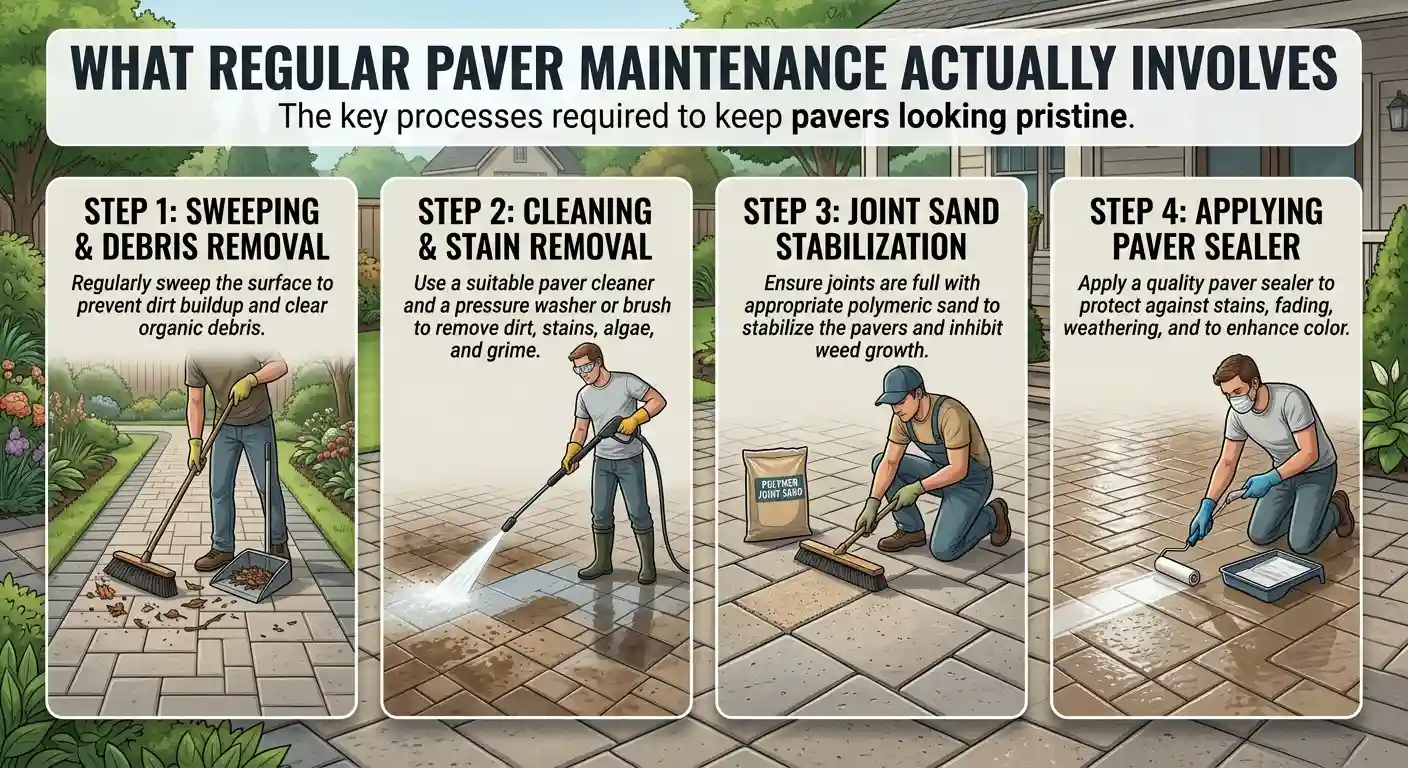
These paver maintenance tips take an hour here and there. Here’s how to maintain pavers without losing a weekend.
Sweep Away Dirt and Debris
Use a soft push broom. Sweep weekly in leaf season, less often the rest of the year. Wet leaves left sitting stain the stone and feed algae. A leaf blower on low is fine, just not on the joints.
Clean Stains Before They Set In
Catch a spill early and it’s easy. Wait a month and it’s a project. Match the cleaner to the stain and the stone, since concrete, brick, and natural stone react differently.
- Oil: Cover with cat litter or cornstarch, then use a paver degreaser.
- Rust: Use a rust remover made for concrete or stone. Bleach makes rust worse.
- Grill grease and food: Dish soap, warm water, soft brush.
- Algae and mildew: An outdoor masonry cleaner and light scrubbing.
Read the label and test a small corner first. Our full walkthrough is in How to Clean a Paver Patio.
Check the Joints for Missing Sand
Healthy joints look nearly full. Deep gaps, a line of weeds, or an ant mound mean the sand is low. Sweep new sand over dry pavers, compact it, and sweep off the extra. Steps are in How to Seal Pavers with Sand.
Remove Weeds Without Damaging the Pavers
Pull them while they’re small. A crack weeder or flat screwdriver works. Go slow so the roots don’t drag the sand out. Skip bleach and strong acids. If you use a weed killer, pick one labeled safe for pavers, then refill the joint.
Check for Loose, Sunken, or Uneven Pavers
Walk the surface now and then. Watch for rocking stones, dips, and puddles after rain. One or two low stones is an easy fix: lift them, add bedding sand, set them back. If a whole section keeps dropping, the base is the problem. Sand won’t fix that.
Do Pavers Need to Be Sealed?
No. Sealing is a choice, not a rule. It depends on the paver material, the look you like, how much staining the spot gets, and what the maker recommends. Most say to wait 6 to 12 months after install.
What Does Paver Sealer Help Protect Against?
A good sealer keeps oil, food, and leaf stains from soaking in. Many deepen the color. Some help hold joint sand and slow weeds. It makes cleaning easier, and that’s the real payoff.
How Do You Know When Pavers Need Resealing?
Try the water test. Sprinkle water on the surface. If it beads, the sealer still works. If it soaks in and darkens the stone fast, it’s wearing thin. More stains and a patchy finish are other signs. A dull look alone doesn’t mean you need another coat. In Florida, sealed pavers often go two to three years between coats.
What Happens If You Never Seal Your Pavers?
Not much. Well-installed pavers that stay clean can last for decades unsealed. You’ll just spend more time on stains, algae, and fading, especially in shade or near a pool.
If you want the sealed look, we offer Sand and Sealing in Winter Springs FL. We’ll also tell you straight if your pavers don’t need it.
How Often Should Pavers Be Maintained?
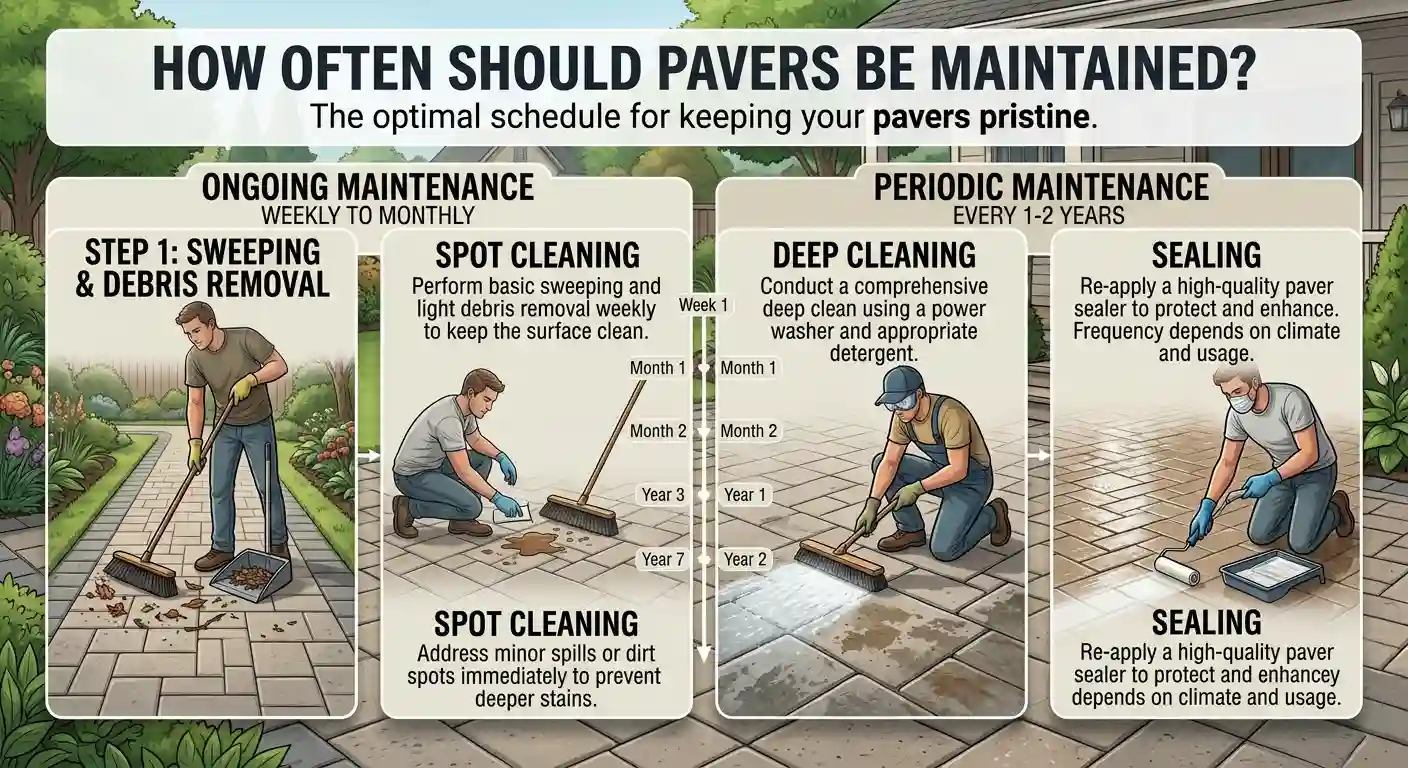
So, do pavers need maintenance every week? No. Sweeping is the only weekly job. The rest is a quick look every few months. And if you wonder how often should pavers be cleaned, once or twice a year works for most surfaces. Damp, shady spots may need more.
| Maintenance task | Suggested frequency |
| Sweep leaves and loose debris | Weekly or as needed |
| Inspect joints, edges, and drainage | Every few months |
| Wash away dirt and surface buildup | As needed |
| Check for missing joint sand | During routine inspections and after heavy rain |
| Assess whether sealing is needed | Based on sealer condition and product guidance |
| Inspect for settling or loose pavers | At least seasonally |
Use this as a starting point, not a rulebook. A shaded pool deck grows algae faster than a sunny driveway, and a busy driveway collects oil spots faster than a back walkway.
Common Paver Maintenance Mistakes to Avoid
Using Too Much Pressure When Washing
Too much pressure strips joint sand and can scar the surface. Use a wide-angle tip, stay back, and keep passes even.
Using Harsh Chemicals Without Checking Compatibility
Bleach, acids, and strong degreasers can etch stone, fade color, and kill nearby plants. Check the label against your paver type.
Sealing Pavers Before They Are Properly Prepared
Sealer locks in whatever is under it. Seal over dirt or damp stone and you trap it. Clean, dry fully, and follow the maker’s directions.
Covering Up a Drainage or Base Problem
New sand or sealer won’t fix pavers that sink from a weak base. Find the cause first.
What Happens If You Ignore Paver Maintenance?
Nothing dramatic, at least not right away. Algae makes the surface look tired and slippery. Low joint sand invites weeds. Old stains get harder to remove. Ignored settling leaves dips and drainage trouble.
Know cosmetic from structural. Faded color or a few weeds don’t need a full restoration. Rocking stones or pooling water need a closer look.
Can You Maintain Pavers Yourself, or Should You Hire a Professional?
Maintenance You Can Usually Handle Yourself
Sweeping, rinsing with a garden hose, pulling small weeds, and cleaning minor spills with a paver-safe product.
When Professional Paver Maintenance Makes Sense
Call a pro for widespread algae or staining, large areas, heavy sand loss, or unevenness that keeps coming back. Call before sealing too, since prep makes or breaks it. If settling or drainage is the issue, repairs come first.
What Does Paver Maintenance Cost?
These are rough ranges from published cost guides, not a quote. Size, condition, and paver type change the price.
| Service | Typical range per sq ft | Example: 500 sq ft patio |
| Professional cleaning | $0.50 to $1.20 | $250 to $600 |
| Sealing (Florida, with prep) | $0.50 to $2.00 | $250 to $1,000 |
| Cleaning, re-sanding, and sealing together | $1.50 to $2.50 | $750 to $1,250 |
DIY cleaning costs a brush and a bottle of cleaner.
Paver Maintenance in Central Florida: What Homeowners Should Watch For
- Rain and runoff: After a big storm, check for washed-out sand and water sitting in low spots.
- Humidity and shade: Watch patios, walkways, and pool decks for algae and mildew that return.
- Sun exposure: If sealed, look for wear and follow the product’s recoat advice.
- Pool areas: Leaves, splash zones, and cleaners safe around water and plants.
- Driveways: Oil spots, loose edge restraints, and stones that move under cars.
Every yard is different, so let what you see set the schedule.
A Simple Paver Maintenance Checklist for Homeowners
- Sweep away leaves and loose debris.
- Clean spills before they become stubborn stains.
- Pull weeds before they take hold.
- Check whether joint sand is washing out.
- Look for low spots, loose pavers, and standing water.
- Use paver-safe cleaning products.
- Check the sealer if the surface is sealed.
- Book repairs if movement or drainage problems keep coming back.
Keep Your Pavers Looking Good With the Right Care
So, do pavers need maintenance? Yes, but they are relatively low-maintenance when cared for regularly. Simple steps like sweeping, cleaning stains, maintaining joint sand, and addressing small repairs can help keep your pavers looking good and lasting longer.
At Ron Hodges Inc, we provide professional paver cleaning and sand-and-seal services for homeowners in Winter Springs and nearby Central Florida communities. We assess your pavers and recommend the care they actually need. If your patio, driveway, or walkway is looking worn or needs attention, Contact Us to discuss your paver maintenance needs.
FAQs
Do pavers need regular maintenance?
Yes, pavers need regular maintenance to keep them clean, prevent weed growth, and maintain their appearance. Sweeping, occasional washing, and checking the joints can help keep them in good condition.
How often should pavers be cleaned?
Most pavers benefit from a thorough cleaning once or twice a year. However, patios and driveways in humid areas like Central Florida may need more frequent cleaning because algae and mildew can build up.
Do pavers need to be sealed?
Pavers do not always need sealing, but applying a suitable sealer can help protect their appearance, reduce staining, and enhance their color. The right sealing schedule depends on the paver material, sealer type, and exposure to weather.
How do you prevent weeds from growing between pavers?
Keep the joints filled with suitable joint sand and remove weeds as soon as they appear. Proper joint maintenance and occasional professional cleaning can help reduce weed growth between pavers.
How can you make pavers last longer?
Sweep away dirt regularly, clean stains promptly, maintain the joint sand, and fix loose or uneven pavers before the problem gets worse. Proper maintenance helps preserve the appearance, stability, and lifespan of your paver patio, walkway, or driveway.