Your driveway takes more abuse than almost any other part of your home. Cars, trucks, rain, and Florida sun hit it every day. So, are concrete driveways a good idea? For most homeowners, yes, as long as the job is done right.
At Ron Hodges Inc, we have worked with concrete for over 30 years. This guide covers the pros, the cons, the costs, and the times when another material makes more sense. By the end, you will know if concrete fits your home and your budget.
Are Concrete Driveways a Good Idea? (Short Answer)
Yes. A concrete driveway is a smart choice if you want a long-lasting, low-maintenance surface and can handle a higher upfront cost. Poured and cured correctly, it can last 25 to 40 years.
The main risks are cracks and stains. Both are easier to prevent than to fix later. Concrete is not right for every property, though, and the sections below show you when to pick something else.
Pros of a Concrete Driveway
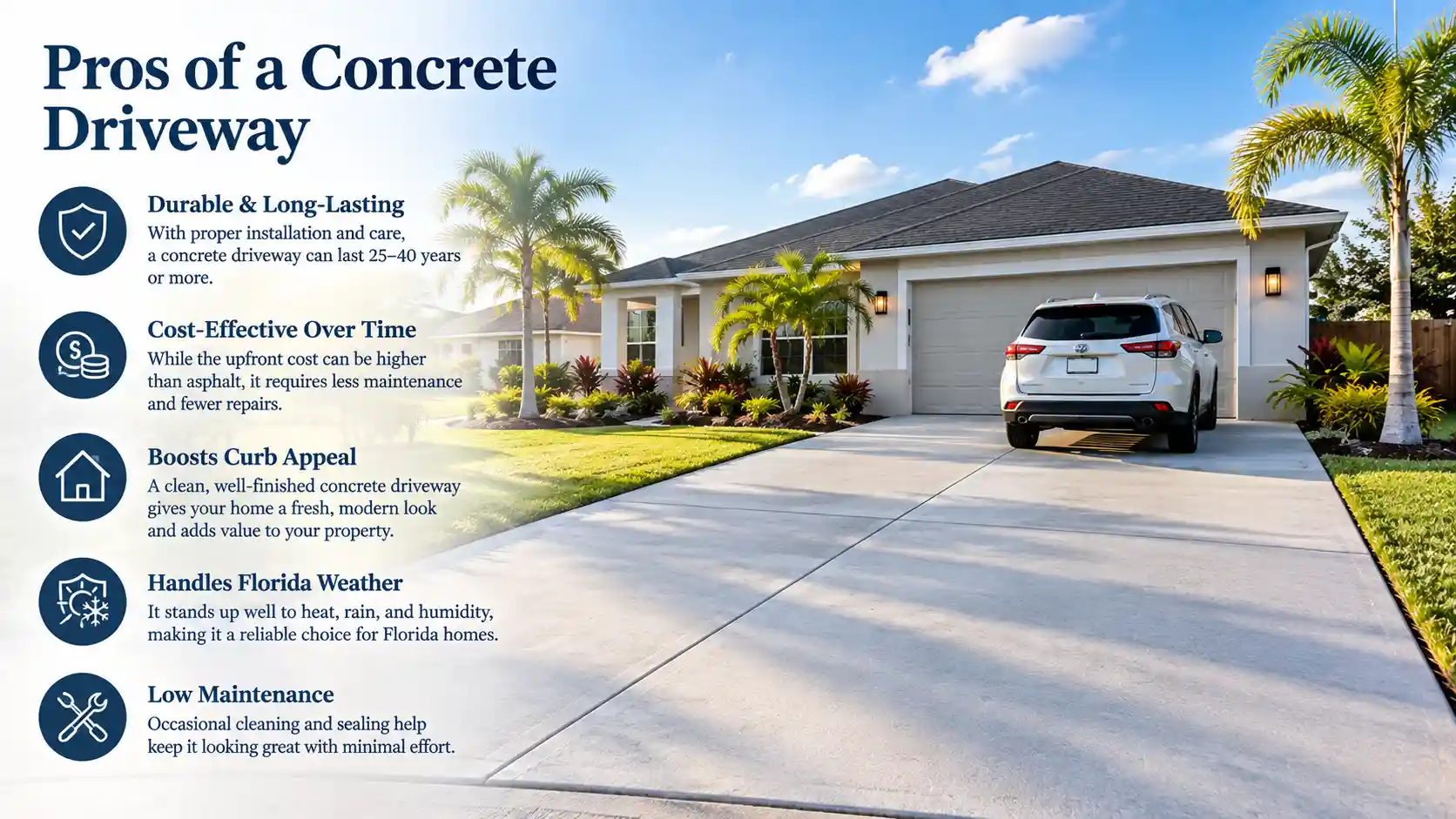
These are the main benefits of concrete driveways.
Lasts 25 to 40 Years
A well-built slab outlasts most other driveway surfaces. Many last 30 years or more with basic care.
Needs Little Upkeep
You do not have to reseal concrete every few years like asphalt. A rinse with the hose and a yearly look for cracks is usually enough. Sealing is optional.
Handles Heat and Heavy Vehicles
Concrete stays firm in summer heat, while asphalt can soften. It also spreads weight well, so trucks, RVs, and boats are fine on a slab that is thick enough. Most home driveways are 4 inches thick. If you park heavy vehicles, plan on 5 or 6 inches.
Many Finishes and Colors
You can choose a plain broom finish, stamped patterns, stain, or exposed aggregate. A broom finish adds grip when the surface is wet.
Adds Curb Appeal and Resale Value
A clean, even driveway gives your home a better first impression. Buyers notice cracked, stained driveways right away.
Cons of a Concrete Driveway
A fair look at the pros and cons of concrete driveways has to include these.
Higher Upfront Cost
Concrete costs more to install than gravel or asphalt. You pay more now for a longer life.
It Can Crack
All concrete can crack. Shrinkage, heavy loads, tree roots, and weak soil are common causes. Control joints guide cracks into straight lines so they are less visible. Small cracks are fixable, and our guide on How to Fix Cracks in Concrete Driveway shows you how.
Oil and Rust Stains
Concrete is porous, so oil, leaf stains, and rust can soak in. Rust from sprinkler water is common in Florida. Sealing helps, and wiping up spills fast helps more.
Cure Time Before Driving on It
Fresh concrete needs time. Keep foot traffic off for about 24 to 48 hours and cars off for at least 7 days. Full strength takes about 28 days.
Repairs Can Show
A patch rarely matches the color of older concrete. Resurfacing can help, but a repaired spot often stands out.
How Much Does a Concrete Driveway Cost?
Published 2026 estimates vary a lot. Many fall between $8 and $20 per square foot installed. Cites Angi for that range and notes that labor can be up to half the cost. Treat it as a starting point, not a quote.
| Cost factor | How it changes the price |
| Size | More square feet raises the total, but big jobs often cost less per foot |
| Finish | Broom finish costs least. Stamped, stained, or exposed aggregate cost more |
| Thickness and steel | 5 or 6 inches and rebar add material and labor |
| Site prep | Removing an old driveway, grading, and base repair add cost |
| Access and slope | Tight spaces and drainage work take more time |
So are concrete driveways worth it? Often, yes. Look at the cost over 20 to 30 years, not just day one. New asphalt runs about $7 to $13 per square foot, according to NerdWallet, but it needs regular resealing and usually wears out sooner.
Concrete vs Asphalt vs Pavers
Each material wins in a different area.
| Feature | Concrete | Asphalt | Pavers |
| Upfront cost | Medium to high | Lowest of the three | Usually highest |
| Upkeep | Low | Regular sealing | Re-sand and seal joints |
| Heat | Stays firm | Can soften | Stays firm |
| Repairs | Patches show | Easy to patch | Swap single pavers |
| Look | Clean, many finishes | Plain black | Many patterns and colors |
Pick concrete for value and simplicity. Pick pavers for looks and easy repairs. Pick asphalt when the lowest price matters most.
Are Concrete Driveways Good in Florida?
Yes. Concrete handles Florida heat and heavy rain well when it is built for local conditions. Here is what matters in Winter Springs, Oviedo, and Longwood.
- Heat: Concrete stays firm in summer. Pour timing matters, though. Hot, windy days make concrete set too fast, which can cause surface cracks.
- Rain and drainage: Slope the driveway so water runs away from your garage and foundation.
- Sandy soil: Sandy soil needs a well-compacted base, or the slab can settle over time.
- Humidity: Shaded, damp spots grow algae and moss. A yearly wash keeps them in check.
- Irrigation: Rusty sprinkler water stains concrete. Aim sprinkler heads away from the slab.
What Makes a Concrete Driveway Last (or Crack)
Concrete driveway durability comes down to the work done before and after the pour. These seven things matter most:
- Compacted base: A firm base under the slab stops settling and cracking.
- Right thickness: Use 4 inches for cars and 5 or 6 inches for heavy vehicles.
- Strong mix: Ask for a driveway mix, often rated 3,500 to 4,000 PSI.
- Reinforcement: Rebar or wire mesh holds cracks tight if they form.
- Control joints: Cuts every 8 to 10 feet or so tell the concrete where to crack.
- Proper curing: Keep the slab damp or covered in the first days so it cures slowly and evenly.
- Good drainage: Water that sits under or on the slab shortens its life.
When Concrete Is Not the Best Choice
Skip concrete in these cases:
- Your budget is tight and you need the lowest upfront price.
- Large tree roots sit close to the driveway path.
- The soil is soft, shifts, or holds water.
- You want to repair one small section without it showing.
- You cannot wait a week before parking on it.
How to Decide in 2 Minutes
Answer these three questions:
- Do you want low upkeep and a long life? If yes, concrete or pavers fit.
- Is the upfront price your top concern? If yes, look at asphalt or gravel.
- Do you want the most design choices and easy repairs? If yes, pavers are worth a quote.
If your site is level and well drained, concrete is likely your best match.
When to Hire a Concrete Driveway Contractor
Hire a pro for any full-size driveway. Concrete cannot be undone once it sets, and small mistakes show up as cracks years later.
Our crew at Ron Hodges Inc handles grading, forms, pouring, and finishing. If you want help, see our concrete driveways installation service in Winter Springs.
Before you hire anyone, ask these questions:
- What thickness, base, and mix will you use?
- Will you add rebar or mesh, and where will you place control joints?
- Are you licensed and insured?
- Is the estimate in writing, and what does it cover?
Final Thoughts
Concrete is a strong, low-maintenance choice for most Florida homeowners. It lasts for decades, handles heat and heavy vehicles, and adds curb appeal. The tradeoffs are a higher upfront cost, possible cracks, and a week of waiting before you can park on it.
If you want a driveway built to last, the team at Ron Hodges Inc is ready to help. Contact us today for a free estimate in Winter Springs, Oviedo, or Longwood.
FAQs
How long does a concrete driveway last?
A concrete driveway typically lasts 25 to 40 years. A good base and basic upkeep push it toward the high end.
Is a concrete driveway cheaper than asphalt?
No. Concrete usually costs more upfront than asphalt. It can cost less over time because it needs less upkeep.
Do concrete driveways crack?
Yes, most slabs get small cracks over time. Control joints, a strong base, and proper curing keep them minor.
Is concrete better than pavers for a driveway?
It depends on your goals. Concrete needs less upkeep, while pavers are easier to repair and offer more patterns.
How thick should a concrete driveway be?
Most home driveways are 4 inches thick. Use 5 or 6 inches if you park trucks, RVs, or boats.