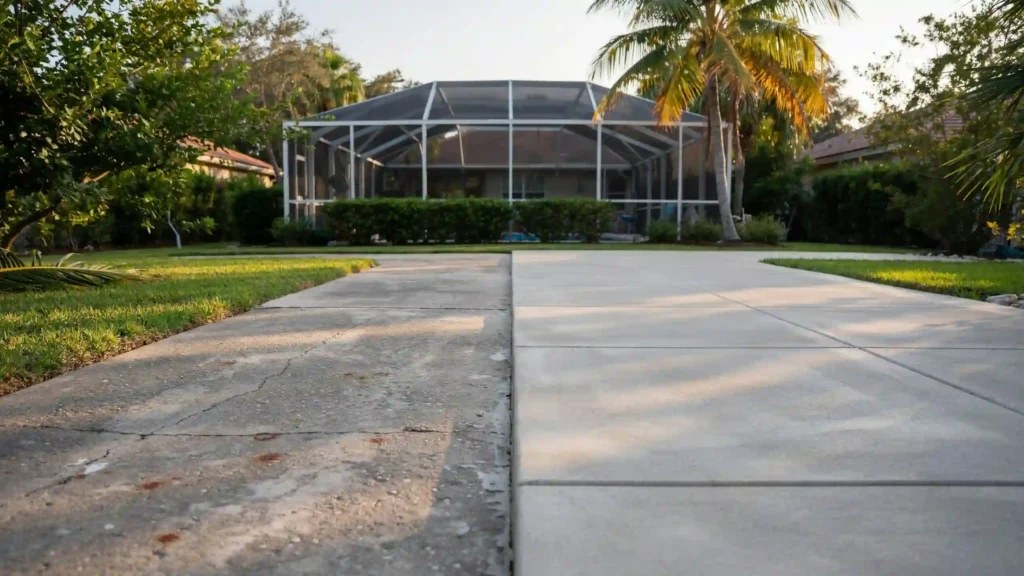
So, can you pour new concrete over old concrete? Yes, you can pour new concrete over existing concrete, but only if the original slab is sturdy, stable and not sinking. Concrete doesn’t naturally bond to itself, so any existing shifting or structural faults will immediately punch through the new layer. It’s a quick, cost-effective solution for minor surface wear, but it won’t repair major foundation or drainage issues.
For best results, pressure-wash or grind the previous surface thoroughly clean and then add a liquid bonding agent if your new layer is less than three inches thick. Finally, be sure that the increased height will not block doorways or mistakenly slope rainwater toward your home.
When Can You Pour New Concrete Over Old Concrete?
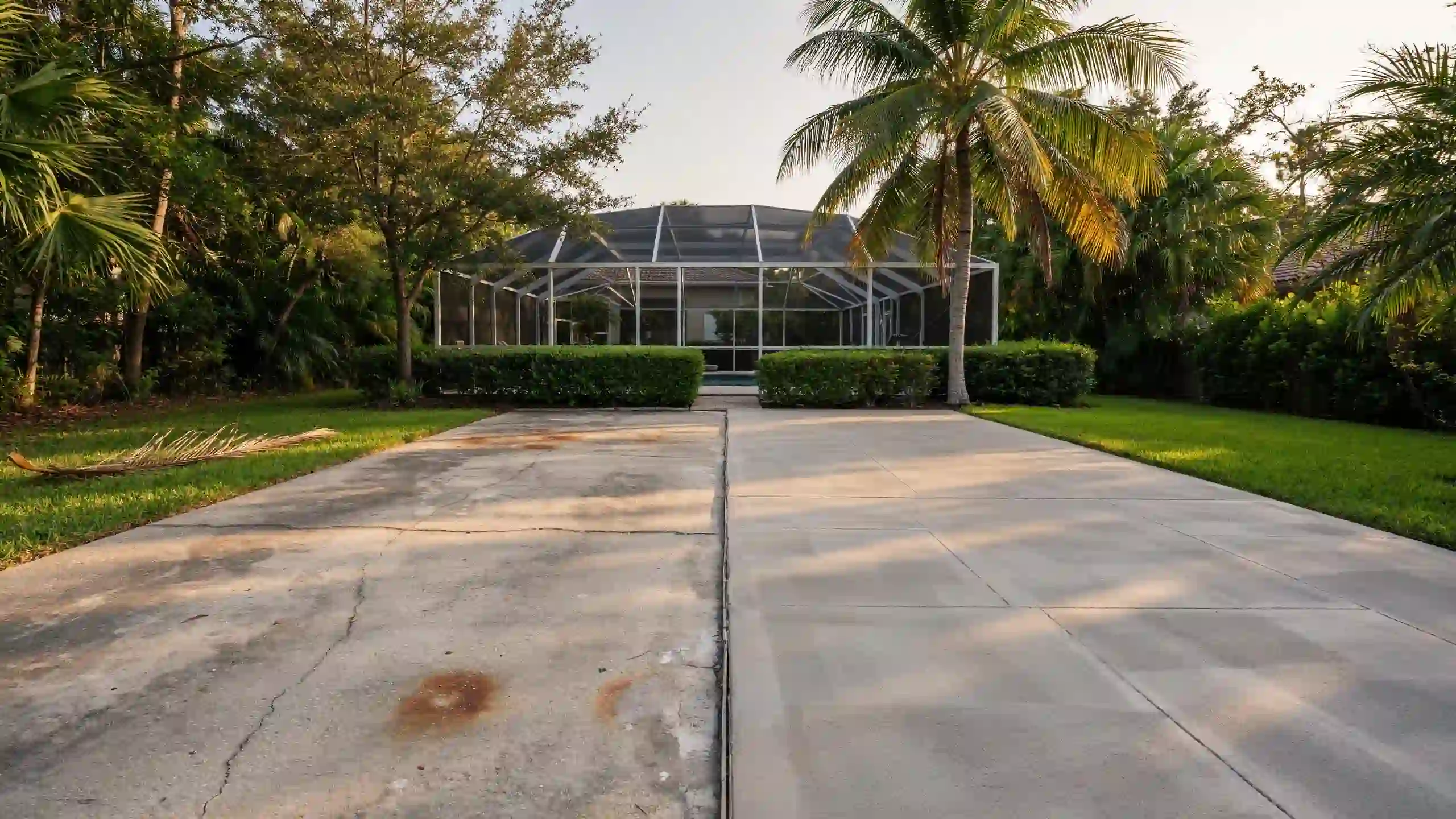
When the old slab is a good base, pouring concrete over concrete is the way to go. Think of it as the floor underneath your new layer. The new layer is supported by a sturdy floor. It’s shredded by a shifting floor.
Thus the condition of the slab matters more than the slab age. A 30-year-old slab that is tight and flat can be overlaid. Cannot sink a 5-year-old slab.
Signs the Existing Slab May Be Suitable
- It is solid. Tap it with a hammer. A clear ring is good. A dull, hollow thud means loose concrete.
- It is stable, with no major settlement or movement.
- The damage is cosmetic: light stains, surface wear, or hairline cracks.
- There is no widespread crumbling or flaking.
- Water runs off and does not pool.
When Pouring Over Old Concrete Is a Bad Idea
- Major cracks, wider than about 1/4 inch or with one side higher than the other
- Sinking slabs
- Heaving slabs, often lifted by tree roots
- Soft or washed-out soil underneath
- Severe spalling, where the surface flakes off in chunks
- Crumbling across most of the slab
- Water that drains toward your house or sits in low spots
Central Florida has no frost heave, but sandy soil and heavy summer rain wash out the ground under slabs. Oak roots lift them. The damage looks the same.
Can You Pour Concrete Over Cracked Concrete?
Yes, you can pour concrete over fractured concrete, but the existing slab must be stable. Small, non-moving hairline cracks can be easily patched in before the new coating is applied. But active or settling cracks those with an uneven, changing or expanding surface are warning indications of significant trouble.
Old cracks will open up to the new surface at the same location (this is called reflected cracking). The new layer will migrate with the old one.
To achieve an effective overlay , the surface must be extensively cleaned and manually roughened . A bonding agent must also be used to attach the layers. You also have to tie the old control joints into the new concrete to deal with movement. Since an overlay moves with whatever it covers, no contractor can promise it will hide structural cracks indefinitely, thus uneven, shifting slabs usually require a full replacement rather than a cover-up.
What Happens If You Pour Concrete Over Bad Concrete?
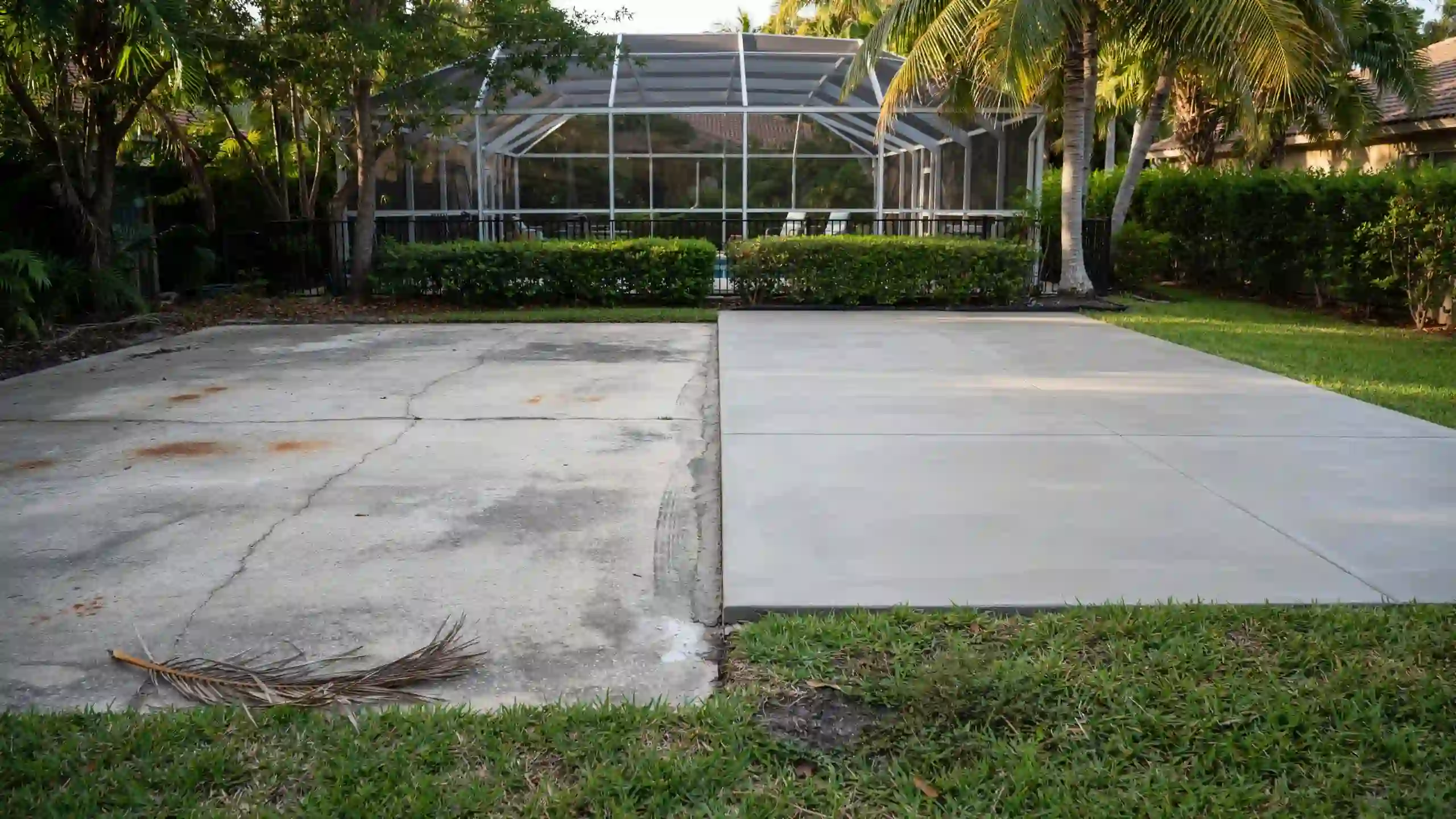
New concrete over an old concrete slab in poor shape fails in predictable ways:
- Old cracks come back through the new layer.
- Low spots and uneven edges stay.
- Settlement keeps going, and the new layer sinks with it.
- The new layer cracks on its own.
- The layers separate, and the top peels or sounds hollow.
- Drainage problems stay in place.
- Extra height blocks doors, garage openings, or steps.
You pay for new concrete and still have the old problem.
How to Prepare Old Concrete Before Pouring New Concrete
Prep decides whether the new layer lasts. Skipping it is the top reason overlays fail.
1. Inspect the Existing Slab
Walk the whole slab. Look for cracks, sinking, and lifted edges. Tap for hollow spots. Press on the edges for soft soil. Run a hose and watch where the water goes.
2. Clean the Surface
Remove dirt, oil, grease, paint, sealers, moss, and leaves. A pressure washer and a degreaser handle most of it. Paint and sealer often need grinding. Pros clean off grease, oil, paint, and weak concrete before a bonded topping, according to the American Society of Concrete Construction’s guidance on slab-over-slab work (source: Journal of Light Construction)
3. Repair Damaged Areas
Fill hairline cracks with a crack filler. Patch spalled spots with repair mortar. Cut out loose concrete. Fill low spots so the slab is reasonably flat.
4. Roughen the Surface When Required
A smooth, slick slab gives the new layer nothing to grab. Grinding, scarifying (scratching the top with a machine), or shot blasting adds grip. For thick bonded toppings, pros may roughen the slab to about 1/4 inch ridges. Sweep or vacuum all the dust off afterward.
5. Make Sure the Surface Is Suitable
Do not stop at “pressure wash and pour.” Check these before you mix anything:
- The slab is clean, rough, and sound.
- It is damp but has no standing water.
- Water beads on the surface? Old sealer is still there. Remove it.
- The extra height clears doors, steps, and garage openings.
- The slope sends water away from the house, about 1/8 to 1/4 inch per foot.
Does New Concrete Stick to Old Concrete?
Not reliably. If you pour fresh concrete onto a smooth, dirty old slab, the layers often separate. A good bond needs a clean, rough surface and the right system for the job.
Bonded Overlay
A bonded overlay is meant to act as one piece with the old slab. That takes a clean, roughened surface. It often takes a bonding agent or a scratch coat of cement slurry too. Bonded layers can be thinner, but they pass old cracks upward more easily.
Unbonded Overlay
An unbonded overlay sits on a separation layer, also called a bond breaker. The new slab and old slab move on their own. This lowers the odds of reflective cracking. The new layer is usually thicker so it can carry its own load.
Neither method wins every time. The right choice depends on the slab’s condition, the use, and the design. A concrete overlay over existing concrete that is sound often works bonded. One over a slab with some movement may call for a bond breaker.
How Thick Should New Concrete Be Over Old Concrete?
There is no single number. Thickness depends on what you are building and which system you use.
| Application | General consideration |
| Decorative or resurfacing work | Often uses a purpose-made overlay product |
| Patio | Depends on the system and the existing slab |
| Walkway | Depends on use and overlay method |
| Driveway | Needs more thought because of vehicle loads |
Some contractors treat 2 inches as the minimum for a bonded pour. Thin polymer overlays go far thinner, but only for surface renewal. Unbonded layers and driveways usually need more, often 3 to 4 inches or beyond.
Thinner layers also need joints placed closer together. For slab depth on new work, see our guide on How Thick Should a Concrete Patio Be.
Remember the height you add. Even 2 to 4 inches can block a door or a garage opening.
Can You Pour New Concrete Over an Old Driveway or Patio?
Yes, in the right conditions. Driveways and patios differ in what can go wrong.
Driveways
A driveway carries cars, trucks, and sometimes a trailer. That load needs a solid slab and enough thickness. Check for sinking near the edges, where water washes soil out. Check the slope to the street. A driveway with settlement or poor drainage needs those fixed first.
Patios and Walkways
These carry foot traffic, so surface wear is the usual complaint. An overlay fits well here when the slab is sound. Watch the height at door thresholds and steps, and keep the slope away from the house.
If your patio is worn but solid, a Concrete Patio in Winter Springs FL can often be renewed. Ron Hodges Inc checks the slab first, so you only pay for what the job needs.
When Should You Remove the Old Concrete Instead?
Replace the slab when the damage goes deeper than the surface. That means:
- Heavy cracking across the slab
- Significant sinking
- A weak or washed-out base
- Severe flaking or crumbling
- Major drainage problems
- Movement in many places
New concrete cannot fix a failed base underneath it. Pull the slab out, fix the soil and base, then pour. The mix matters here too. Our guide on What Are Three Types of Concrete explains your choices.
Pouring Concrete Over Old Concrete vs. Resurfacing
Can you pour new concrete over old concrete, or should you resurface? The two are not the same.
| Option | Best suited for |
| New concrete overlay | Adding a new concrete layer where conditions allow |
| Concrete resurfacing | Mainly surface or cosmetic renewal |
| Repair | Localized damage |
| Replacement | Structural failure |
Resurfacing fits a slab with minor flaws like stains and light wear. A thicker overlay fits when you want a stronger top layer. Repair handles one cracked corner. Replacement handles a failed slab.
What Does It Cost to Overlay vs. Replace?
These are national averages, not a quote. Resurfacing concrete averages $3 to $5 per square foot, and a patio averages about $4. Removing old concrete costs $2 to $6 per square foot, and slabs with rebar cost more.
Picture a 400 square foot patio. Resurfacing runs about $1,200 to $2,000. Tearing it out costs about $800 to $2,400 before you pay for the new slab.
A thicker pour costs more than a thin resurfacer. Decorative finishes add more. The savings come from skipping demolition and hauling. They shrink fast if the slab needs big repairs first. Get written prices for both routes.
Common Mistakes to Avoid
- Pouring Over Major Cracks: Wide or moving cracks can come back. Fix the cause or replace the slab.
- Skipping Surface Preparation: Dirt, oil, and old sealer can block the bond. Clean and roughen the slab first.
- Pouring Too Thin: A layer that is too thin for the intended use may chip or crack. Match the thickness to the job.
- Ignoring Drainage or Settlement: A new layer cannot fix poor drainage or unstable soil beneath the old slab.
- Raising the Surface Too Much: Check doors, steps, garage openings, and nearby surfaces before adding height.
- Using the New Slab Too Soon: Keep foot traffic off fresh concrete for about 24 to 48 hours. Vehicle traffic may need longer, depending on the concrete and project.
Final Verdict
Can you pour new concrete over old concrete? Yes. The condition of the slab matters more than its age.
- A sound slab can take an overlay.
- Minor surface problems may call for repair or resurfacing.
- Settlement, major movement, or structural failure usually means replacement.
Not sure what your driveway, patio, or walkway can handle? Have the slab checked before you choose between overlay, repair, or replacement. Contact Ron Hodges Inc for an honest look and a clear written quote.
FAQs
Can you pour new concrete over old concrete?
Yes, if the old slab is solid, stable, and free of major cracks or sinking. Fix small flaws first, clean and rough up the surface, then use a bonding system or a separation layer. A slab that moves needs replacement.
Can you pour concrete over cracked concrete?
Hairline cracks that do not move are usually fine after repair. Wide, uneven, or growing cracks point to a deeper problem. Fix the cause first, because cracks can reflect up through the new layer and show again.
Will new concrete bond to old concrete?
Not reliably on a smooth, dirty slab. A bond needs a clean, rough surface and often a bonding agent or repair mortar. If you want the layers to move apart, use a separation layer instead.
How thick should concrete be over existing concrete?
It depends on the use and the system. Thin overlays handle surface wear. Patios and walkways need a design that fits the slab. Driveways need more thickness for vehicle loads. Ask your contractor for the spec, not one number.
Is it cheaper to pour concrete over old concrete?
Often, because you skip demolition and hauling, which average $2 to $6 per square foot. Repairs, a thicker pour, or a decorative finish can erase that gap. Compare written quotes for both routes.
Should you remove old concrete before pouring new concrete?
Yes, when the slab has deep cracks, sinking, weak soil under it, heavy flaking, or water that will not drain. A new layer cannot fix a bad base. Remove the slab and rebuild the base.