
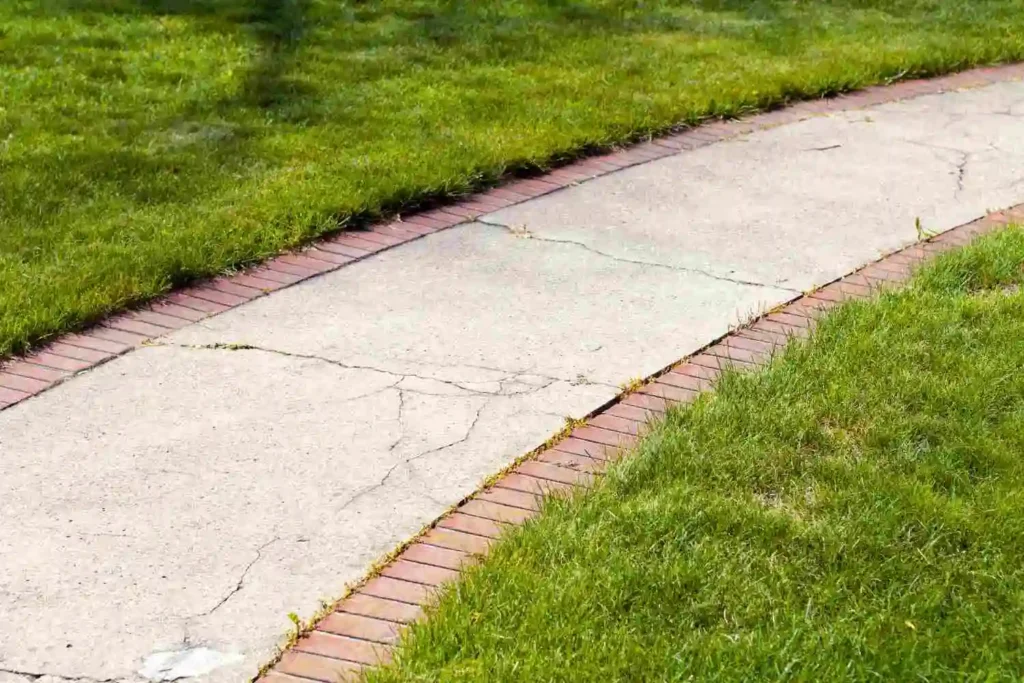
Streets and sidewalks are almost exclusively constructed of concrete, as evidenced by nearly every sidewalk found outside homes, stores or city blocks. What are sidewalks made of? is an assembly of cement, sand gravel and water mixed together and then reinforced for years of foot traffic, rainfall and heat exposure.
However, concrete isn’t always what’s underfoot. Some walkways feature asphalt surfaces; others can feature brick designs; yet others still may use recycled rubber materials or recycled tire bits! Below we will outline which mix contractors typically utilize and when one or more alternatives might make more sense for your property.
What Are Sidewalks Made Of?
U.S. sidewalks, both those you maintain at your own house and those maintained by cities, are predominantly constructed out of concrete.
A contractor is hired to mix cement, sand, crushed stone or gravel and water into a workable paste before pouring it onto wooden or metal forms for smooth surface quality and cutting joints into it so temperature changes don’t cause random fractures of its surface.
Concrete remains popular due to its affordability compared to alternative paving materials and strength for everyday traffic conditions, along with reparability through individual slab replacement rather than all at once. But before proceeding further there’s one potential miscommunication we should address.
Are Sidewalks Made of Concrete or Cement?
Sidewalks are concrete surfaces, not cement as people often conflate them in everyday conversation. While people use both terms interchangeably, here’s the distinction:
Cement is a fine grey powder on its own; however, it cannot support human footstep on its own. What it really serves for is acting as the glue; binding all other elements together when water is added to a mix.
Portland cement is often found in American sidewalk mixes; thanks to this ingredient concrete can harden over the weeks following curing. Concrete is what’s created when cement is combined with other ingredients like sand, gravel and water – not an end result on your doorstep!
So when contractors mention pouring “cement”, they mean concrete as no one walks on an endless stretch of cement powder!
If a contractor uses that term when discussing walkway installations for you – and that contractor says they’re pouring “cement”, that actually refers to something quite different!
What Is Concrete Made Of? (The Sidewalk Mix Breakdown)
A standard sidewalk mix comes down to five ingredients, and each one is doing a specific job.
- Cement (Portland cement, usually): the binder that reacts with water and locks everything else together.
- Sand (fine aggregate): fills the gaps between the bigger rock particles and smooth out the texture.
- Gravel or crushed stone (coarse aggregate): the bulk of the mix, often 60 to 75 percent of the total volume, and where a lot of the slab’s strength comes from.
- Water: starts the chemical reaction that hardens cement. Too much water and you weaken the slab, which is why contractors pay attention to the water-cement ratio instead of just eyeballing it.
- Air-entrainment admixture: a chemical that creates microscopic air bubbles through the mix, giving frozen water inside the concrete somewhere to expand into. Standard in cold-climate states, less critical in Florida.
Get the ratio off and you’ll see cracking or surface flaking within a year or two. Get it right and a sidewalk will realistically outlast the house it sits in front of, often 25 to 30 years with basically no maintenance.
What Type of Concrete Is Used for Sidewalks?
Most residential sidewalks are usually installed using a pressure of 3,000 PSI; some contractors may increase it up to 4,000 PSI for high traffic areas or extra durability. PSI measures how much pressure a slab can withstand before it cracks under strain; the higher number signifies stronger slabs at an increased cost.
A typical residential mix specification looks something like this:
- Strength: 3,000 to 4,000 PSI
- Thickness: 4 inches under normal foot traffic, 5 to 6 inches anywhere a vehicle might cross it, like a driveway apron
- Slump: about 4 to 5 inches, a measure of how workable the wet mix is before it sets
- Reinforcement: wire mesh, rebar, or fiber mesh worked into the concrete
- Air entrainment: required where winters freeze and thaw, optional in warmer states
Commercial sidewalks that need to meet ADA accessibility rules usually go up to a 5-inch minimum thickness, with tighter grading tolerances so the surface stays level for wheelchairs and walkers.
Other Materials Sidewalks Can Be Made Of
Concrete is the default, but it’s far from the only option out there, and depending on your budget or the look you’re going for, one of these might fit better.
Asphalt Sidewalks
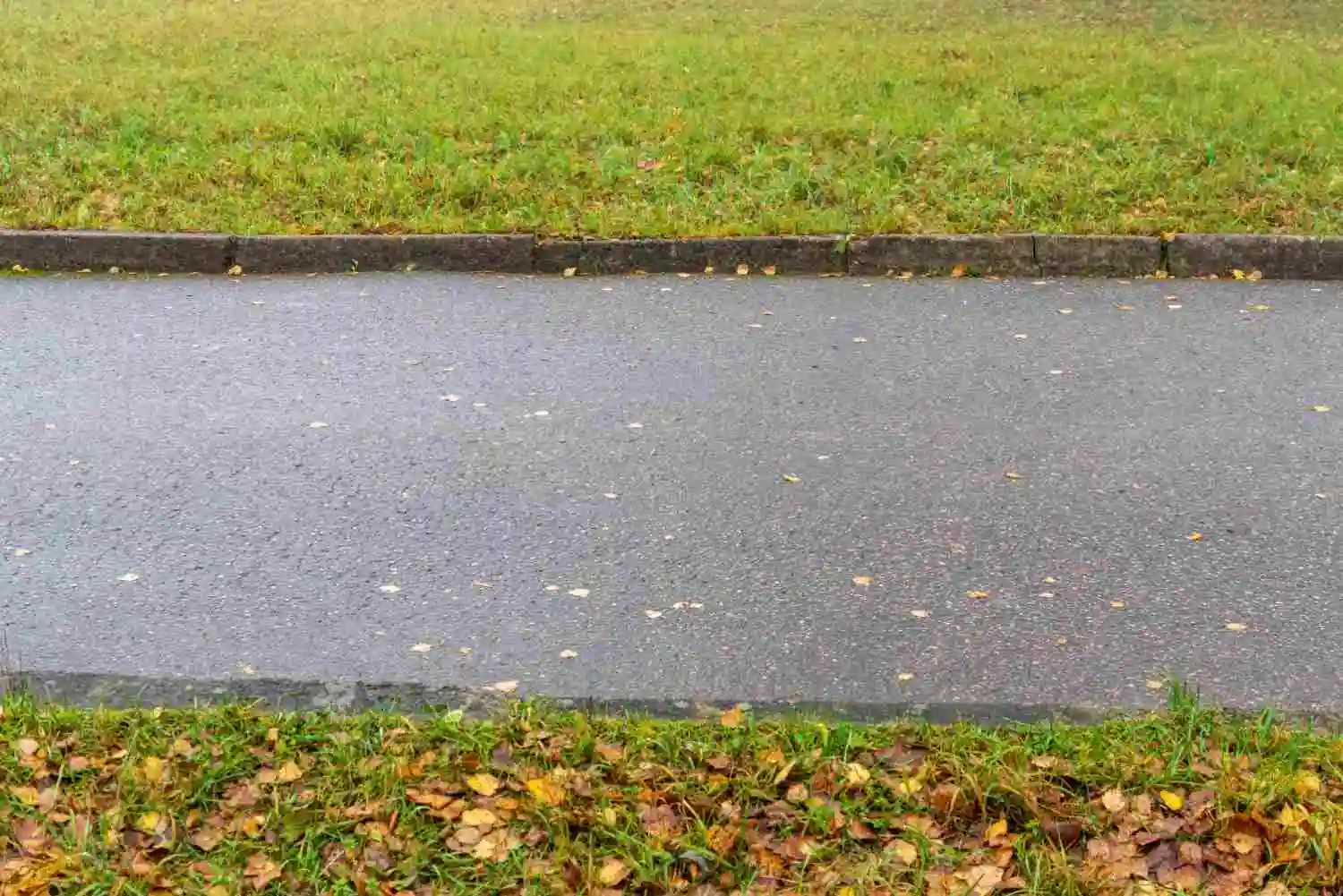
Asphalt is bitumen mixed with crushed stone, basically the same stuff under most roads. It’s less expensive to install than concrete and has a bit of flex to it, which helps in spots where the soil shifts. The tradeoff is a shorter lifespan and the need to reseal every handful of years.
Brick and Paver Sidewalks
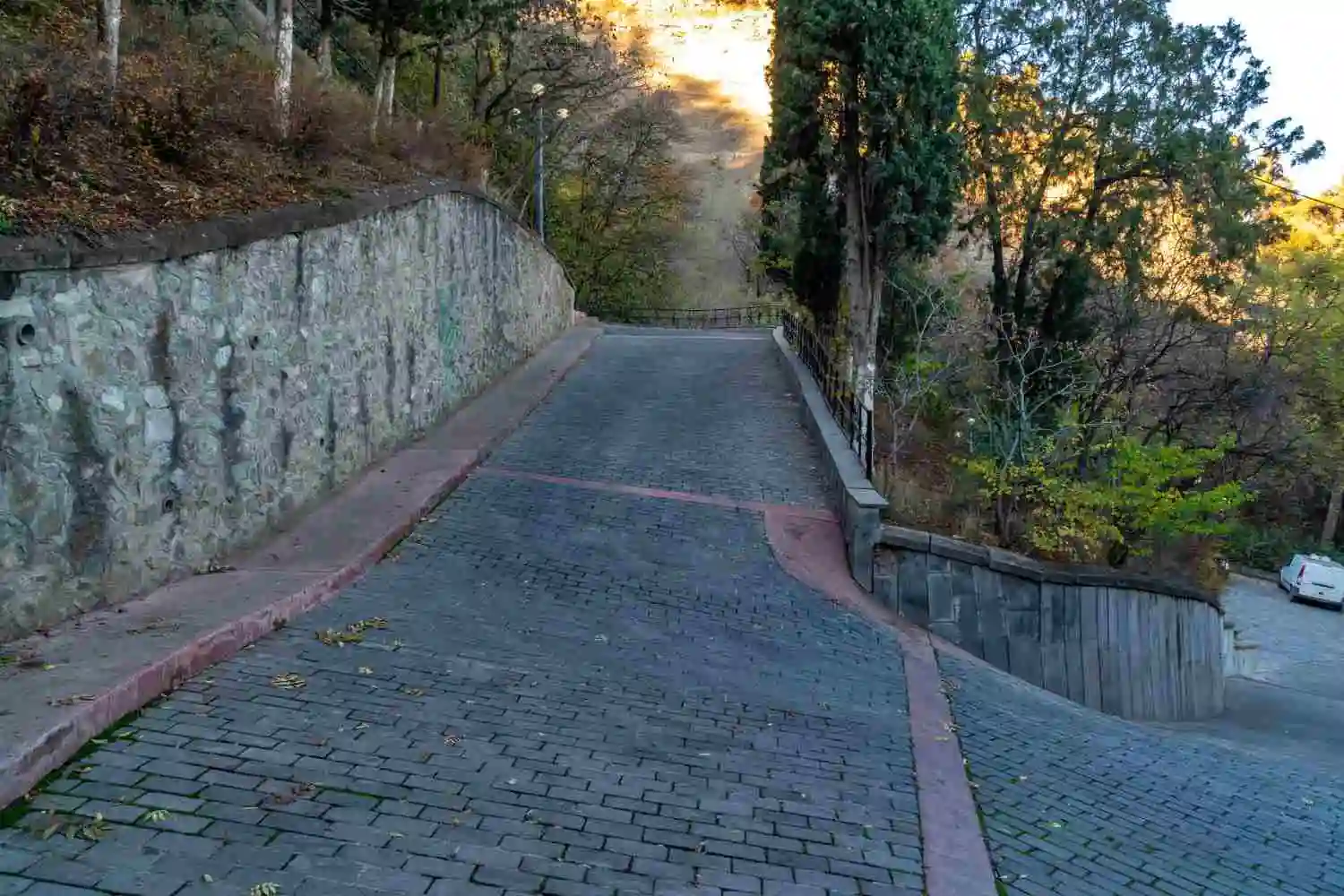
You’ll see brick pavers a lot in older neighborhoods and near heavily landscaped front yards. They’re set piece by piece into a sand or gravel base, which actually makes repairs simpler in one sense: you pull the damaged brick and drop in a new one instead of tearing out a whole slab.
Natural Stone (Flagstone) Sidewalks
Flagstone paths use flat, irregular stone pieces bedded in sand, gravel, or mortar. They look great, no argument there, but they cost more up front and need someone who actually knows what they’re doing to keep the surface even and safe to walk on.
Gravel and Crushed Stone Paths
The cheapest way to build a path, and it drains well, but loose gravel shifts underfoot over time and doesn’t meet ADA requirements. Fine for a garden path. Not something you’d want as a main entry walkway.
Rubber Sidewalks
Recycled rubber tiles flex around tree roots instead of cracking the way concrete does. A growing number of cities install rubber panels specifically near mature trees, because tree roots are one of the top reasons standard concrete sidewalks heave and crack in the first place.
Permeable (Pervious) Concrete
This is concrete made with little to no sand, which leaves small gaps that let rainwater soak straight through instead of pooling or running off. More cities are requiring it, or at least incentivizing it, as a way to manage storm water without adding drains.
Concrete vs. Other Materials: Quick Comparison
| Material | Average Lifespan | Cost per Sq. Ft. (Installed) | Best For |
| Concrete | 25–30+ years | $6–$17 | Most homes, driveways, public sidewalks |
| Asphalt | 12–20 years | $3–$7 | Budget projects, shifting soil |
| Brick pavers | 25–50 years | $10–$20 | Historic homes, decorative walkways |
| Natural stone | 30+ years | $15–$30 | High-end landscaping, custom paths |
| Gravel | 5–10 years (needs refilling) | $1–$3 | Garden paths, informal walkways |
| Rubber tiles | 20+ years | $12–$20 | Areas with large tree roots |
| Permeable concrete | 20–25 years | $10–$20 | Storm water management, eco-friendly builds |
These are general national ranges for installed residential work. Your actual quote will move around based on region, site prep, and the finish you pick.
How Sidewalks Are Reinforced
Reinforcing concrete helps maintain its integrity over the years. Wire mesh is often chosen as it sits centrally within a slab to prevent hairline cracks from widening further; thicker pours that need real weight distribution like driveway apron require thicker pours with more weight-bearing capabilities, such as using rebar.
Fiber-reinforced concrete takes an alternative route by mixing synthetic fibers directly into wet concrete for extra surface cracking prevention without the additional labor of placing mesh or bar manually.
Contractors also enact additional measures, like cutting control joints and placing expansion joints roughly every 4 to 6 feet.
Concrete shrinks slightly as it cures regardless of what you do, so these joints provide it with a planned line to crack rather than random spots all across a sidewalk you walk down – that is why you see those regular seams running across every sidewalk you pass – they serve an essential function and should never be mistaken as decoration!
Ready for a New Concrete Walkway?
Knowing What are sidewalks made of? Getting one poured correctly is another. A slab with the wrong PSI, thin coverage, or no proper base under it will start cracking within a couple of years, no matter how clean it looks the day it’s finished.
Ron Hodges Inc has handled Concrete Walkway Installation Winter Springs FL homeowners rely on for years, using properly reinforced 3,000+ PSI mixes, correct slab thickness, and a compacted gravel base on every job we do. We also work in Oviedo and Longwood, FL, for both residential and commercial concrete projects. Contact Ron Hodges Inc to plan a walkway built for long-term durability.
FAQs
What is a sidewalk made of?
Most sidewalks are concrete, a mix of cement, sand, gravel, and water. Some are asphalt, brick, stone, or rubber instead.
Is a sidewalk concrete or cement?
Concrete. Cement is one ingredient inside concrete, not the material you’re actually walking on.
What PSI concrete is used for sidewalks?
Residential sidewalks are typically 3,000 PSI. Some contractors go up to 4,000 PSI for heavier traffic areas.
How thick is a concrete sidewalk?
Standard residential sidewalks run 4 inches thick. Spots where vehicles cross, like driveway aprons, usually need 5 to 6 inches.