
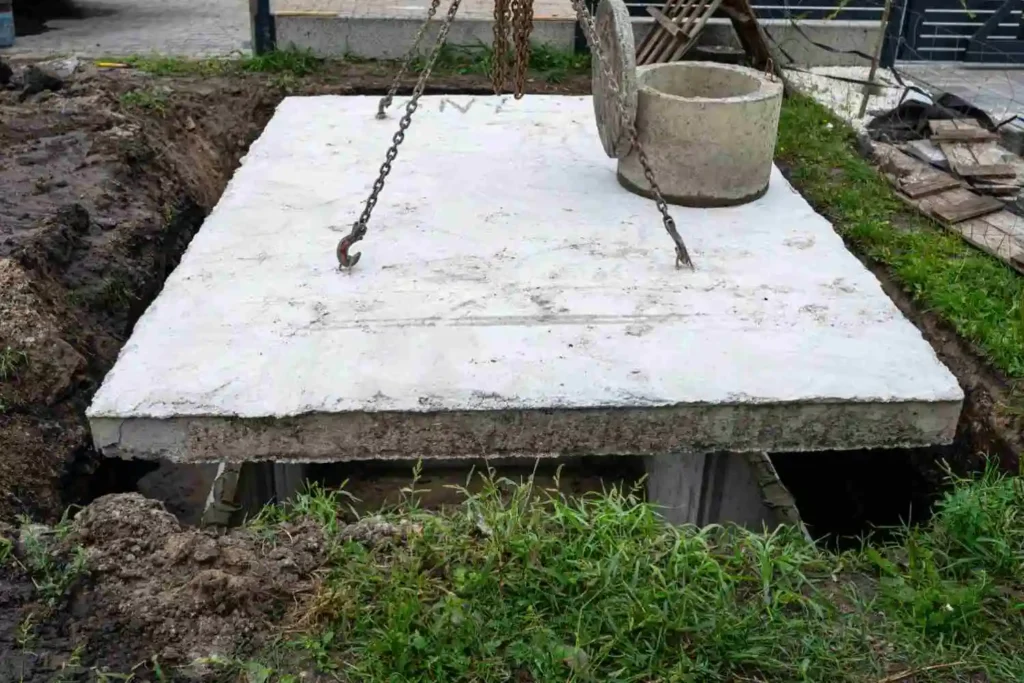
Short answer: about 4,000 to 4,050 pounds. Call it 2 tons. Break that down further and you’re looking at roughly 150 pounds for every cubic foot. It’s one of those numbers that sounds simple until you actually need it for something real, like figuring out if a delivery truck can reach your driveway, planning what a dumpster will hold after a demo job, or working out how much does a yard of concrete weigh?
I’ve spent over 30 years pouring concrete around Central Florida, and this is one of those questions that sounds basic until you actually need the number for something. So let’s get into it, with real figures, not just the textbook average.
What Is a Cubic Yard of Concrete, Anyway?
A cubic yard is 3 feet by 3 feet by 3 feet. Do the math and that’s 27 cubic feet. Every ready-mix supplier in the U.S. prices and delivers concrete by this measurement, so it’s not just some abstract unit, it’s what shows up on your invoice.
If it helps to picture it: think of a cube roughly the size of a large chest freezer. That’s about what one cubic yard looks like before a crew spreads it out into a concrete slab. Suppliers don’t sell by the bag or the square foot. They sell by the yard. That’s the number that matters.
The Actual Weight Numbers (Not Just the Average)
Here’s where people get tripped up. Concrete doesn’t weigh one fixed amount. It depends on whether it’s wet, cured, or already broken into chunks.
| Concrete State | Weight per Cubic Yard | Weight per Cubic Foot |
| Wet, freshly mixed | 4,000–4,050 lbs | ~150 lbs |
| Fully cured, dry | 3,600–3,700 lbs | ~135 lbs |
| Broken/demo rubble | ~2,025 lbs | ~75 lbs |
If you’re working in metric, that’s roughly 1,830 kilograms per yard, or about 1.8 metric tons.
The formula behind all of it isn’t complicated: Weight = Volume × Density. Multiply 27 cubic feet by about 150 pounds per cubic foot and you land close to 4,050 pounds. Every concrete weight calculator out there is built on that same math, ours included, when we’re pricing out a job.
People often ask how much does a cubic yard of concrete weigh when they’re really trying to estimate a whole truckload. Just scale it up. Five yards runs close to 20,000 pounds, about 10 tons, since each yard adds around 4,000 pounds. So if the real question is how much does 5 yards of concrete weigh, now you know, and it’s also why a driveway pour almost always calls for a full-size mixer instead of a smaller truck.
Does Curing Actually Change Weight?

Most people assume wet concrete, loaded with water, must weigh a lot more than the same slab once it’s hard. It doesn’t, at least not by much.
Here’s what’s actually happening. As concrete cures, water reacts with the cement through a process called hydration. A big chunk of that water gets locked into the hardened material rather than just drying away. Some surface moisture evaporates, sure, but the concrete is also getting denser as it sets. Those two things basically cancel each other out. It’s a small detail, but one that most calculator sites gloss right over.
Bottom line: plan around the full weight whether the slab was poured yesterday or cured six months ago. The gap is small enough that it won’t throw off your delivery plan or your load calculations.
What Actually Moves the Number
That 4,000-pound figure is a starting point, not a rule carved in stone. A few things push it up or down.
Aggregate type matters most. Standard mixes lean on gravel or crushed stone, which is where that 150-pound-per-cubic-foot figure comes from. Switch to a lightweight aggregate, like pumice or expanded clay, and you can knock the weight down 25 percent or more. Go the opposite direction with something like barite or magnetite, used for things like radiation shielding, and you’re pushing well past 6,000 pounds per yard.
For a driveway, patio, or walkway, though, you’re basically always dealing with standard gravel aggregate.
Water-to-cement ratio plays a smaller part. Add more water and the mix thins out a little, which lowers density slightly, but it also weakens the concrete. That’s why a good crew keeps that ratio tight instead of loosening it up just to make the pour easier to handle.
Rebar and wire mesh add weight, but for a residential job, not much. A slab with standard wire mesh picks up maybe a few extra pounds per yard. On a heavily reinforced footing or a commercial foundation loaded with rebar, steel can tack on several hundred pounds per yard. Steel runs about 490 pounds per cubic foot, compared to concrete’s 150, so it doesn’t take much to add up.
One more thing worth mentioning, and it’s a Florida-specific detail most guides skip: air entrainment. Contractors up north add tiny air bubbles to concrete so it can survive freeze and thaw cycles without cracking apart.
That extra air makes the mix a bit lighter. Down here, freeze-thaw damage just isn’t something we deal with, so most residential mixes in Central Florida skip heavy air entrainment and stick closer to that full 150-pound figure. Small detail, but it’s the kind of thing that actually shows up in your numbers.
Concrete Weight by Mix Type

| Mix Type | Weight per Cubic Yard | Common Use |
| Standard (gravel aggregate) | 3,700–4,220 lbs | Driveways, patios, walkways, slabs |
| Reinforced (with rebar) | ~4,200 lbs | Footings, retaining walls |
| High-strength | 4,200–4,500 lbs | Commercial columns, structural work |
| Lightweight | 2,360–3,120 lbs | Upper floors, weight-sensitive retrofits |
| High-density | 4,700–6,700+ lbs | Specialty, industrial applications |
For almost every homeowner job we take on, the standard range is the one that applies. You’d have to be doing something unusual to land anywhere else on that chart.
What This Looks Like on a Real Job
Charts are fine, but they don’t mean much until you tie them to an actual project. So here’s what a handful of common jobs actually weigh out to.
| Project | Approx. Cubic Yards | Approx. Total Weight |
| 10×10 ft patio, 4 inches thick | ~1.2 yd | ~4,900 lbs |
| Standard 2-car driveway, 4 inches thick | 7–10 yd | 28,000–40,000 lbs |
| Walkway, 100 ft x 4 ft, 4 inches thick | ~5 yd | ~20,000 lbs |
| Paver base prep slab | Varies | Depends on thickness |
If you’re staring down a new driveway and trying to figure out how many yards of concrete in a driveway you’ll actually need, most standard two-car driveways fall somewhere between 7 and 10 cubic yards.
That’s a big enough pour that it usually needs a full-size ready-mix truck, and sometimes more than one load depending on how the driveway’s laid out. If you’re weighing a concrete driveway installation or replacement against putting in a new patio instead, we can walk through the real numbers for your property, not just averages pulled off a chart.
How Much Concrete Fits in a Truck?

A standard ready-mix truck, the one with the big rotating drum you see driving around, carries somewhere between 9 and 11 cubic yards per load. At about 4,000 pounds a yard, a full 10-yard load works out to roughly 40,000 pounds of concrete, and that’s not even counting the truck itself.
That matters more than most people realize. A fully loaded mixer, truck plus concrete, can weigh close to 60,000 pounds or more. A lot of older asphalt driveways, soft lawns, and tighter access roads around Winter Springs, Oviedo, and Longwood weren’t built to handle that kind of weight. Before a big pour, it’s worth walking the delivery path yourself and checking for soft shoulders, low branches, or turns the truck simply can’t make.
We always check access before locking in a delivery date, because a truck that can’t get to the pour site turns a routine job into a delay nobody planned for.
Working Out the Weight for Your Own Project
You don’t need to be a contractor to figure this out. It comes down to three steps.
Step 1. Find the volume in cubic feet. Length times width times thickness, all in feet. A 4-inch slab converts to 0.33 feet.
Step 2. Convert cubic feet to cubic yards. Divide by 27.
Step 3. Multiply by the weight per yard. Use 4,050 pounds for a standard mix.
Let’s run through an example. Say you’re pouring a 20 by 10 foot slab, 4 inches thick.
20 x 10 x 0.33 = 66 cubic feet 66 ÷ 27 = 2.4 cubic yards 2.4 x 4,050 = about 9,720 pounds
That’s roughly 5 tons for one slab. The same three steps work whether you’re pricing out bagged concrete for a small repair or ordering ready mix for a full driveway. Going the bagged route? An 80-pound bag covers about 0.6 cubic feet, so it takes around 45 bags to make a full cubic yard.
A 60-pound bag needs about 60 bags, a 40-pound bag needs about 90. Once a job gets bigger than a small patch, ready-mix delivery is almost always cheaper, and a lot less back-breaking than hauling dozens of bags out of a truck bed.
Going the other direction, tearing out old concrete instead of pouring new, the math shifts. Broken concrete weighs about half of solid concrete per yard, close to 2,025 pounds, thanks to all the gaps between the chunks. That number matters for the dumpster weight limit for concrete disposal too. Most 10-yard dumpsters cap out around 10 tons, or 20,000 pounds, which usually means they’ll hold about 5 cubic yards of solid slab, a bit more if it’s already broken up.
Where This Leaves You
A cubic yard of concrete weighs about 4,000 to 4,050 pounds, roughly 2 tons. That holds true for the vast majority of residential driveways, patios, and walkways poured across Central Florida. The number shifts a bit depending on the mix, the aggregate, and whether you’re dealing with fresh concrete or broken rubble, but 4,000 pounds a yard is a safe number to plan around, whether you’re thinking about delivery, disposal, or structural load.
If you’re planning a driveway, patio, or walkway pour anywhere in Winter Springs, Oviedo, or Longwood, Ron Hodges Inc handles the mix, the delivery, and every detail of the pour so you don’t have to figure any of it out on your own. Contact us now and we’ll walk your project from the first measurement to the finished slab.
FAQs
How much does a yard of concrete weigh in tons?
About 2 tons. That’s 4,000 to 4,050 pounds for a standard cubic yard.
How much does 5 yards of concrete weigh?
Around 20,000 pounds, close to 10 tons, figuring roughly 4,000 pounds per yard.
How much does concrete weigh per cubic foot?
About 150 pounds for a standard mix.
How much does broken concrete weigh?
Roughly 2,025 pounds per cubic yard, about half the weight of a solid slab, because of the gaps between the broken pieces.
How many yards of concrete are in a driveway?
A standard two-car driveway poured 4 inches thick usually needs 7 to 10 cubic yards, depending on the exact length and width.
Is a yard of cement the same as a yard of concrete?
No. Cement’s just one ingredient in concrete, mixed in with sand, gravel, and water. Dry Portland cement weighs a lot less per yard than finished concrete, which lands around 4,050 pounds once everything’s combined.