
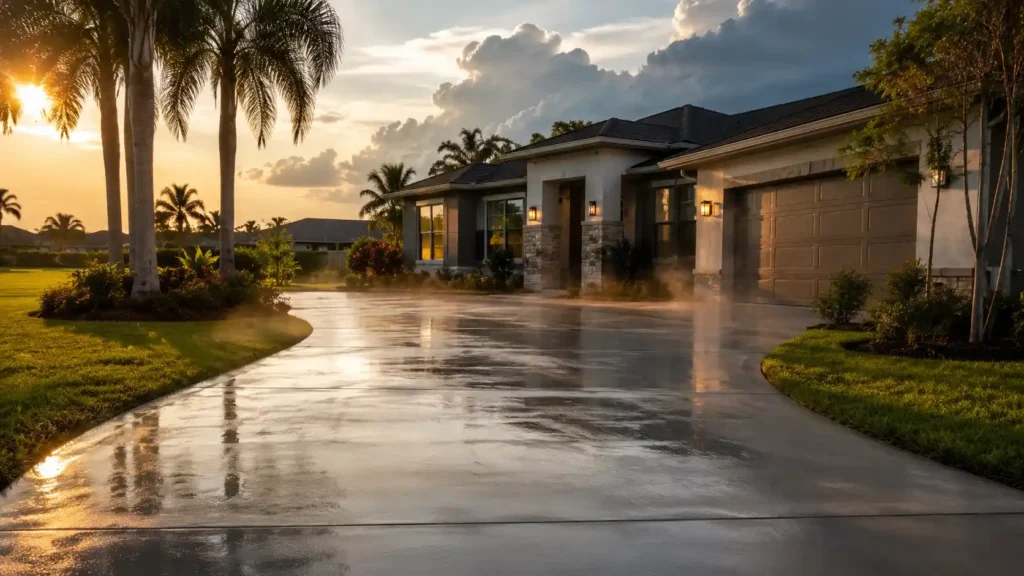
Step on your new driveway too soon and you could leave a footprint that’s there for the next 20 years. That’s not a scare tactic it’s just what happens when Florida heat tricks you into thinking concrete is ready before it actually is.
If your driveway, patio, or walkway was just poured in Winter Springs, Oviedo, or Longwood, you’re probably standing at the window right now wondering how long does concrete take to dry before you can walk on it, park on it, or drag your patio furniture back into place. Here’s the real answer, built around Florida weather instead of a generic national chart.
Quick Answer
New concrete is safe to walk on in 24–48 hours, safe for cars in about 7 days, and reaches full design strength around 28 days. In Central Florida, heat dries the surface fast while the inside stays soft, and summer humidity or rain can stretch that timeline out even further.
Drying and Curing Aren’t the Same Thing
Here’s the thing most people miss: drying and curing are two completely different processes, and mixing them up is what causes most early cracking.
Drying is just surface moisture leaving the slab. It’s what you can see and feel when you walk outside and touch the concrete.
Curing is a chemical reaction called hydration water and cement molecules bond together to form crystals that lock the mix into a solid, load-bearing structure. That process runs for weeks, not hours, and it’s invisible from the surface.
Think of it like a cake. The top can look golden and set the moment it comes out of the oven, but the center is still soft and needs time to finish baking. Concrete works the same way the surface tells you almost nothing about what’s happening a few inches down.
This gap between “looks dry” and “is actually strong” is exactly why so many Florida driveways develop cracks in the first few weeks. The water-to-cement ratio your contractor uses also plays into this: a lower ratio cures stronger, but it dries the surface faster in the heat, which means the timing of your curing steps matters more here than it does in a cooler climate.
Pro Tip: Ask your contractor what water-to-cement ratio they’re using before the pour. A ratio under 0.50 is generally considered strong for driveways carrying regular vehicle traffic.
The Concrete Curing Timeline
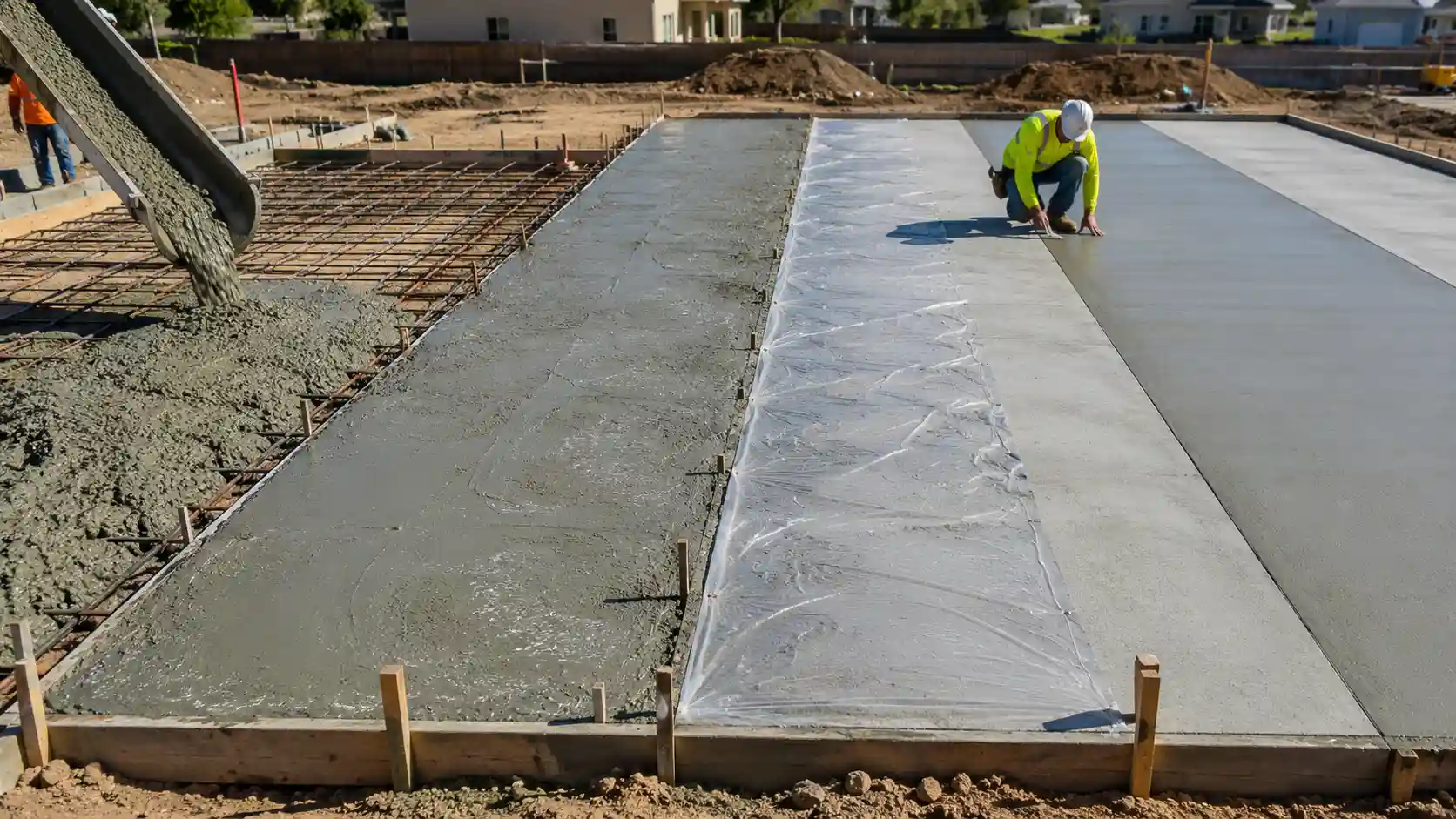
Here’s how strength builds over the full 28-day cure period the benchmark the concrete industry uses to judge a slab’s design strength.
| Timeframe | What’s Happening | Approx. Strength |
| Day 0–1 | Surface sets, needs full protection, no traffic at all | Under 40% |
| 24–48 hours | Safe to walk on carefully | 40–50% |
| Day 2–6 | Light foot traffic only, no heavy items | 50–65% |
| Day 3–7 | Forms typically removed | 65–70% |
| 7 days | Safe for cars and light trucks | 65–75% |
| Day 8–27 | Slab keeps gaining strength daily | 75–90% |
| 28 days | Full structural capacity reached | 90–100% |
If you’ve been typing how long does concrete take to dry into Google at 11pm because you’re worried about your car sitting in the driveway too early this table is your answer in plain numbers.
What Actually Changes Concrete Drying Time in Florida
Florida weather doesn’t play by the same rules as the rest of the country, and that changes how you should think about timing.
Heat Dries the Surface Too Fast
Once temperatures climb above 90°F, surface evaporation speeds up dramatically. The top of the slab can look completely dry within hours but the hydration reaction underneath still needs steady moisture to keep working.
When the top dries out ahead of the inside, you get:
- Shrinkage cracks across the surface
- A dusty, chalky top layer
- Weak spots that show up months later, not immediately
Humidity Slows Internal Moisture Loss
High humidity works in the opposite direction. It keeps surface moisture from escaping quickly, which sounds like a good thing but it also means the slab holds excess water longer than expected.
Combine that with slab thickness and low wind, and a thick driveway pour during a humid stretch can take noticeably longer to reach a safe moisture level before flooring or sealing goes on top.
Summer Thunderstorms Are the Real Risk
Rain hitting the concrete within the first few hours can wash out the surface paste and leave a pitted, weak top layer behind and yes, this actually happens more than people expect during a typical Central Florida summer.
After the first 24 hours, that risk drops off. But a hard storm during the first week can still soften unprotected concrete. If a pop-up storm looks likely, cover fresh concrete with plastic sheeting before you leave the job site not after the sky turns dark.
Sandy Soil Changes How the Slab Cures From Below
Central Florida’s sandy soil drains fast, which helps keep standing water off a compacted base. But that same fast drainage means the ground can pull moisture out of the bottom of a slab unevenly.
A properly graded, well-compacted base helps the concrete cure evenly from top to bottom skip that step and you’re looking at a slab that dries unevenly and cracks along uneven stress points.
How Long Different Concrete Projects Take to Dry
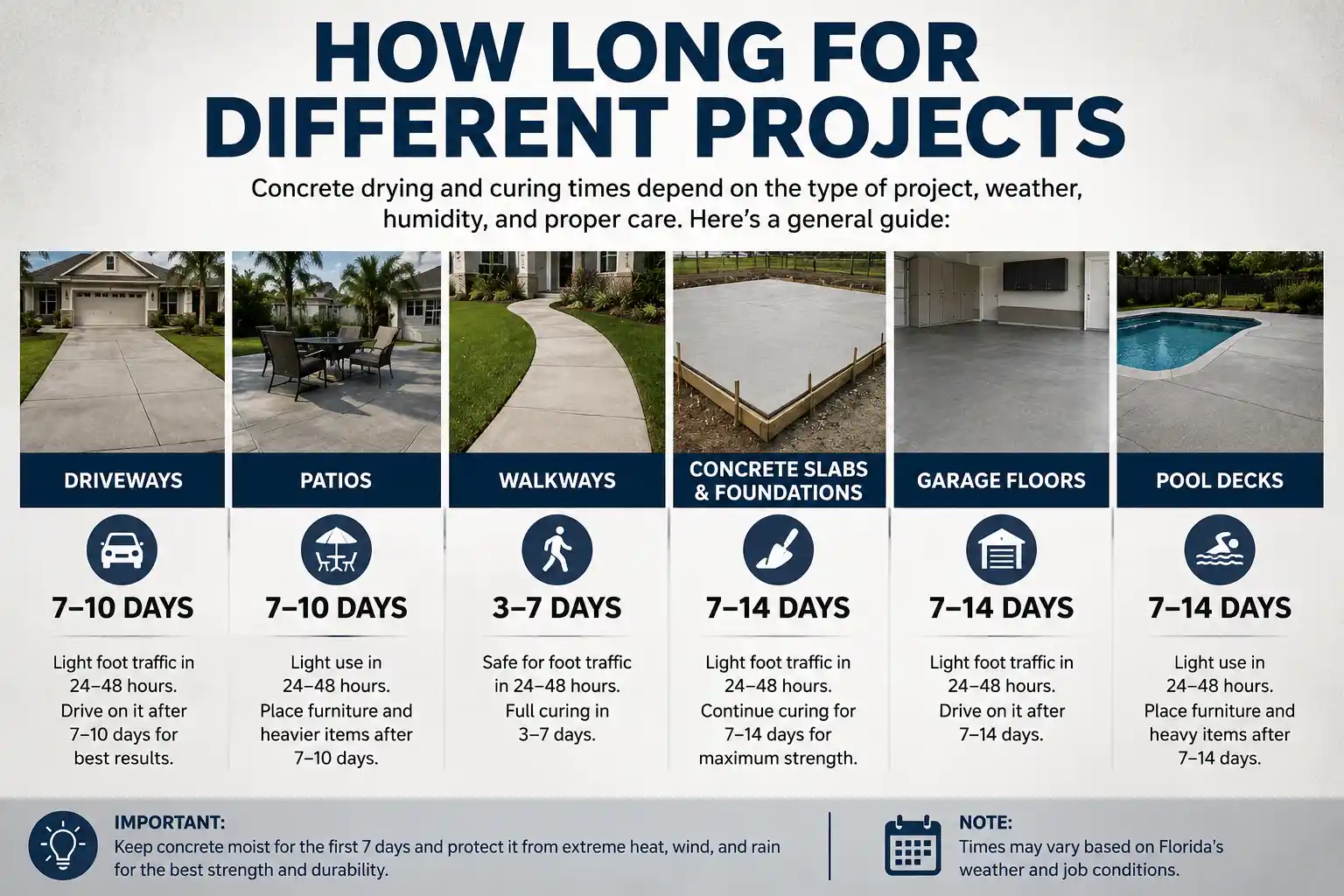
Not every project follows the exact same clock. Here’s how the timeline shifts depending on what’s going in the ground.
Concrete Driveways
Driveways carry the heaviest load of anything on this list, so the full 7-day wait for passenger vehicles matters most here. Hold off on anything heavier an RV, a moving truck, a dumpster delivery until you hit the full 28 days.
Concrete Patios
Patios see lighter use, mostly foot traffic and furniture. You can typically walk on a new patio within 24–48 hours, but wait at least a week before setting furniture back down. Put a table out too soon and you’ll press leg marks straight into the surface.
Concrete Walkways
Sidewalks and walkways cure the same way patios do. Light foot traffic within two days is fine, but skip dragging heavy planters or equipment across them for the first week.
Paver Installation
Pavers play by different rules entirely they arrive already hardened, so there’s no curing reaction happening at all. What actually needs time is the compacted base underneath and the joint sand settling into place. Give a new paver patio or walkway a few days of light use before heavy furniture or a grill goes back on top.
Sand and Seal Timing
For a sealed paver surface, let the pavers and joint sand fully settle first typically a week or more before applying sealer. Fresh sealer needs about 24 hours to dry clear of foot traffic and shouldn’t get rained on before it sets. This is exactly why sealing timing should follow an actual weather forecast, not just a date circled on the calendar.
Common Mistakes That Ruin a Fresh Pour
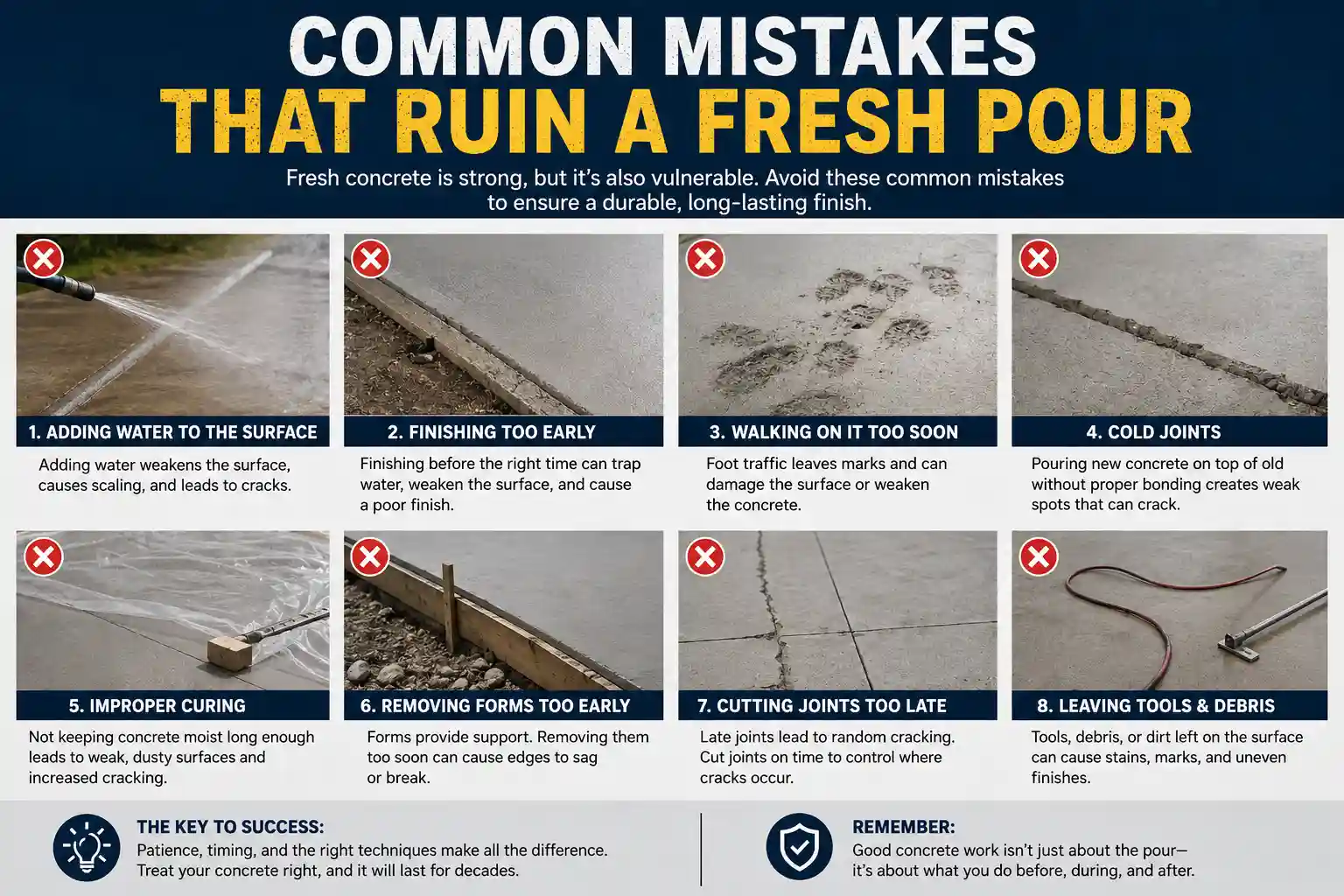
Knowing how long concrete takes to dry only helps if you actually avoid the mistakes that undo all that waiting:
- Driving on it before day 7, even if the surface looks solid
- Pressure-washing new concrete before it’s fully cured
- Leaving a slab uncovered when storm clouds are building
- Sealing too early, before the concrete has cured long enough underneath
- Letting sprinklers hit the slab during the first week
- Skipping control joints, which help prevent random cracking as the slab shrinks
If you’ve made one of these mistakes already, don’t panic a slab that got driven on a day early usually survives fine. Repeated early loading or a full week of neglect is what actually causes lasting damage. When in doubt, call your contractor and ask them to take a look before you assume the worst.
How to Help Your Concrete Cure Right in Florida Heat
- Keep the slab damp with light misting during the first few days, especially in direct sun
- Cover it with wet burlap or curing blankets during peak heat hours
- Have plastic sheeting ready before afternoon storms roll in not after
- Avoid pouring during the hottest part of the day when you have a choice
- Water by hand instead of letting sprinklers hit the fresh slab
- Rig up shade with a tarp if the pour sits in direct sun most of the day
- Ask your contractor about curing compounds for large driveway pours
Professional crews will sometimes use a moisture meter or RH probe under ASTM F2170 guidelines to confirm a slab is actually ready for flooring or sealing especially on garage slabs where getting it wrong means tearing out flooring later. Depending on the weather and the job, some mixes also call for accelerators, retarders, or fiber reinforcement, which is something we factor into every pour based on the season it’s going in.
Ready for a Driveway, Patio, or Paver Project?
We’ve poured concrete and installed pavers across Winter Springs, Oviedo, and Longwood long enough to know exactly how Florida heat, humidity, and sudden storms affect a fresh slab and how to plan around all three. Whether you need a new driveway, a patio, a walkway, or a full paver installation, we’ll walk you through the realistic timeline before we ever break ground.
The Bottom Line
Plan on two days before you walk on it, a full week before you drive on it, and 28 days before it’s carrying full weight without question. Heat, humidity, and summer storms all shift that timeline in Central Florida, which is exactly why local experience beats a generic online chart every time.
We build every pour around Florida weather from the very first step not as an afterthought. Contact us today.
FAQ
How long before I can drive on my new driveway?
Wait a full 7 days before driving passenger vehicles on it, and hold off 28 days before parking anything heavier, like an RV or moving truck.
Can I walk on new concrete after it rains?
If the rain hits after the first 24 hours, light walking is usually fine once the surface firms back up. Rain in the first few hours is more serious and should get checked by your contractor.
Does Florida heat make concrete cure faster?
Heat speeds up how fast the surface dries, but the actual curing strength still takes the full 28 days no matter how hot it gets outside.
Why does my concrete look dry but still feel soft?
That’s the drying-versus-curing gap in action — the surface moisture evaporates in hours, but the hydration reaction that builds real strength keeps working for weeks underneath.
How long should pavers set before sand and seal?
Give the joint sand about a week to settle before sealing, and longer than that if it’s been a rainy stretch.
What happens if it rains right after the pour?
Fresh concrete rained on within the first couple hours can lose surface strength and may need patching or refinishing before it’s usable.