Should I clean pavers before sealing? Yes, every single time. Sealer locks in whatever sits on the surface, so trapped dirt, stains, and a weak bond all end up under the coat.
Skip the cleaning and you get dark stains, a cloudy finish, and sealer that peels early. Ron Hodges Inc has sealed Florida pavers for over 30 years, and this one step decides how the job turns out. Here is what to remove, how to clean, and when to call a pro.
Do You Have to Clean Pavers Before Sealing?
Yes. Ask a paver crew should I clean pavers before sealing and you will hear the same answer. Sealer does not cover up dirt. It bonds to whatever is on top, so dust, pollen, and debris stop it from gripping the paver itself.
Stains are the bigger problem. Once sealer goes over a stain, that stain is permanent. You can’t scrub through a cured coat. The only fix is stripping the sealer and starting over.
What Happens If You Seal Dirty Pavers?
Four things go wrong, and each one costs time or money to fix.
Stains Show Up Darker
Sealer, especially a wet-look sealer, deepens color. A faint oil spot you barely noticed turns into a dark patch that stands out.
Cloudy or Patchy Finish
Dust and trapped moisture under the coat create haze. The sealer dries unevenly, so glossy spots sit next to dull ones.
Bubbling and Peeling
Sealer needs clean paver pores to grip. Over dirt, it lifts in bubbles and then peels away in flakes.
Sealer Wears Out Faster
A weak bond means sun, rain, and foot traffic break the coat down early. You end up paying to seal twice.
What Needs to Come Off Before You Seal?
Walk the whole surface first. Look for these problems and deal with each one before you open a bucket of sealer.
| Problem | Best Way to Deal With It |
|---|---|
| Dirt and pollen | Sweep, scrub with soapy water, and rinse |
| Moss and algae | Pull it by hand, then use a paver-safe algae cleaner |
| Oil and grease | Soak up the spill, then scrub with a degreaser and rinse |
| Efflorescence (white haze) | Dry brush first, then use an efflorescence cleaner |
| Old sealer | Test a small spot. Strip it if it is peeling or cloudy |
| Weeds in joints | Pull the roots, then refill with sand |
How to Clean Pavers Before Sealing (5 Steps)
- Clear furniture and sweep. Move planters and chairs, then sweep off loose debris.
- Pull weeds and treat moss or algae. Get the roots out of the joints.
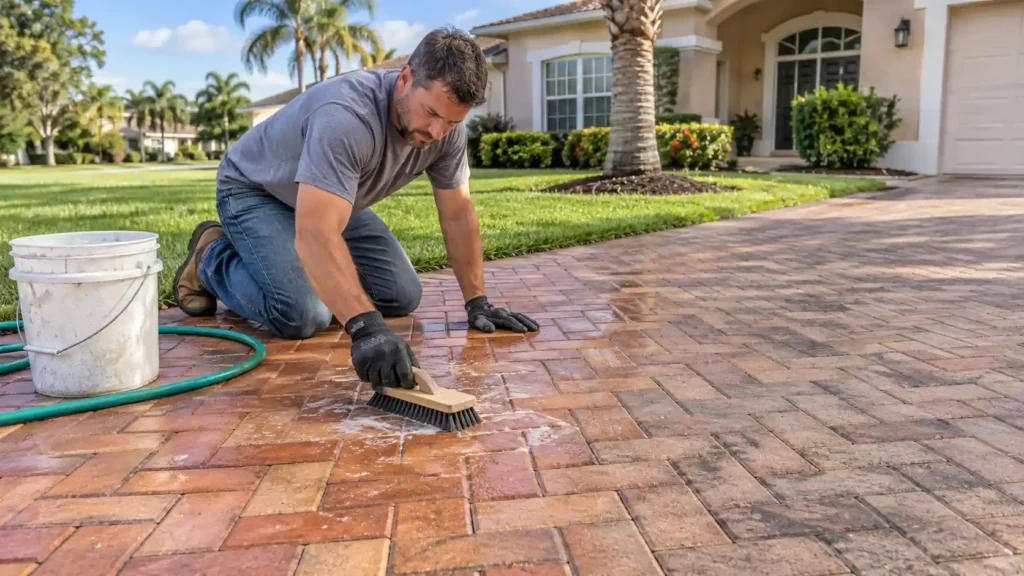
- Wash with dish soap or a paver cleaner and a stiff brush. Work in small sections.
- Rinse well. Use a hose, or a pressure washer on a low setting only.
- Treat efflorescence if you see white haze. Dry brush first, and test any cleaner in a hidden spot.
Should You Pressure Wash Pavers Before Sealing?
Yes, it can work. The risk is too much force. High pressure strips the joint sand and roughens the paver surface, which leaves an uneven base for sealer.
Use a wide fan tip or a surface cleaner attachment. Keep the wand moving and stay on the lowest PSI that lifts the dirt. If sand starts washing out of the joints, back off.
How Long Should Pavers Dry Before Sealing?
Wait until the pavers are dry all the way through, not just on top. Water hides in the joints and inside the paver.
How to Check They’re Dry
Try the plastic sheet test. Tape a clear plastic sheet flat on the pavers and leave it for a few hours. If fog or droplets form underneath, moisture is still rising. Give it more time.
Drying Time in Florida Humidity
Humid air slows everything down. Pavers can look dry by noon and still hold water in the joints. Plan on at least 24 hours without rain after washing, and check your sealer label for its own rule.
Why Damp Pavers Cause a Milky Finish
Trapped moisture can’t escape through the sealer. It gets locked under the coat and turns the finish white and milky as it cures.
Do New Pavers Need Cleaning Before Sealing?
Yes, and there is a catch. Brush off construction dust and debris first. New pavers also tend to show efflorescence, a white salt that rises as they cure. Let it appear and fade before you seal.
Follow the paver maker’s wait time, since it varies by product. Sealing too early traps that haze under the coat. Planning a new patio?
Do You Need to Re-Sand Pavers Before Sealing?
Check the joints after washing. If the joint sand sits low, refill it, sweep it in, and let it settle before you seal. Fix any loose pavers first too.
Polymeric sand needs its own dry time, so follow the bag directions. Our guide on How to Seal Pavers with Sand walks through it.
Cleaning and Sealing Pavers in Central Florida
Humidity, algae, and afternoon rain make timing harder here. Shaded pool decks and north-facing patios grow algae fast, so look for a green film even when the pavers look clean.
The rainy season shrinks your drying window. The cooler, drier weeks in fall and spring give the best sealing days. Start early so the sealer cures before storms roll in. That goes for Winter Springs, Oviedo, and Longwood alike. Regular cleaning also keeps algae from coming back, as we cover in Do Pavers Need Maintenance.
Clean and Seal Yourself or Hire a Pro?
DIY works for a small patio with light dirt. You need a brush, a hose, patience, and a few dry days.
Call a pro when you have:
- A large driveway
- Heavy stains
- Old sealer that is peeling
- Efflorescence that keeps coming back
Ron Hodges Inc offers Sand and Sealing in Winter Springs FL, so one crew handles the prep and the sealing.
Common Mistakes Before Sealing
- Sealing right after washing. Damp pavers cause a milky finish.
- Skipping the joints. Weeds and low sand cause trouble later.
- Sealing in direct hot sun. The sealer dries too fast and can leave streaks.
- Ignoring old sealer. A new coat won’t bond to a failing one.
- Using muriatic acid without a test spot. It can etch pavers and fade the color.
Final Thoughts
So, should I clean pavers before sealing? Yes. Clean first, dry fully, then seal. That order protects your pavers and your money. If you want the prep done right, Ron Hodges Inc can clean, sand, and seal them for you. Contact us today to book paver cleaning and sealing in Winter Springs, Oviedo, or Longwood.
FAQs
Can you seal pavers without cleaning them?
You can, but you shouldn’t. Sealer traps dirt and stains under the coat, and the finish clouds or peels early.
How long after cleaning can you seal pavers?
Wait at least 24 hours of dry weather, longer in humid air. Follow your sealer label and run the plastic sheet test.
Can I seal pavers over old sealer?
Only if the old sealer is intact. Test a small spot first. If it is peeling or cloudy, strip it.
What if my pavers have white haze?
White haze is usually efflorescence. Dry brush it, use an efflorescence cleaner, and let the pavers dry before sealing.
How often should pavers be cleaned and sealed?
Clean pavers at least once a year. Reseal when water stops beading on the surface.