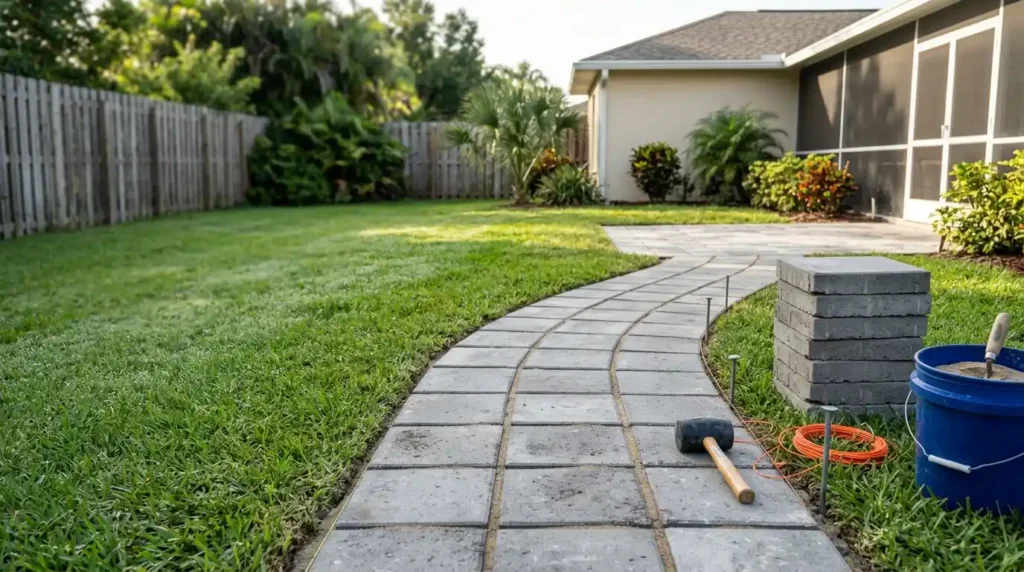
Homeowners often ask us, Can I use concrete blocks as pavers? Yes, you can, but only for light-duty spots like garden paths and small patios. For driveways and busy areas, real pavers hold up far better.
At Ron Hodges Inc, we have worked with concrete and pavers around Winter Springs for over 30 years. This guide shows you where blocks work, where they fail, and how to install them the right way.
Can You Use Concrete Blocks as Pavers?
Yes. Concrete blocks are made from the same basic material as pavers, so they can handle foot traffic outdoors. The catch is shape and strength. Blocks are built to stack in walls, not to lie flat under weather and weight.
People also ask, can concrete blocks be used for paving on a tight budget? They can, and low cost is the main reason homeowners try it.
What Is the Difference Between Concrete Blocks and Concrete Pavers?
A concrete block, also called a cinder block or CMU, is made for building walls. A concrete paver is made for walking and driving on.
| Feature | Concrete Blocks | Concrete Pavers |
| Made for | Walls and foundations | Patios, walkways, driveways |
| Strength | About 2,000 psi for standard blocks | 8,000 psi minimum under ASTM C936 |
| Shape | Large, thick, often hollow | Flat, solid, many sizes |
| Edges | Square, chip easily | Often beveled and interlocking |
| Look | Plain gray | Many colors, textures, patterns |
| Upfront cost | Lower | Higher |
Pavers cost more because they are built and tested for surface use. Blocks are not.
Types of Concrete Blocks You Might Consider for Paving
Not every block is a bad choice. Here is how the three common types stack up.
Solid Concrete Blocks
Solid blocks have no hollow cores. They are the safest wall-block option for a flat surface because weight does not crush thin walls. They still look rough and sit thicker than pavers, so the finished surface can feel uneven underfoot.
Hollow Concrete Blocks
Hollow blocks have open cores that save weight and money. Those same cores are the problem. Weight pressing straight down can crack the thin walls, and rain fills the cores and feeds moss and mosquitoes.
Purpose-Made Concrete Patio Blocks
Patio blocks are flat, solid, and made to lie on the ground. Common sizes include 12 by 12 and 16 by 16 inches. This is the best of the three types, and it is the one most homeowners should buy if they want the block look on a budget.
Pros and Cons of Using Concrete Blocks as Pavers
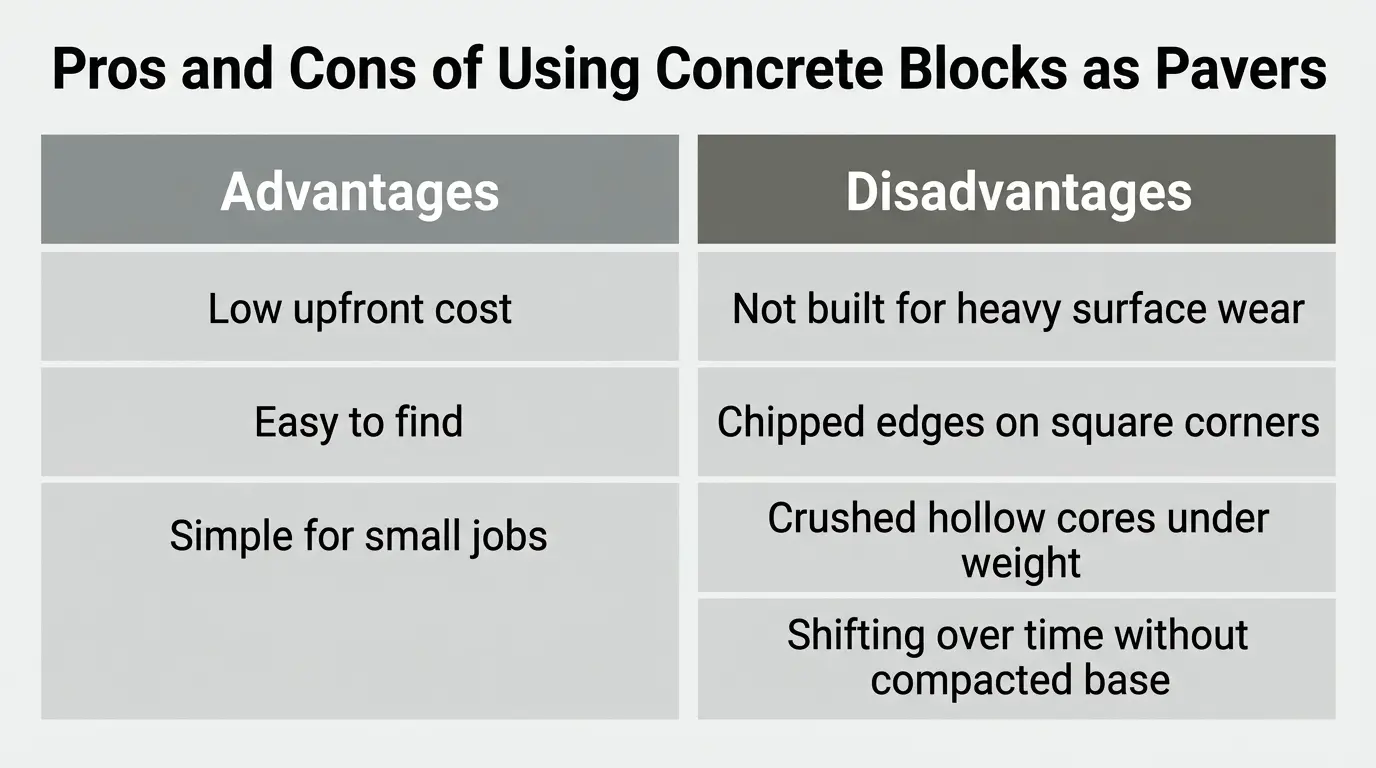
Advantages of Concrete Blocks
- Low upfront cost. Blocks usually cost less than pavers.
- Easy to find. Home centers and block yards stock them.
- Simple for small jobs. A handy homeowner can set a short path in a weekend.
Disadvantages of Concrete Blocks
Are concrete blocks durable outdoors? Solid and patio blocks can be, when the base is right. Weather is rarely the issue. Load and poor prep are what break them.
- Not built for surface wear. Wheels and heavy furniture can crack them.
- Chipped edges. Square corners break more easily than beveled paver edges.
- Crushed hollow cores. Thin walls give way under weight.
- Shifting over time. Without a compacted base, blocks sink and tilt.
Where Can You Use Concrete Blocks for Outdoor Paving?
Garden Paths and Walkways
Using concrete blocks for walkways works well when only people walk on them. Set solid or patio blocks on a compacted base, and keep the path about 36 inches wide so two people can pass.
Patios and Backyard Areas
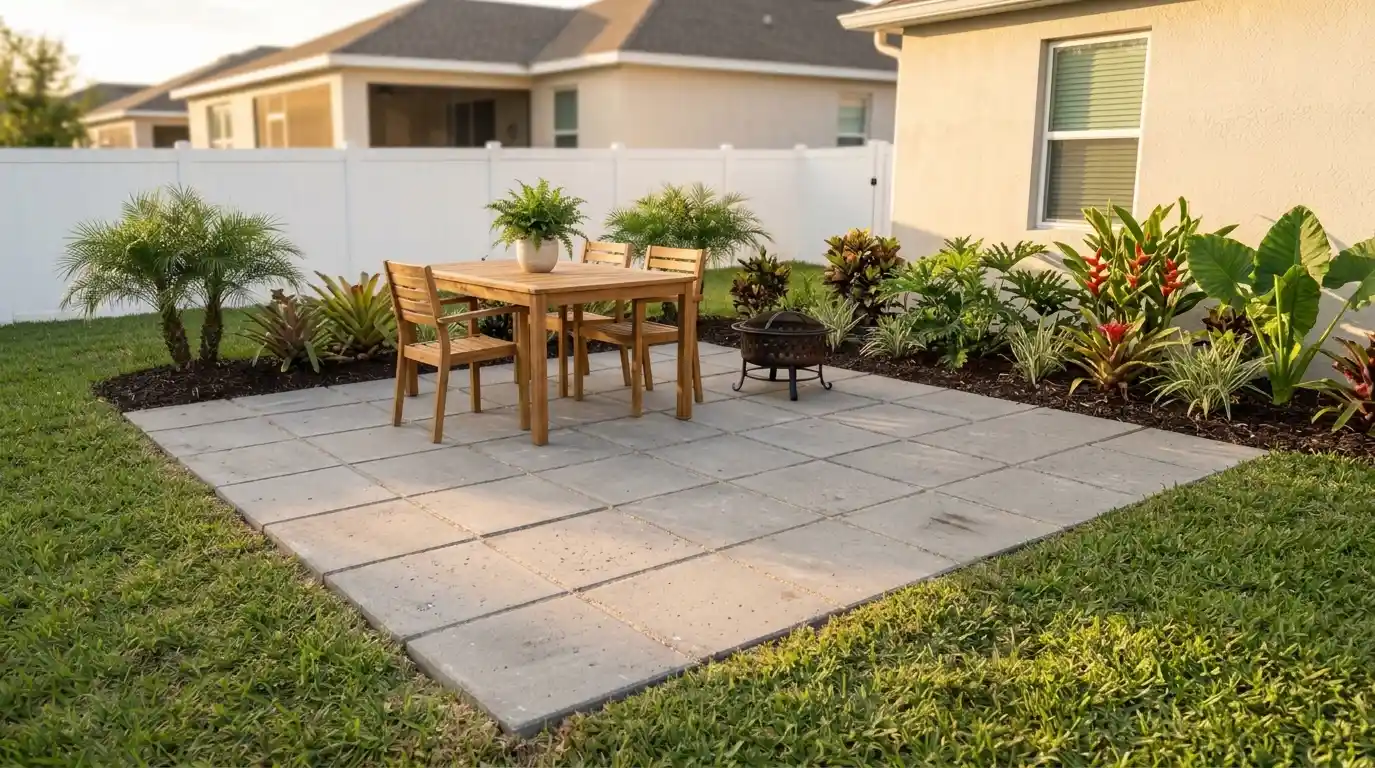
Are concrete blocks good for patios? For small, simple patios, yes. Choose thick, solid blocks, because chairs, grills, and fire pits add real weight. Slope the surface slightly away from your house so rain drains off.
Driveways and Parking Areas
Can I use concrete blocks as pavers for a driveway? No. A parked car is tons of weight on a small footprint, and blocks crack, rock, and sink under it. A driveway needs thick pavers or poured concrete over a deep, compacted base.
How to Install Concrete Blocks as Pavers
- Mark the area. Use stakes and string to outline the path or patio.
- Dig out the soil. Dig deep enough for 4 inches of base, 1 inch of sand, and the thickness of your block.
- Compact the soil. Run a plate compactor over the bare ground until it feels firm.
- Add crushed stone. Spread 4 inches of base material and compact it in thin layers.
- Spread bedding sand. Lay about 1 inch of sand and level it with a straight board.
- Set the blocks. Place each block tight against the next, tap it down with a rubber mallet, and check for level. Keep a slope of about 1/4 inch per foot.
- Fill the joints. Sweep fine sand or polymeric sand into the gaps, then compact and sweep again.
Common Problems With Using Concrete Blocks as Pavers
- Sinking and tilting. Central Florida has sandy soil and heavy summer rain. A thin base washes out fast.
- Cracking. Hollow blocks and heavy loads are the usual cause.
- Weeds and ants in the joints. Gaps need fresh sand every so often.
- Moss and algae. Florida humidity grows green film on shaded blocks.
Are Concrete Blocks Better Than Traditional Concrete Pavers?
No. Pavers win on strength, looks, and long-term performance. Blocks win only on upfront price.
Pavers are denser, cleaner in shape, and made for outdoor wear. Both surfaces still need care, so read our guide, Do Pavers Need Maintenance, to see what to expect.
What Are the Best Alternatives to Concrete Blocks for Paving?
- Concrete pavers. The best all-around choice for patios, walkways, and driveways.
- Brick pavers. A classic look with strong color that lasts.
- Poured concrete. A smooth, one-piece surface that suits driveways and larger patios.
- Natural stone. Flagstone gives a rustic, irregular look for patios and paths.
When Should You Choose Professional Paver Installation?
Call a pro for driveways, large patios, pool decks, and any spot with a slope or drainage problem. These jobs need a deep base, proper compaction, and the right grade to keep water moving.
Our Paver Installation crew prepares the ground for Central Florida’s sandy soil and summer storms. That prep decides whether your surface stays flat for years or sinks in one rainy season.
Final Thoughts on Using Concrete Blocks as Pavers
So, can i use concrete blocks as pavers? Yes, for light jobs like garden paths and small patios, if you choose solid or patio blocks and build a firm base. Avoid hollow blocks, and never use blocks for a driveway.
Ron Hodges Inc has helped Winter Springs homeowners pick the right surface for their yards for over 30 years. Contact us today talk through your project.
FAQs
Can hollow concrete blocks be used as pavers?
No. Their thin walls crack under weight, and the open cores trap water.
Do concrete blocks crack when used for patios?
Yes, if the base is weak or the blocks are hollow. Solid blocks on a compacted base crack far less.
Are concrete blocks cheaper than patio pavers?
Yes, usually upfront. Repairs and replacements can erase that savings over time.
Can you use concrete blocks for a walkway?
Yes. Solid or patio blocks work well for foot traffic on a compacted base.
How long do concrete blocks last outdoors?
It depends on the block, base, and traffic. Solid blocks on a good base last many years under foot traffic.