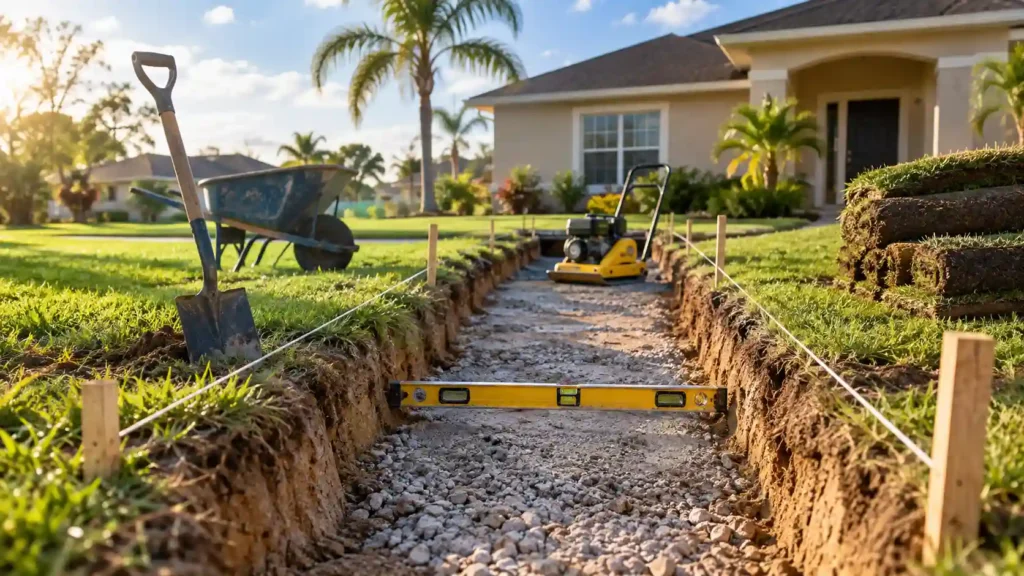
Outline the path with stakes and paint, then dig a trench 6 to 8 inches deep, accounting for a 4-to-6-inch gravel base, 1-inch sand layer, and your paver thickness. Ensure the trench bottom slopes 1/4 inch per foot away from structures for drainage, then firmly pack the bare dirt with a tamper to create a solid subgrade that prevents future settling.
Here is how to excavate lawn for walkway projects the right way. Remove the grass and topsoil, dig about 7 to 8 inches deep, compact the soil, and add a firm base. At Ron Hodges Inc have dug walkways in Central Florida soil for over 30 years, and these are the steps we trust.
Why Proper Lawn Excavation Matters for a Walkway
Excavation gives your walkway a flat, firm, well-drained place to sit. Grass and topsoil are soft and full of roots. They rot and shrink over time, so a walkway built on top settles unevenly.
Good ground preparation for a walkway is the part nobody sees and everybody pays for later. In Winter Springs, heavy summer storms can wash out a weak base. A clean, level dig with compacted soil keeps your walkway flat and stops water from pooling underneath.
What You Need Before Excavating
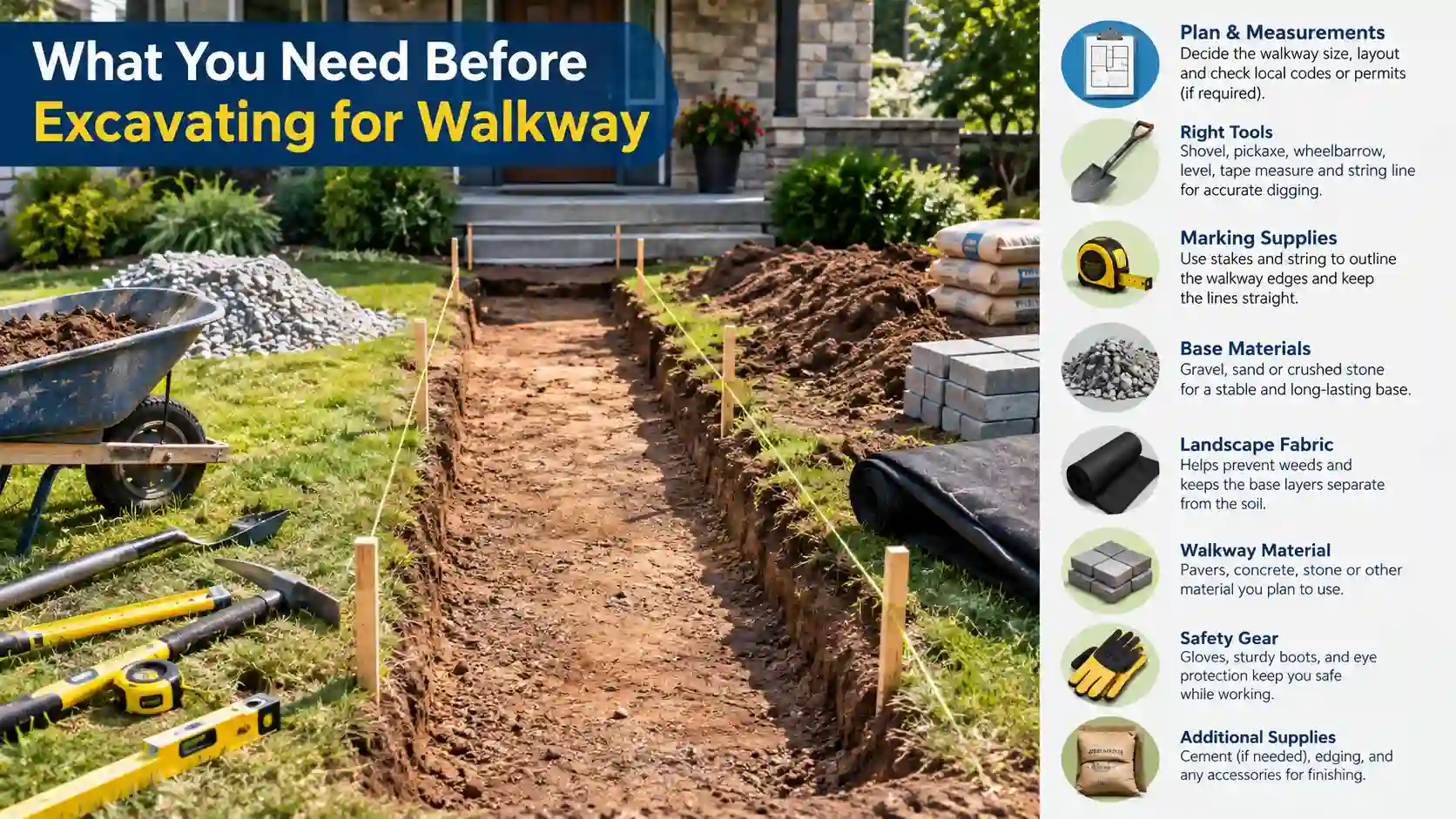
Knowing how to excavate lawn for walkway work starts with the right gear. Most of it is cheap or easy to rent.
- Flat spade and square shovel
- Sod cutter (rent one for a day)
- Wheelbarrow
- Stakes, string, and marking paint
- 4-foot level and tape measure
- Hand tamper or plate compactor
- Gloves, boots, and safety glasses
It does not mark private lines like sprinkler pipes, so check your yard for those. Read your HOA rules too.
Step 1: Mark the Walkway Area
Start with the width. Most walkways run 36 inches wide, but 48 inches lets two people walk side by side. Set stakes at the corners and run string between them.
For curves, lay a garden hose on the lawn and shift it until the shape looks right. Spray paint along the hose. Then mark the dig line 6 inches wider on each side. Concrete forms and paver edge restraints both need that extra room.
Step 2: Remove Grass and Topsoil
If you want to know how to dig out grass for a walkway without wrecking your back, rent a sod cutter. It slices the lawn into strips you can roll up and move. A flat spade works fine for short or curved paths.
Next, remove the top 3 to 4 inches of soil that holds the roots. St. Augustine grass, common in Central Florida, has thick runners that can push back up through a thin base. Pull every root you find.
Keep the sod if it looks healthy. You can use it to patch bare spots along the finished walkway.
Step 3: Check the Soil and Grade
Look at the soil you just exposed. Most Winter Springs yards have sandy soil, which drains well and compacts nicely. Soft, dark, or mucky spots are a problem. Dig those out and replace them with base material.
Now check the slope. Your walkway should drop about 1/4 inch per foot, away from your house. Run a string line along the stakes and measure down with a level. That slight pitch sends rain off the surface instead of toward your foundation.
Mark any low spots where water pools. Fix them now with compacted base, not after the walkway is down.
Step 4: Excavate to the Correct Depth
Here is how deep to dig for a walkway, based on what goes on top. Measure down from your planned finished surface, not from the lawn.
| Walkway Type | Surface Layer | Base Layer | Total Dig Depth |
| Concrete | 4 in. slab | 3 to 4 in. compacted base | 7 to 8 in. |
| Pavers | 2 3/8 in. paver + 1 in. sand | 4 in. compacted base | 7 to 8 in. |
| Soft or clay soil | Same as above | Add 2 to 4 in. more base | 9 to 12 in. |
Plan the finished surface about an inch above the surrounding lawn so water runs off. Check your depth every few feet with a ruler against a stake. Keep the bottom flat and at the same slope as your finished walkway.
Step 5: Prepare and Compact the Subgrade
The subgrade is the native soil at the bottom of your dig. If you are wondering how to prepare ground for a walkway after the digging is done, this step matters most. Rake it level and pull out roots, rocks, and trash.
Compact the soil with a plate compactor or hand tamper. Make several passes in both directions. Sandy soil packs best when it is slightly damp, not soaked.
Fill any low spots in thin layers of about 2 inches. Compact each layer before adding the next. When you walk across it, the soil should feel firm and leave only a light footprint.
Step 6: Add the Base Material
Use crushed stone or limerock, which many Florida crews rely on. Both lock together when compacted and drain water well. Here is the order to follow:
- Lay geotextile fabric first if the soil is soft or you are building a paver walkway.
- Spread the base in layers no thicker than 4 inches.
- Dampen each layer lightly and compact it until it feels solid.
- Check the slope and height with your string line and level.
The finished base should match the slope you set in Step 3. It should also sit at the right height for your concrete slab or paver sand bed.
Concrete vs. Paver Walkway Excavation
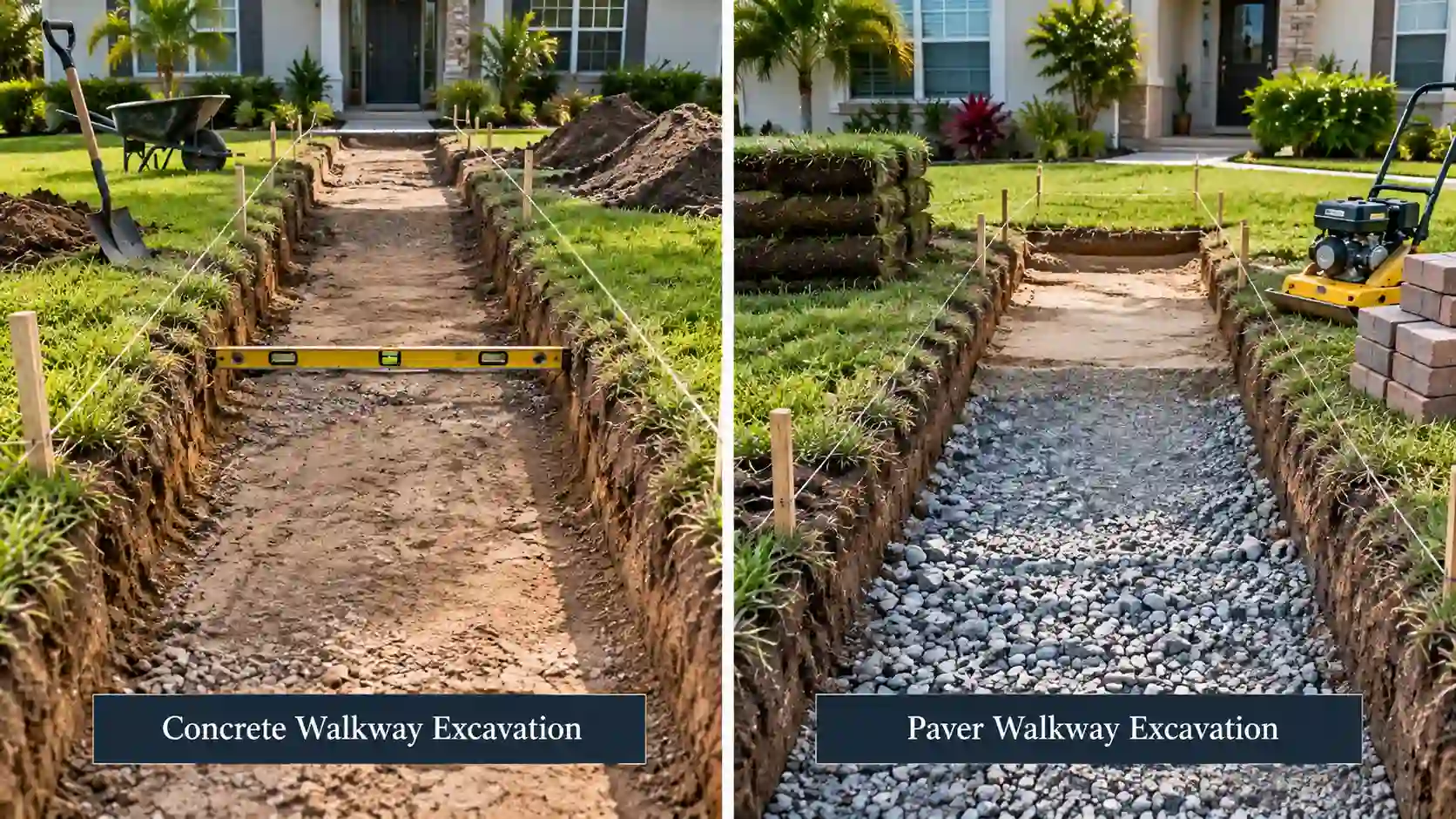
The dig looks almost the same for both. The differences are in the details.
- Concrete: Crews set wood or metal forms along the edges, so you need that extra 6 inches of width. The base can run a little thinner because the slab spreads the load.
- Pavers: Pavers flex, so base compaction matters even more. You also need edge restraints and a 1 inch sand bed on top of the base.
Still choosing a material? Read What Is the Cheapest Type of Walkway before you dig. Cost can change your plan.
Common Lawn Excavation Mistakes to Avoid
- Skipping the 811 call. Hitting a buried line is dangerous and expensive.
- Leaving roots behind. They rot and leave soft spots under your base.
- Digging too shallow. A thin base cracks slabs and sinks pavers.
- Skipping compaction. Loose soil settles, and the walkway settles with it.
- Forgetting the slope. Flat walkways hold water and grow algae fast in Florida humidity.
- Digging in soaked soil. Wet ground turns to mud and will not compact. Wait for a few dry days after a storm.
When Should You Hire a Professional?
Hire a pro when the job is bigger than a weekend. Call one if:
- The path runs close to your foundation, pool deck, or driveway
- Your soil is mucky, clay, or stays wet
- Large tree roots are in the way
- You do not want to rent and haul a plate compactor
- You plan a long or curved concrete walkway
Our crew at Ron Hodges Inc handles the digging, base, and finish from start to end. You can also see our concrete walkways installation service if you want the whole job done for you.
Final Thoughts
You now know how to excavate lawn for walkway work from start to finish. Mark the path, strip the sod, check the soil and slope, dig 7 to 8 inches, compact the subgrade, and add a firm base. Do those six things well, and your walkway starts on solid ground.
If you would rather leave the digging to a crew with 30 years of Central Florida experience, Ron Hodges Inc is ready to help. Contact us today to plan your walkway in Winter Springs, Oviedo, or Longwood.
FAQs
How deep should you dig for a walkway?
Dig about 7 to 8 inches for most concrete and paver walkways. Soft soil may need 9 to 12 inches.
Can you build a walkway directly on grass?
No. Grass and topsoil rot and settle, so the walkway sinks and cracks.
What is the easiest way to remove grass for a walkway?
Rent a sod cutter. It slices the lawn into strips that you roll up and move.
Do you need a base under a concrete walkway?
Yes. A compacted base keeps the slab flat and helps water drain away.
Do you need a permit to build a walkway in Winter Springs?
It depends on your property, so check with the City of Winter Springs and your HOA first.