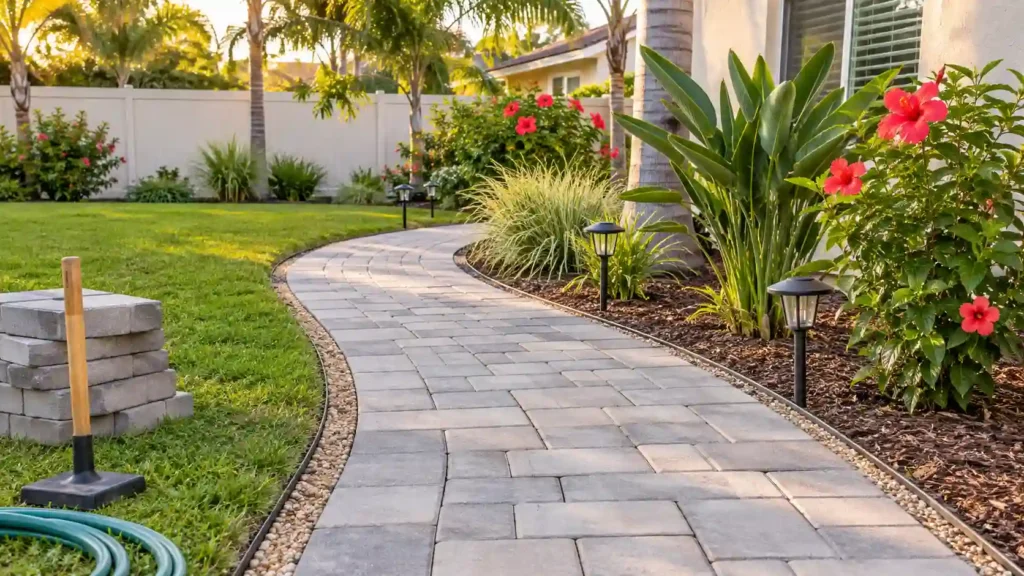
What is the easiest way to build a garden path? Mark your route, dig down a few inches, add a layer of crushed stone, and set stepping stones or pea gravel on top. Most people finish a short path in one weekend with basic hand tools.
Ron Hodges Inc has worked on concrete and paver projects around Winter Springs for more than 30 years. We know what holds up in Central Florida’s sandy soil and heavy summer rain. This guide covers materials, steps, edging, cost, and upkeep so your path stays put.
Which Materials Are Best for an Easy Garden Path?
Pea gravel and stepping stones are the easiest materials for a first-time builder. Pavers take more work but last the longest.
| Material | Difficulty | Relative Cost | Upkeep | Best For |
| Pea gravel | Easy | Low | Rake and top up | Curved garden paths |
| Stepping stones | Easy | Low to medium | Very little | Lawns and flower beds |
| Mulch | Easy | Low | Refill often | Shaded beds |
| Concrete pavers | Moderate | Medium to high | Occasional cleaning | Busy paths |
| Poured concrete | Hard | High | Very little | Main walkways |
Mulch breaks down fast in Florida’s heat and rain, so it suits short, shaded paths. If you want a low-maintenance garden path that lasts for years, pavers are the better pick. Our crew handles Paver Installation for homeowners who would rather skip the digging.
How to Build a Simple Garden Path Step by Step
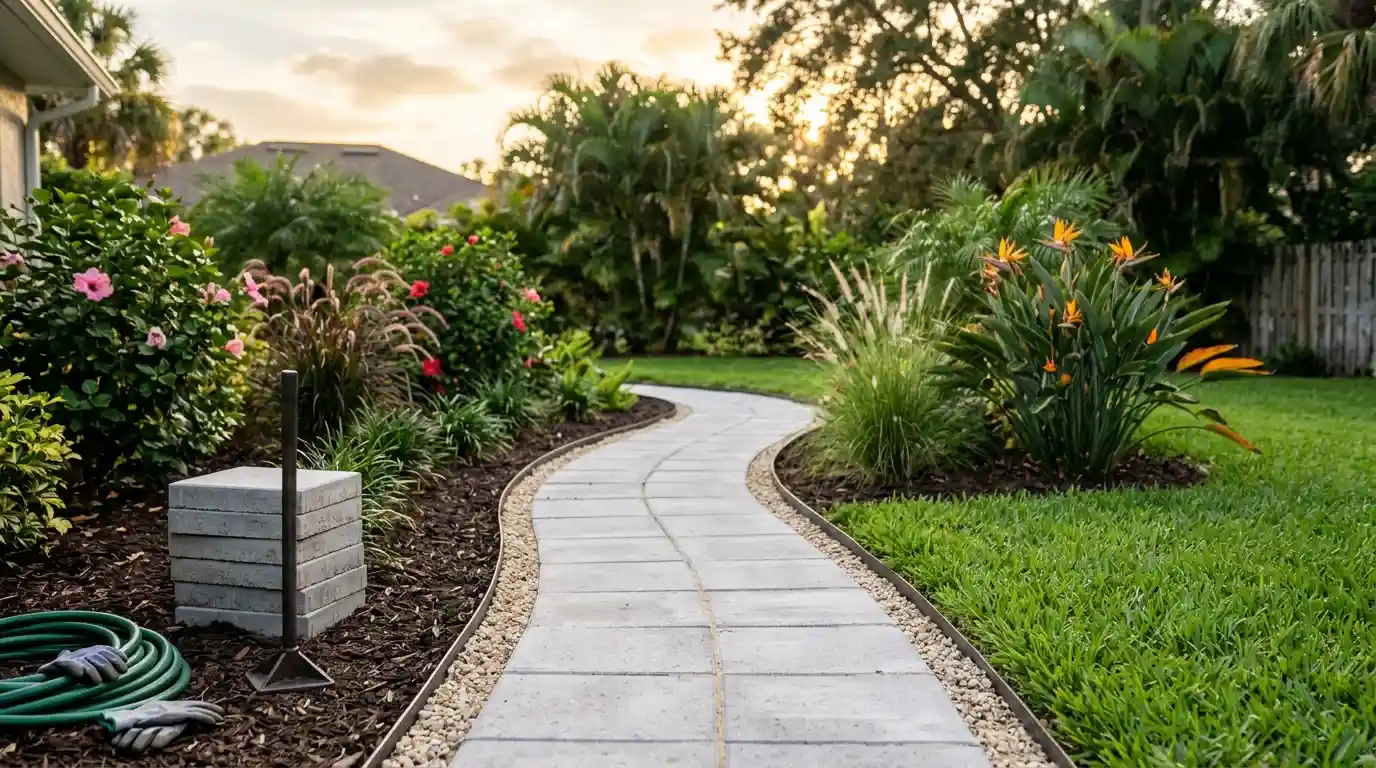
Learning how to build a garden path comes down to six steps.
- Call 811 first. Florida homeowners can call 811 a few days before digging so buried lines get marked for free.
- Mark the route. Lay a garden hose on the ground and shape it into the curve you want.
- Set the width. Three feet fits one person. Go with four feet if two people will walk side by side.
- Prepare the ground. Remove the grass, dig to depth, and compact the soil. The next section covers this in detail.
- Add the base and surface. Spread crushed stone, then lay your stones, pavers, or gravel.
- Finish the edges. Install edging, rake or sweep the surface, and make sure water drains away.
How to Prepare the Ground for a Garden Path
Knowing how to prepare ground for a garden path matters more than any other step. Poor prep is why most DIY paths sink, shift, or fill with weeds.
- Remove the sod. Cut it out with a flat spade and shake off the loose soil.
- Dig to the right depth. Gravel paths need about 4 inches. Stepping stones need the stone’s thickness plus 1 inch of sand. Pavers need about 7 inches to fit a 4-inch base, 1 inch of sand, and the paver.
- Compact the soil. Use a hand tamper until the bottom feels firm and flat. Sandy soil needs this step the most.
- Slope it slightly. Aim for about a quarter inch of drop per foot so rain runs off instead of pooling.
- Lay weed fabric. It slows weeds and keeps the stone base from mixing into the soil.
How to Install Concrete and Paver Pathways
Concrete
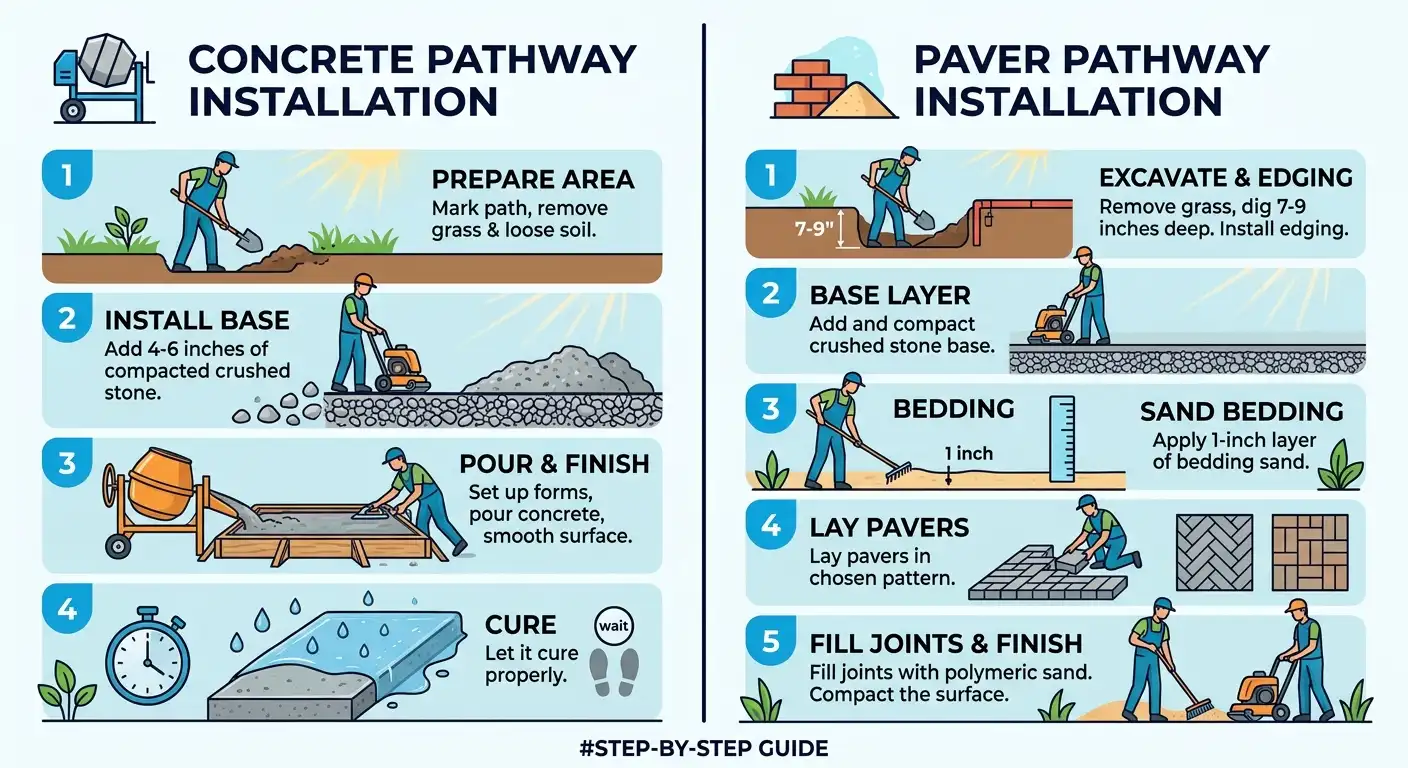
Mark your pathway and remove the grass and loose soil. Add 4 to 6 inches of compacted crushed stone for a solid base. Set up the forms, pour the concrete, and smooth the surface with a finishing tool. Let it cure properly before using the walkway.
Pavers
Remove the grass and dig down about 7 to 9 inches. Install edging along both sides to keep the pavers in place. Add and compact a crushed stone base, followed by a 1-inch layer of bedding sand. Lay the pavers in your chosen pattern, fill the joints with polymeric sand, and compact the surface to finish.
How to Add Edging to Keep Your Garden Path in Place
Edging holds your path material inside the lines and stops grass from creeping in. Here are the garden path edging ideas that work best in Florida yards:
- Steel or aluminum edging: Thin, clean, and easy to bend around curves.
- Plastic edging: Cheap and simple, but it can crack in strong sun.
- Brick or stone borders: They look great and last for years. They need a small trench and some sand.
- Concrete mow strip: The most permanent option. A pro should pour it.
To install any of these, dig a narrow trench along both sides. Set the edging so the top sits level with or just above the path. Backfill with soil and tamp it down firmly.
How Much Does It Cost to Build a Garden Path?
Cost depends on length, width, material, and whether you do the work yourself. Gravel and stepping stones sit at the low end. Pavers cost more but need less repair later. Poured concrete costs the most upfront.
Plan for these items in your budget:
- The surface material itself
- Crushed stone base, sand, and weed fabric
- Edging
- Tool rental, such as a plate compactor for longer paths
- Labor, if you hire a contractor
Prices vary by yard, so ask for a written quote with materials and labor listed separately.
How to Maintain a Garden Path
- Gravel: Rake it every few weeks and add a fresh layer once a year.
- Weeds: Pull them while they are small. Warm weather keeps them growing most of the year.
- Stepping stones: Trim the grass edges and re-level any stone that sinks after heavy rain.
- Pavers: Sweep often and wash with mild soap. Our post on Do Pavers Need Maintenance covers sealing and cleaning.
- Shady spots: Humidity grows algae fast. Scrub with soap and a soft brush.
Common Mistakes to Avoid When Building a Garden Path
- Skipping the base. Soil alone turns soft and uneven after a few storms.
- Leaving out edging. Gravel spreads into the lawn and pavers drift apart.
- Making it too narrow. Anything under 3 feet feels cramped.
- Ignoring drainage. Water that pools under a path washes the base away.
- Skipping weed fabric. Weeds will push through within a season.
- Rushing the compaction. A loose base settles over time.
Final Thoughts
So, what is the easiest way to build a garden path? Use pea gravel or stepping stones on a compacted base, and add solid edging. Spend your time on ground prep, because that step decides how long the path lasts.
If you want a path that needs less upkeep, pavers are worth the investment. Ron Hodges Inc can design and install one that fits your yard. Contact us today or call (407) 947-8843 for a quote.
FAQs
What is the cheapest material for a garden path?
Mulch and pea gravel cost the least. Gravel lasts longer in Florida because heavy rain breaks mulch down quickly.
How deep should a garden path base be?
Dig 4 to 7 inches, depending on the surface. Pavers need the full depth for base, sand, and stone.
Do I need weed fabric under a garden path?
Yes, fabric under gravel or stones slows weeds a lot. It won’t stop them completely, so pull any that show up.
How wide should a garden path be?
Make it 3 feet wide for one person. Go to 4 feet if two people will walk side by side.
Can I build a garden path on sandy Florida soil?
Yes, but compact the soil first and add a crushed stone base. That keeps the path from sinking or washing out.