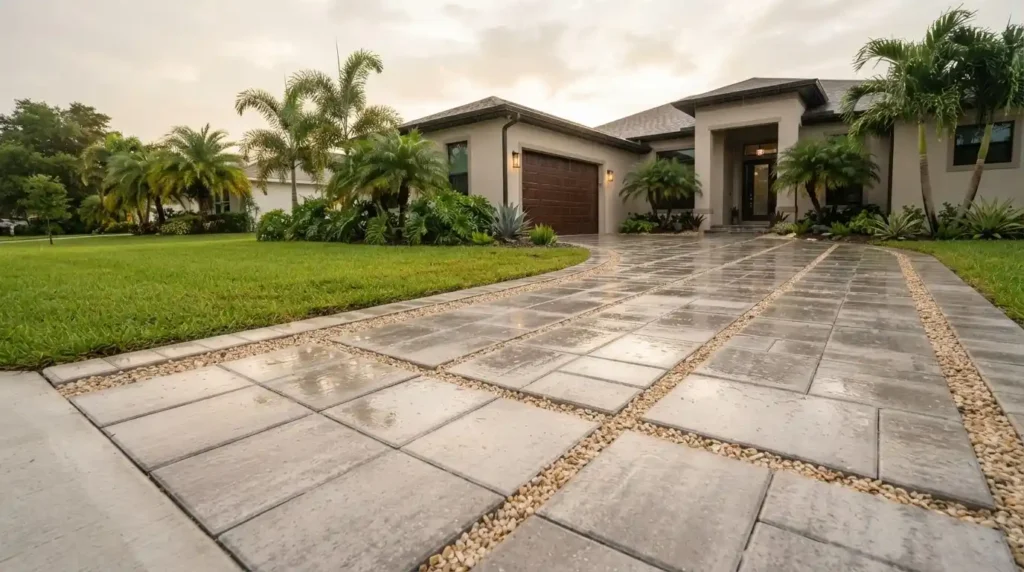
So, what are permeable pavers? They are paving stones set with open joints over a crushed stone base, so rain drains through the surface instead of running off it. If you have watched a driveway flood during a Florida downpour, you can see the appeal.
At Ron Hodges Inc, we hear this question from Winter Springs homeowners all the time. This guide covers how the system works, where it fits, and what it asks of you.
What Are Permeable Pavers?
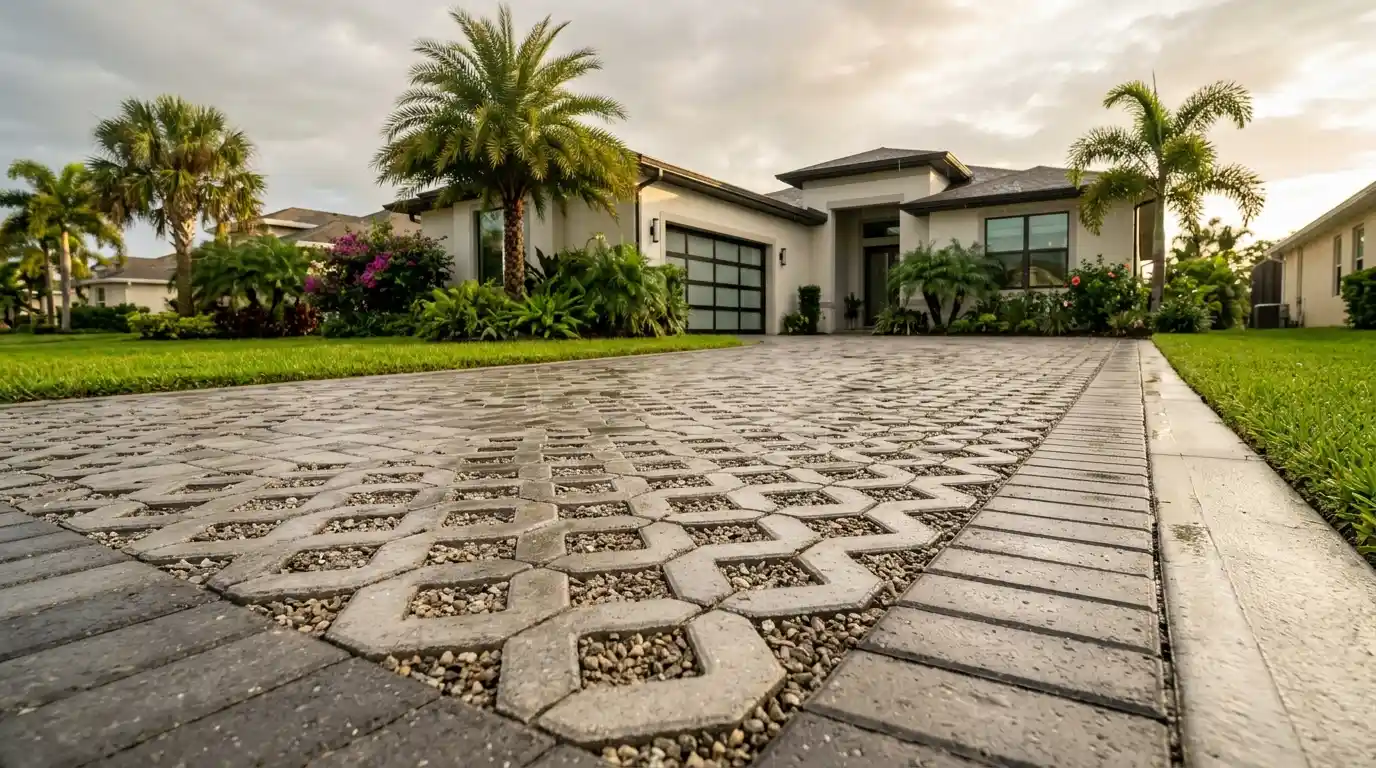
Permeable pavers are concrete or stone units that let water pass through the gaps between them. Under the surface sits a thick layer of open-graded crushed stone. That layer holds rainwater for a short time while it drains into the soil below.
You may also see the name permeable interlocking concrete pavers, or PICP. From the street, they look like any other paver driveway or patio. The difference is what you cannot see: wide joints filled with small stone and a base built to drain.
How Do Permeable Pavers Work?
Water takes a simple path through the surface. Here is how it moves:
- Rain lands on the pavers and drops into the stone-filled joints.
- It passes through a bedding layer of small, clean crushed stone.
- It collects in a deeper base of larger stone, which has lots of open space.
- It soaks into the ground below, or leaves through an underdrain pipe if your soil drains slowly.
Regular joint sand would clog this path. That is why the joints get small stone instead.
What Are the Main Benefits of Permeable Pavers?
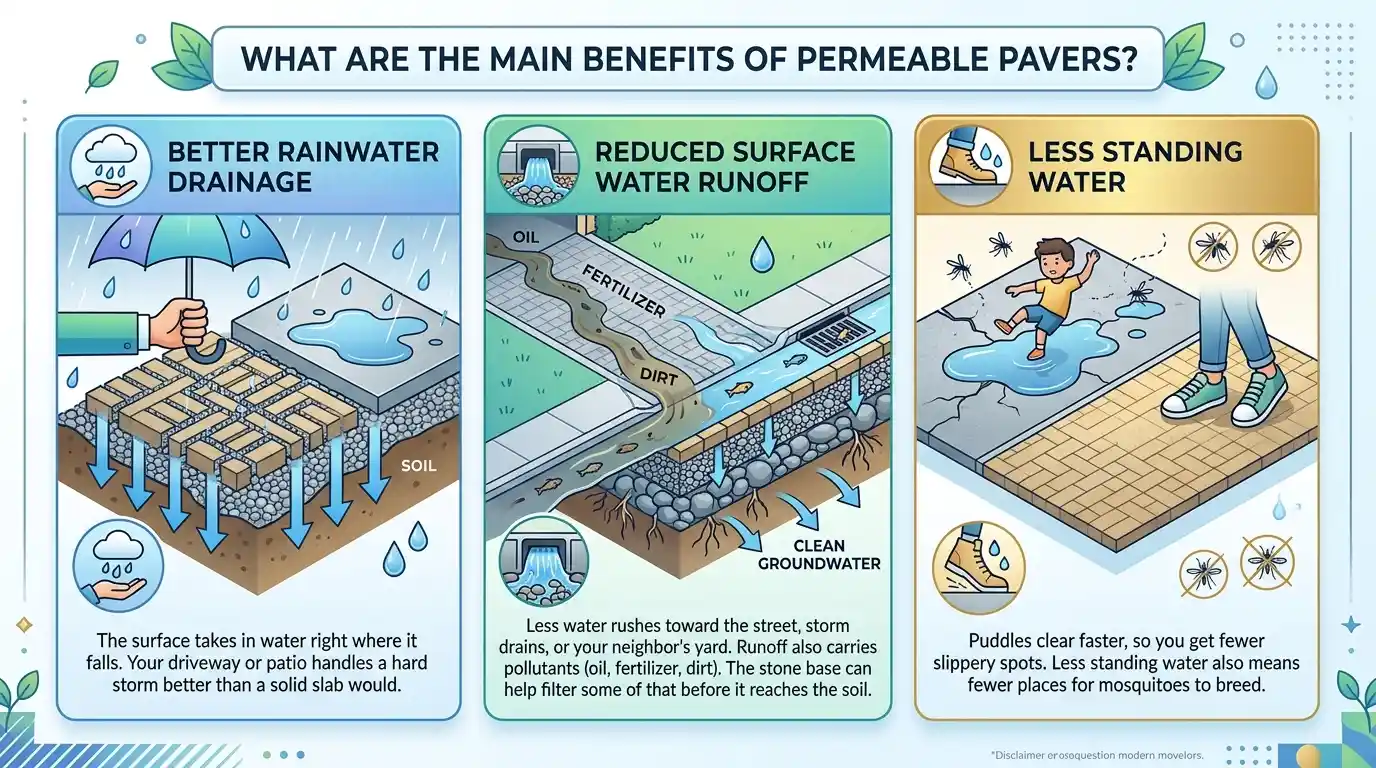
Better rainwater drainage
The surface takes in water right where it falls. Your driveway or patio handles a hard storm better than a solid slab would.
Reduced surface water runoff
Less water rushes toward the street, storm drains, or your neighbor’s yard. Runoff also carries oil, fertilizer, and dirt. The stone base can help filter some of that before it reaches the soil.
Less standing water
Puddles clear faster, so you get fewer slippery spots. Less standing water also means fewer places for mosquitoes to breed.
What Are the Different Types of Permeable Pavers?
Most homes use one of three styles:
- Wide-joint interlocking pavers. Spacer lugs on each paver create gaps that get filled with stone. This is the most common choice for homes.
- Porous pavers. The paver itself has small open pores, so water moves through the unit and the joints.
- Grid pavers. Plastic or concrete grids filled with gravel or grass. They work best for overflow parking and light traffic.
Your traffic load and budget decide which one fits.
Where Can You Use Permeable Pavers?
Driveways
A permeable paver driveway works well for homes with drainage trouble near the garage. The base is built thicker to carry vehicle weight, so the dig and stone cost more.
Patios
A patio is a good fit when water collects in your backyard after rain. You still need a slight slope away from the house, even with a draining surface.
Walkways
Walkways carry light loads, so the base is simpler. They help along side yards, where water often runs between houses.
Permeable Pavers vs. Regular Pavers: What’s the Difference?
The main difference is where the water goes. Regular pavers shed it across the surface to a slope or drain. Permeable pavers take it in.
| Feature | Permeable Pavers | Regular Pavers |
| Joint fill | Small, clean stone | Sand or polymeric sand |
| Base | Thick, open-graded stone | Compacted dense base |
| Water | Drains through the surface | Runs off to a slope or drain |
| Upfront cost | Usually higher | Usually lower |
| Upkeep | Keep joints clear, top up stone | Sweep, re-sand, seal |
| Best for | Drainage trouble, runoff rules | Standard patios and walkways |
Neither is better in every case. The right pick depends on your lot.
Are Permeable Pavers Suitable for Florida Homes?
Yes, in many cases. Central Florida gets heavy summer downpours, and a stone base gives that water a place to go. There is no freeze and thaw to worry about, which is a common problem in colder states.
Soil matters most. Sandy soil drains well, but a high water table or a clay layer can slow things down, and the base may need an underdrain. Check with your city and HOA first, since drainage rules and permits differ from place to place.
What Are the Disadvantages of Permeable Pavers?
- Higher upfront cost. You pay for deeper digging and more stone.
- Joint clogging. Dirt, leaves, and mulch can fill the gaps over time.
- Less forgiving installation. The wrong stone, or sand in the joints, ruins drainage.
- Joint stone movement. The stone can settle or wash out and needs topping up.
- Limits on sealers. Film-forming sealers and polymeric sand block the joints, so you skip them.
Good planning handles most of these.
How Do You Maintain Permeable Pavers?
Keep the joints open and full. That is the whole job. Follow this routine:
- Sweep or blow off leaves and dirt every few weeks.
- Vacuum or gently rinse the joints once or twice a year.
- Top up joint stone where it has settled.
- Pull weeds and moss early. Florida humidity feeds both.
- Skip sand and sealers that close the joints.
For the basics that apply to any paver surface, read Do Pavers Need Maintenance?
Are Permeable Pavers Worth It?
They are worth it when water is a real problem on your property or local rules call for stormwater control. If your yard already drains well and you want the lowest cost, standard pavers are a solid choice.
Ask yourself three things:
- Does water pool on your driveway or patio?
- Do you face drainage or runoff rules?
- Are you ready for light yearly upkeep?
Three yeses point toward permeable.
Need Help With Your Paver Installation Project?
Choosing between permeable and standard pavers comes down to your soil, slope, and budget. With more than 30 years of concrete and paver work in Central Florida, we can look at your yard and tell you what will work. Our Paver Installation service covers patios, walkways, and driveways.
Final Thoughts
Permeable pavers let rain soak through stone-filled joints and a stone base. That cuts runoff and puddles, and it suits many Florida lots. You pay more upfront and you need to keep the joints clear, but the drainage payoff is real when water is a problem.
Ron Hodges Inc brings more than 30 years of concrete and paver experience to every project. Contact us today to talk through your yard and get a plan that fits your budget.
FAQs
Do permeable pavers prevent flooding?
They reduce flooding, but they do not stop it. Very heavy storms on saturated ground can overwhelm any surface.
Can permeable pavers handle heavy rain?
Yes, when the base is sized for your site. The stone layer stores water while it drains.
Do permeable pavers need a special base?
Yes. They sit on open-graded crushed stone, not the dense base used for standard pavers.
Do permeable pavers get clogged?
Yes, the joints can clog over time. Regular sweeping and occasional vacuuming keep them draining.
Are permeable pavers more expensive?
Usually, yes. The deeper excavation and extra stone raise the upfront price.