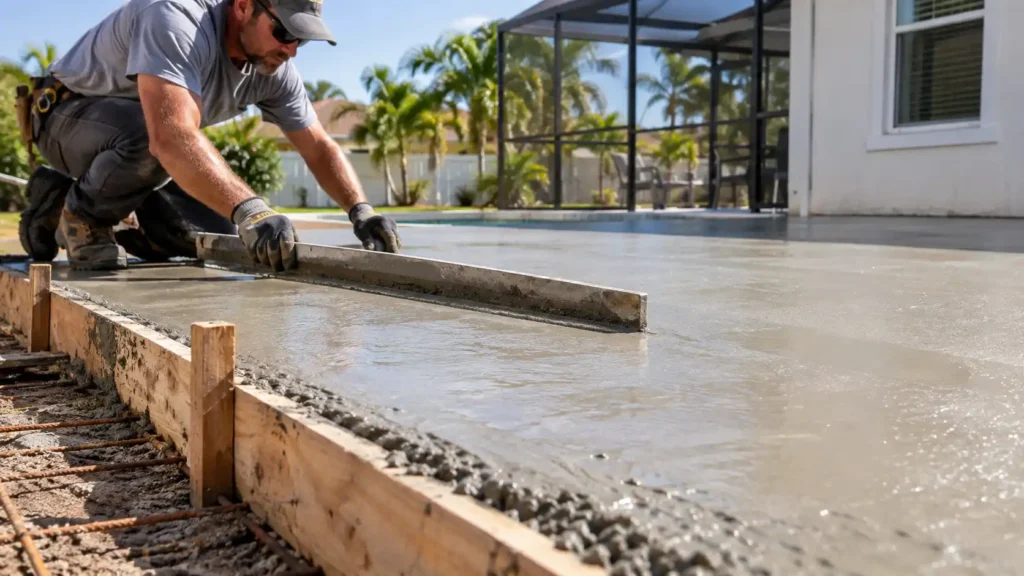
For normal foot activity, a conventional concrete patio has to be 4 inches thick; heavier loads, such hot tubs or outdoor kitchens, need to be 6 inches thick; and permanent overhead constructions need footings that are 8 to 12 inches deep.
Subject to local municipal construction requirements, how thick should a concrete patio be slab lifespan in Central Florida depends on a compacted 3–6-inch gravel foundation over sandy soil and the proper steel rebar reinforcement for heavy-duty pours.
The Quick Answer
Normal foot traffic, a table and chairs, maybe a grill? Four inches of concrete handles that just fine. Planning an outdoor kitchen or a hot tub, or dealing with soil that moves? Go with 6 inches.
Most local codes set the minimum at 3.5 inches, tied to a concrete strength of at least 3,000 PSI. In practice, almost nobody pours exactly 3.5. Contractors round up to 4 because that extra half inch costs next to nothing and buys you real margin. The International Residential Code is where that 3.5-inch baseline comes from, and most Florida counties build their own code on top of it.
So if you searched “how thick of concrete for a patio” and just wanted a number, 4 inches is it, until something specific about your project changes that.
When 4 Inches Is Enough
Ninety percent of the patios we construct fit this description. A few seats, a lightweight fire pit, and family cookouts. Stable ground underneath. Nothing unusual.
The majority of Central Florida is situated on sandy soil, which is really advantageous in this situation. A 4-inch slab atop a well-compacted gravel foundation won’t battle the earth underneath it since it drains quickly and doesn’t heave or shrink as clay does. This thickness of patio concrete is used for sidewalks and pathways for the same reason: it’s sturdy enough for the task and you’re not paying for unnecessary concrete.
When You Need 6 Inches
Some patios are basically load-bearing furniture. If any of this sounds like your project, plan on 6 inches:
- An outdoor kitchen, especially one built with concrete block or stone
- A hot tub, which puts an enormous amount of weight in a small footprint
- Heavy stone fire pits or oversized planters
- A large stamped concrete patio (the extra depth helps the pattern hold its detail)
- Clay-heavy soil that expands when it’s wet and shrinks when it dries out
If you’re torn between building the outdoor kitchen now or “maybe later,” pour the 6-inch slab now. Tearing out a patio because it can’t handle what got added to it later costs a lot more than the concrete would have.
What Florida Soil and Weather Actually Change
While clay subsoils and heavy seasonal rainfall cause concrete degradation via aggressive shrink-swell cycles, freeze-thaw cracking is minimal in Central Florida municipalities like Winter Springs, Oviedo, and Longwood. Heavy rains can quickly raise the water table and erode underlying sandy bases, reducing the soil’s ability to support loads.
Preventing structural failure requires giving drainage management and subgrade preparation first priority. When required, property owners should dig unstable native soils and replace them with aggregate subbases or compacted crushed concrete. They should also perform downpour audits to make sure yard grading slopes at least 1/4 inch per foot away from foundations.
Does a Concrete Patio Need Rebar or Wire Mesh?
In summary, the majority of the time, the answer is yes. After someone has decided on a thickness, I get asked this question more often than virtually any other.
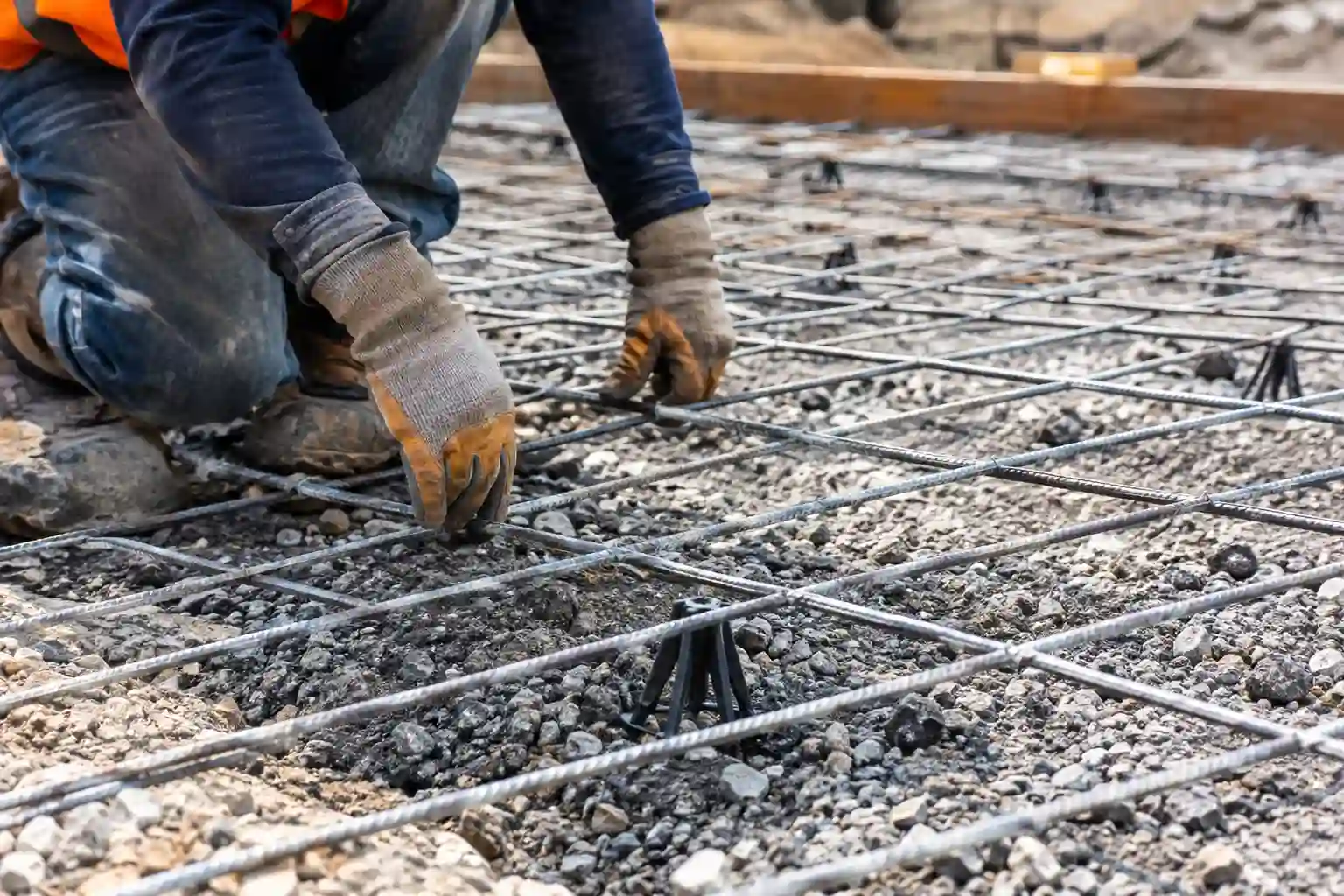
Wire mesh (6×6 W2.9 is the recommended spacing and gauge) works well for a typical 4-inch patio. Although it won’t prevent a crack from developing, it keeps the slab together in the event that one develops, resulting in a little fracture rather than a piece that moves and creates a trip hazard. Rebar is a preferable option after you’re pouring six inches or working on less-than-solid soil. A good place to start is with number 3 bars spaced 12 to 18 inches apart.
Proper thickness is not replaced by any of that reinforcement. Consider it a backup strategy rather than the primary one. Additionally, you should cut control joints into the slab at regular intervals so that any cracking occurs along the intended straight line rather than wherever the concrete chooses to yield.
What Happens If It’s Too Thin, or Too Thick
Pour it under 3.5 inches and you’re taking a real risk. Thin slabs crack under ordinary foot traffic. They spall, meaning small chips flake off the surface. They settle unevenly, and now you’ve got a dip that catches someone’s toe. None of that shows up the day you pour it. It shows up a year or two later, after the slab has been through a full cycle of Florida heat and rain.
Going too thick won’t hurt the patio, but it will hurt your wallet. Pouring 8 inches for a simple sitting area is money spent on concrete doing nothing useful. The goal isn’t maximum thickness. It’s the right thickness for what the patio actually has to carry.
The Base Matters as Much as the Slab
Homeowners spend a lot of time thinking about the concrete and almost none thinking about what’s underneath it. That’s backwards. The base is doing just as much work.
Most patios sit on 4 to 6 inches of compacted gravel. That layer handles drainage, gives the slab a stable and even surface to rest on, and keeps movement in the ground from reaching the concrete above it. A poorly compacted base is probably the single most common reason a correctly poured 4-inch slab cracks early anyway.
Grading matters too. Slope the patio away from the house, roughly a quarter inch per foot, so rain runs off instead of pooling against your foundation. Where the slab meets the house, put in an isolation joint so the two can move independently instead of cracking each other over time.
Local Codes and Permits
Winter Springs, Oviedo, and Longwood all work off building codes built on the IRC‘s 3.5-inch minimum and 3,000 PSI strength requirement. Whether you need a permit depends on the size of the patio and whether it’s attached to the house, and Seminole County has its own rules around setbacks and drainage that can catch people off guard.
Call your local building department before you pour, or just work with someone who already knows the answer. Ron Hodges Inc handles this stuff daily and can walk you through what your specific lot needs before the truck ever shows up.
4 Inches vs. 6 Inches: Is the Extra Cost Worth It?
Going from 4 to 6 inches means roughly 50% more concrete across the same footprint, plus a bit more labor for the deeper forms. It’s a real bump in cost, but not a dramatic one against the total price of the project.
Here’s how I’d frame it: the extra you spend going thicker up front is almost always less than what you’d spend tearing out a cracked slab and starting over. If there’s any chance your plans grow, the hot tub gets added, the grill station becomes a full outdoor kitchen, pour the 6-inch slab now.
Quick Decision Guide
| Situation | Recommended Thickness |
| Standard patio, light furniture | 4 inches |
| Walkway or small sitting area | 4 inches |
| Stamped concrete patio | 4 to 5 inches |
| Outdoor kitchen | 6 inches |
| Hot tub | 6 inches |
| Soil with clay content | 6 inches |
| Large entertaining space | 5 to 6 inches |
If your project checks more than one box, build to the thicker one.
Conclusion
For a typical residential patio, 4 inches of concrete is a common starting point. A heavier-use patio may need a thicker design, often around 6 inches, but the correct choice depends on the actual site and load.
The most important thing is to look beyond the number. Good soil preparation, a compacted base, drainage, proper reinforcement, control joints, suitable concrete, and correct construction all work together.
Want your patio built to the right spec for your yard, not just a generic number off a website? Reach out to a Concrete Patio Installer in Winter Springs FL before you pour. And if you’re weighing thickness for a driveway instead, our guide on How Thick Should a Concrete Driveway Be breaks down those numbers too.
FAQs
How thick should a concrete patio be for a hot tub?
Six inches minimum, reinforced with rebar. A filled hot tub concentrates thousands of pounds in one spot, more than a standard 4-inch slab was ever built to hold.
Is 3.5 inches enough for a patio?
It clears most code minimums, but it leaves you no room for error. Most contractors pour 4 inches anyway since the extra half inch costs so little.
Do I need rebar for a 4-inch patio slab?
Wire mesh is usually enough on stable soil. Rebar makes more sense once you’re dealing with heavier loads or ground that isn’t fully predictable.
How thick should the gravel base be under a patio?
Plan on 4 to 6 inches of compacted gravel beneath the slab. It supports the concrete and gives water somewhere to go instead of sitting underneath it.
Can you pour a patio directly on dirt?
No. That leads to uneven settling and cracking within a year or two, no matter what thickness you pour. A compacted gravel base isn’t optional.