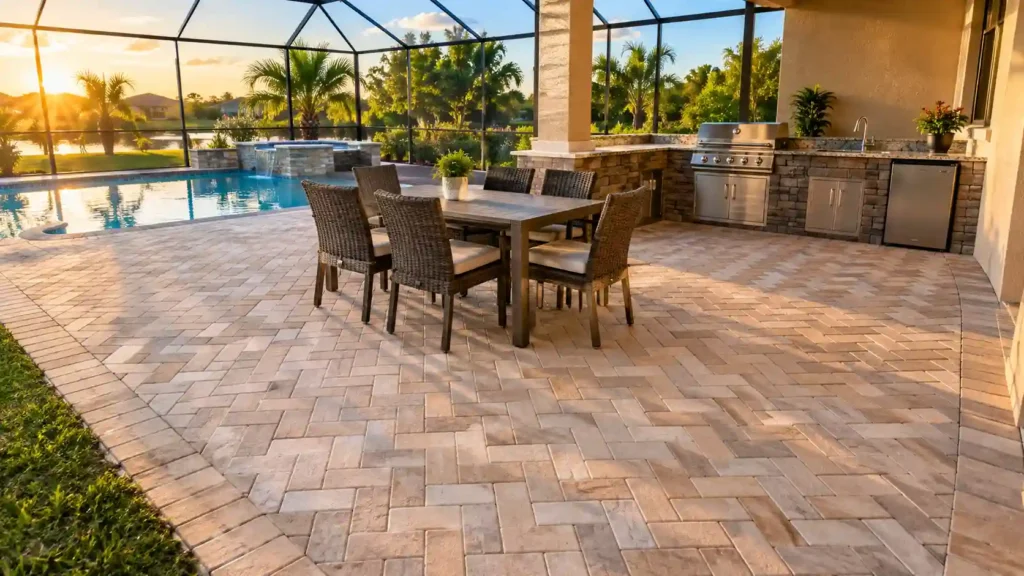
Whar are pavers? pre-cut modular blocks made of materials like concrete, brick, natural stone, or porcelain that are laid over a compacted aggregate foundation to build durable patios, driveways, and walkways. This interconnected system flexes with ground shifts to prevent cracking, allows proper drainage, and permits the easy replacement of individual damaged units.
For 2026 hardscape projects, professionally installed costs range from $12 to $22 per square foot for concrete pavers, $16 to $28 for clay brick, and $22 to $45+ for luxury options like natural stone and porcelain. Raw materials alone typically cost between $6 and $12 per square foot, with final pricing depending on layout complexity, excavation depth, and stabilizing materials.
What Are Pavers?
A paver is a single pre-cut block of concrete, clay, stone, or porcelain. Crews set pavers on a compacted base and fill the joints with sand. The blocks lock together and form a paved surface for a patio, driveway, walkway, or pool deck. You may also hear them called paving stones or interlocking pavers.
A poured concrete slab is one big piece. When the ground moves, it cracks. Pavers work differently. Each block can shift a little and stay whole. If one stains or sinks, a crew lifts it and resets it. Pros call these hard outdoor surfaces hardscape.
What Are Pavers Made Of?
Most pavers are made of concrete. The rest are clay brick, natural stone, or porcelain. Some are laid with open joints so water can drain through.
Concrete Pavers
Concrete pavers start with Portland cement, aggregate (sand and crushed stone), and water. Makers add pigment, usually iron oxide, for color. A machine presses the mix into a mold. This is called dry-cast molding. The blocks then cure until hard.
The U.S. standard, ASTM C936, calls for an average compressive strength of at least 8,000 psi and average water absorption of no more than 5%. In plain terms, they are strong and they don’t soak up much water.
Clay Brick Pavers
Clay brick pavers are made from fired clay. The clay is shaped, then baked in a kiln at very high heat. The color runs through the whole block, so color retention is excellent. They give you a classic, old-street look. They cost more than concrete.
Natural Stone Pavers
Natural stone pavers start with quarrying. Workers pull stone out of the ground, then cutting shapes it into flat pieces. Travertine, flagstone, granite, bluestone, and limestone are the common picks. Every piece is different, so no two patios match. Travertine tends to stay cooler underfoot, which pool owners like. Stone is the priciest choice.
Porcelain Pavers
Porcelain pavers are kiln-fired ceramic. The surface is non-porous, so water and dirt stay on top. That gives them strong stain resistance. Many look like wood or stone. The trade-off is price, and crews need extra care when cutting and setting them.
Permeable Pavers (and Rubber Pavers)
Permeable interlocking pavers are usually concrete. They are laid with open joints filled with small stone instead of sand. Rain drains through those joints into an aggregate reservoir below. That cuts stormwater runoff. Rubber pavers, made from recycled tires, are a softer option for play areas.
Some guides list only stone and skip concrete. Don’t let that fool you. Concrete is by far the most common paver on homes.
Paver Materials Compared
This table shows the main paver materials side by side. Costs are national installed prices per square foot for 2026. Central Florida quotes will vary.
| Material | Look | Cost (installed) | Typical lifespan | Maintenance | Best for |
| Concrete pavers | Many colors and shapes | $ $8 to $15 | 25 to 50 years | Sweep, re-sand joints, seal | Patios, driveways, walkways |
| Brick pavers | Classic, warm tones | $$ $18 to $26 | 50+ years | Sweep, occasional seal | Walkways, patios, entries |
| Natural stone | Unique, one of a kind | $$$ $15 to $30+ | 75 to 100+ years | Seal most types | Pool decks, high-end patios |
| Porcelain | Sleek, wood or stone look | $$$ $17 to $38 | Long, but a shorter track record | Very little | Modern patios, pool decks |
| Permeable pavers | Same as concrete | $$ (ask for a quote) | Similar to concrete | Clean out joint stone | Wet spots, drainage needs |
Cost is only part of the picture. Most paver installs run $8 to $25 per square foot, and labor alone is about $4 to $11 per square foot. A 12 by 12 patio is 144 square feet. At $8 to $25, that is roughly $1,150 to $3,600. A poured slab usually costs 30 to 50 percent less to install. Pavers close that gap when you repair them later.
For most Central Florida homes, a light-colored concrete paver is the default choice. It costs the least, handles rain well, and stays cooler than dark colors.
What Is a Patio Paver?
A patio paver is a paver chosen for foot traffic and furniture, not cars. That difference is about pedestrian vs vehicular load. ICPI recommends pavers about 2⅜ inches (60 mm) thick for foot traffic and home driveways. Thicker units, around 3⅛ inches (80 mm), go where heavy trucks drive.
Common sizes include 4 by 8 inch bricks, 6 by 9 inch blocks, and large 12 by 12 squares. Three patterns show up most:
- Herringbone: zigzag rows that lock tightly. It suits driveways too.
- Running bond: offset rows like a brick wall. It needs fewer cuts.
- Basketweave: pairs of blocks turned side by side. It looks classic.
Pick a surface texture with grip, especially near a pool. A smooth wet paver is slick. Heat matters just as much. Dark pavers soak up Florida sun and burn bare feet. Light tan and cream stay cooler. A screen enclosure blocks some sun, but not all of it.
Planning an outdoor kitchen? Pavers make a solid, easy-to-clean floor. For a fire pit, ask your installer about a heat-safe pad or stone ring first.
How Pavers Work: What’s Under the Surface
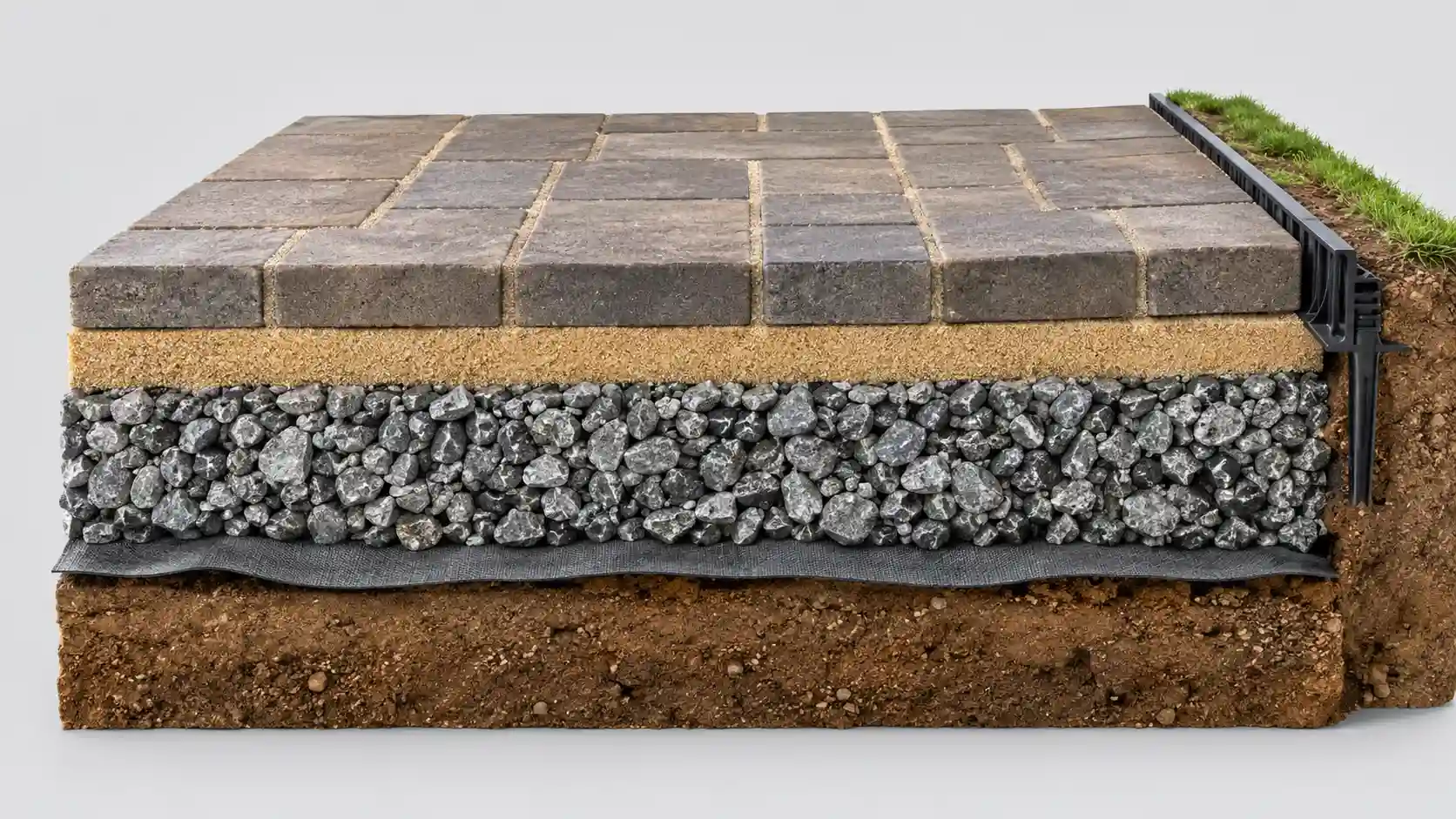
Pavers are only as good as what sits below them. From the bottom up, a good system looks like this:
- Soil. The ground is compacted first. In soft or sandy spots, crews add geotextile fabric on top. It keeps the base from sinking into the soil.
- Base. This is crushed stone, packed tight with a plate compactor. Patios need about 4 inches. Driveways need 6 to 8 inches.
- Bedding sand. A layer about 1 inch thick, screeded flat.
- Pavers. Set in your pattern, with edge restraint around the border to hold everything in.
- Joint sand. Swept into the gaps. Polymeric sand hardens when wet, which locks the blocks and slows weeds.
The whole surface has a slight slope, about ¼ inch per foot, so water drains away from your house. Drainage matters as much as strength.
Because of the sand joints, the blocks interlock and share weight. The surface can flex instead of crack. When something goes wrong, individual paver replacement fixes it. Crews lift the bad blocks, fix the base, and lay them back.
Pavers vs Concrete, Asphalt, and Gravel
| Surface | When it cracks or settles | How you repair it | In the heat |
| Pavers | Blocks sink or shift | Lift and reset the blocks | Warm; dark colors get hot |
| Poured concrete | Cracks across the slab | Patch, or resurfacing | Light slabs get hot |
| Stamped concrete | Cracks; color fades | Patch and reseal | Similar to concrete |
| Asphalt | Cracks and potholes | Patch and sealcoat | Softens and gets hottest |
| Gravel | Ruts and thin spots | Add stone and rake | Stays cool |
Repairs make the biggest difference. A patch on a slab shows. A reset paver does not. A tidy paver patio also boosts curb appeal, and that can help resale value.
Pros and Cons of Pavers
The good:
- Strong durability when the base is right
- Easy repair, one block at a time
- Many colors, shapes, and patterns
- Less cracking than a slab
The not-so-good:
- Upfront cost. Pavers cost more than a poured slab.
- Weeds and ants. Both like joint sand. Ants tunnel through joint sand and loose base material, which can leave small gaps under blocks.
- Joint sand washout. Heavy rain and hard spraying pull sand out. Refill it when you see gaps.
- Sinking and settling. This comes from a poor base, not from the pavers.
- Fading. Sun slowly lightens some colors.
- Efflorescence. This is a white, chalky film that can show on new concrete pavers. It is harmless and usually washes off.
- Upkeep. Expect some re-sanding and sealing over the years.
Where Pavers Are Used
- Patios: dining and lounge areas
- Driveways: thicker units on a deeper base
- Walkways: paths from the street to your door
- Pool decks: textured, lighter pavers
- Entryways: a front step and porch landing
- Outdoor kitchens: a firm, clean floor
- Garden paths: curved routes through beds
- Steps: matching pavers on stairs
Pavers in Central Florida: What to Know
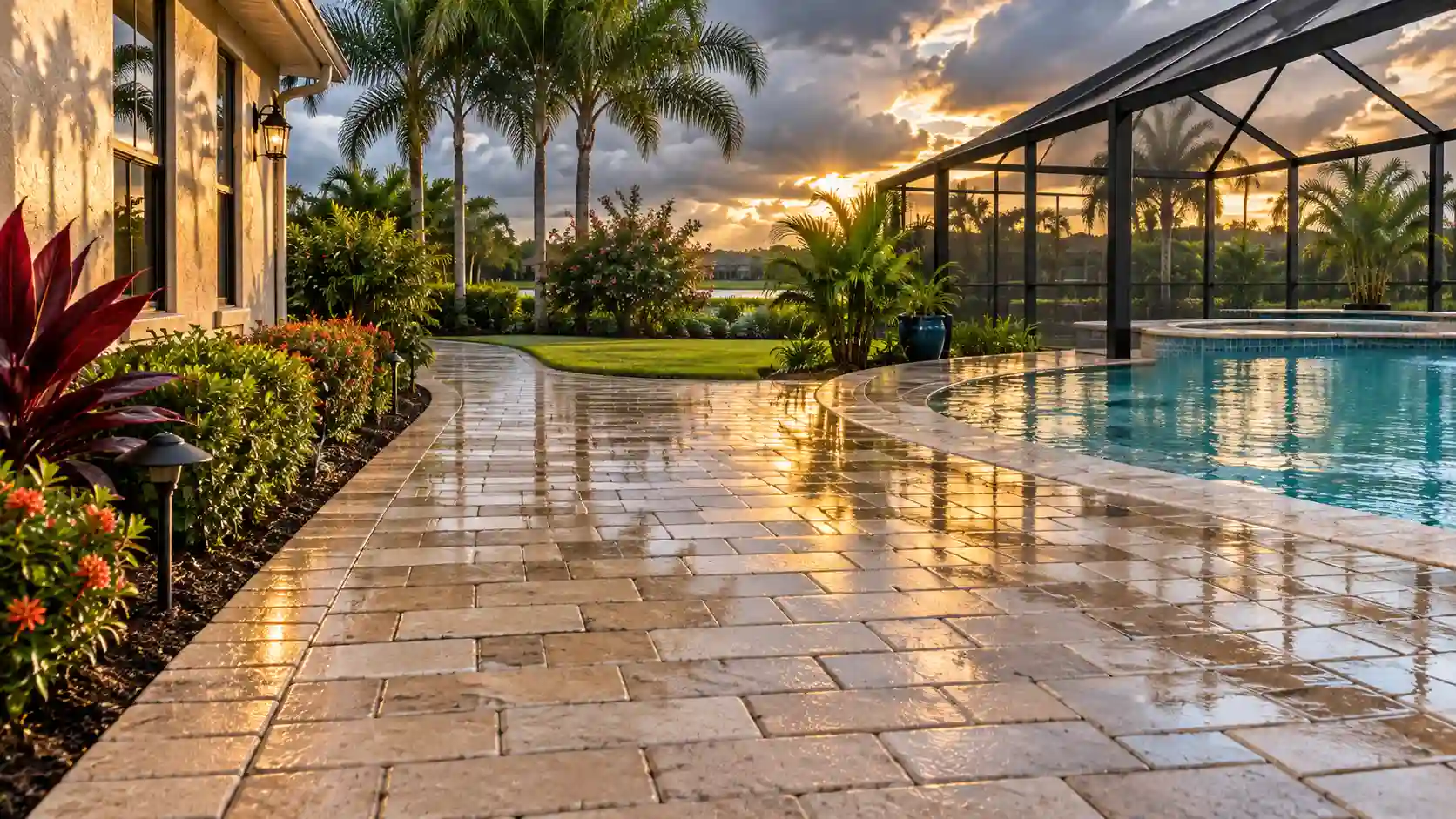
Pavers behave differently in Winter Springs, Oviedo, and Longwood than in colder states. Here is what matters in Seminole County and across Central Florida.
Sandy soil. Florida has sandy soils. Sand drains fast, but it also shifts. A deep, well-compacted base and geotextile fabric keep pavers from sinking.
Summer rain and hurricane season. Storms run June through November. Heavy rain can wash out joint sand and pool water on flat spots. Proper slope and drainage protect the job.
Heat and humidity. Pick lighter colors for pool decks. Shaded pavers can grow mildew in the humidity, so sweep and rinse them.
Weeds and ants. Warm weather feeds both. Fire ants are an invasive pest across Florida. Polymeric sand and a tight base help keep them out.
Want it done right the first time? Ron Hodges Inc offers Paver Installation in Winter Springs, FL, and we also serve Oviedo and Longwood. We build the base first, because that is what keeps pavers flat.
How to Choose the Right Paver
Use these five rules:
- Match the traffic load. Patios and walkways use standard thickness. Driveways need a driveway-rated paver and a deeper base.
- Think about heat and grip. For a pool deck, choose light colors and a textured surface for slip resistance.
- Set your budget. Concrete is the value pick. Brick, stone, and porcelain cost more.
- Count the maintenance. Ask yourself how much sweeping and sealing you will do.
- Hire the right installer. Base preparation decides how long pavers last. Ask what depth of base your crew uses and how they compact it.
Paver Care in Brief
Pavers need little care, but they do need some. Sweep often and rinse away stains fast. Go easy with pressure washing. High pressure can strip joint sand and expose the base. Use low pressure and refill the joints afterward.
Sealing adds color and stain protection, and it helps lock the joint sand. Learn the steps in our guide on How to Seal Pavers with Sand. We also offer paver cleaning and Sand & Seal service.
Conclusion
For durable craftsmanship that completely transforms your outdoor space, look no further than Ron Hodges Inc. Our team is ready to walk your property, talk through your ideas, and provide a clear, upfront price you can trust. Contact Ron Hodges Inc today at (407) 947-8843 or email ronhodgesinc@yahoo.com to lock in your free, no-obligation estimate!
FAQs
What are pavers made of?
Most pavers are concrete, made from Portland cement, aggregate, water, and pigment. Others are fired clay brick, cut natural stone, or kiln-fired porcelain. Each type has a different price and look.
What is a patio paver?
A patio paver is a paver used for foot traffic and furniture. It is usually about 2⅜ inches thick. Look for a textured surface and a lighter color if the patio gets full sun.
How long do pavers last?
Concrete pavers often last 25 to 50 years, brick 50 or more, and natural stone 75 or more. Those numbers depend on a good base. A weak base can cut them short.
Are pavers better than concrete?
Pavers cost more upfront, but they resist cracking and are easy to repair. A slab costs less at first. If it cracks, you patch it or replace it. It depends on your budget and how long you plan to stay.
Do pavers need sealing?
No, but sealing helps. It protects color, blocks stains, and helps hold the joint sand. Most Florida homeowners reseal every few years. Sealing also makes cleaning easier.