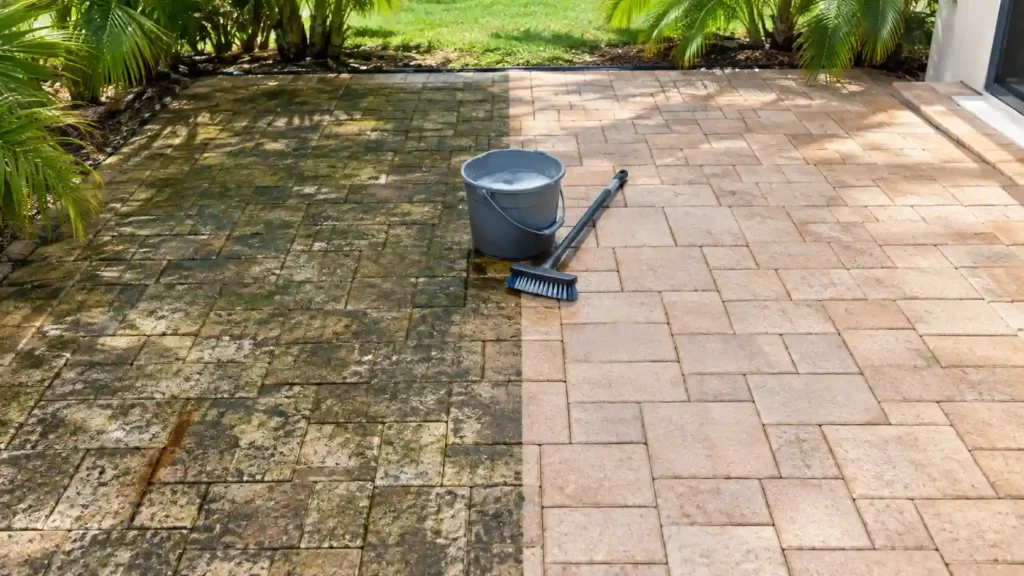
For general dirt, a mild, paver-safe cleaner mixed with water is best because it lifts grime without damaging the stone or joint sand. Tougher stains require targeted solutions: use a degreaser for grease, a rust remover for mineral spots, and an algae cleaner for green growth to ensure you clean effectively on the first try.
When cleaning, avoid harsh chemicals like standard acids or bleach, which permanently discolor pavers and degrade joint sand. Factor in the cost of specialized liquids to decide if a DIY clean is best or if you should hire a professional for large, severe areas.
What Type of Liquid Is Best for Cleaning Pavers?
A mild paver-safe cleaner and water is the best all-around choice for lightly dirty concrete pavers. Switch to a stain-specific liquid when the problem is more than dirt.
Here is how the main problems break down:
- General dirt: Mild cleaner and water. This covers dust, pollen, and foot traffic grime.
- Organic buildup: Algae, moss, mildew, and leaf stains need a cleaner made for living growth.
- Grease and oil: These need a degreaser. Water alone just spreads them.
- Rust: Orange streaks need a rust remover, not soap.
- Mineral deposits: White chalky haze needs a cleaner made for mineral salts.
To optimize paver maintenance, match the specific cleaner to the type of stain. Using a single multi-purpose cleaner either fails to remove the stain or aggressively damages the paver surface and sealer.
Best Liquids for Cleaning Different Types of Paver Stains
| Paver problem | Best liquid to try | Good to know |
| General dirt | Mild paver-safe cleaner + water | Safe first step for most pavers |
| Light grime | Mild dish soap + warm water | Rinse well so no film stays |
| Algae, moss, mildew | Oxygen-based outdoor cleaner or a paver algae remover | Shade and damp spots bring it back |
| Grease and oil | Paver-safe degreaser | Never use acid on oil |
| Rust | Oxalic-acid or purpose-made rust remover | Test first, it can lighten color |
| Leaf (tannin) stains | Oxygen-based cleaner | Works best on fresh stains |
| White haze (efflorescence) | Efflorescence cleaner made for pavers | Follow the label closely |
This chart beats a random DIY tip list. It tells you which liquid fits which stain before you buy anything.
Is Dish Soap and Water Good for Cleaning Pavers?
Yes, dish soap and warm water is excellent for cleaning light dirt and fresh oil from pavers without causing damage. Simply sweep the area, wet it down, apply a sudsy mix of soap and water, scrub with a stiff nylon brush, and rinse thoroughly until the water runs clear so leftover residue doesn’t attract new dirt. For oil spots, apply soap directly, let it sit for 20 to 30 minutes, and rinse with hot water.
Note that dish soap will not remove rust, thick algae, or white mineral haze (efflorescence); if a stain remains after two scrubbing attempts, stop to avoid damaging the stone and switch to a specialized commercial cleaner.
Can You Use Commercial Paver Cleaners?
Yes. So what is the best cleaner for pavers? The one made for your paver type and your stain. Look for products labeled for concrete or brick pavers.
Follow these rules:
- Read the label. Mix ratio, dwell time, and rinse steps all matter.
- Test a hidden spot first. Try a corner under a planter or a spot by the house.
- Skip the “stronger is better” idea. Extra strength can fade color or etch the top layer.
- Check your stone. One paver sealer retailer notes that an oxygenated cleaner is meant for concrete only, not travertine or natural stone. Concrete, brick, and natural stone react in different ways.
Cost is low. Most paver cleaning products run about $15 to $40.
What Liquid Should You Use for Rust, Oil, and Algae?
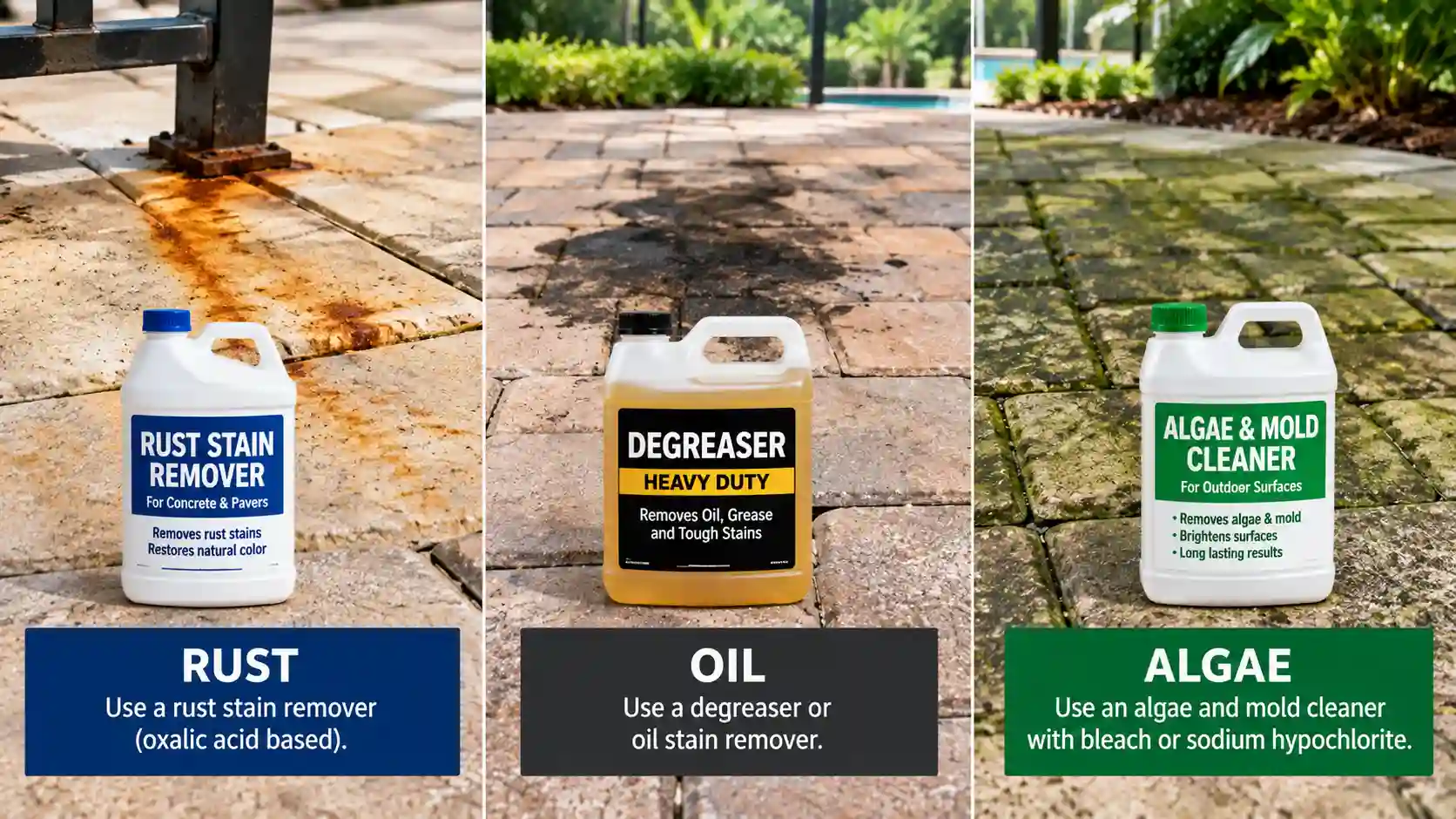
Ask what chemical can I use to clean pavers and the answer changes with the stain. Here are the three big ones.
For Rust Stains
To remove rust stains caused by metal furniture, planters, sprinklers, or fertilizer, use an oxalic-acid or purpose-made rust remover. Because these chemical removers can damage sealers and etch pavers, always test a small spot first. Rust removers will clear the orange discoloration but can also lighten the paver itself; therefore, you should treat the entire area to ensure the final color matches uniformly. Finally, make sure to move the source of the metal to prevent the stain from returning.
For Oil and Grease
To effectively clear oil from your porous pavers, act fast by applying a specialized, acid-free degreaser like Techniseal or Alliance Gator Clean, as acids will harm the masonry and do nothing for grease.
For fresh spills, immediately blot the area or soak it up with a granular oil absorbent like cat litter never rub, which drives the stain deeper then apply the degreaser, scrub with a stiff nylon-bristle brush, and rinse with warm water. For old or stubborn stains, draw the embedded oil upward by applying a thick poultice paste made of baking soda and degreaser, covering it with plastic wrap for 24 hours, and sweeping away the residue once it dries to a powder.
For Algae, Moss, and Mildew
Living growth on outdoor surfaces requires specific care to prevent structural and cosmetic damage, especially in humid environments like Central Florida where constant rain and shade feed continuous algae growth.
When addressing these stubborn biological patches, oxygen-based outdoor cleaners (sodium percarbonate) are the safest choice to protect both nearby plants and the pigments of colored pavers. While some professionals use diluted chlorine bleach, it carries a high risk of fading material colors and destroying landscaping.
Most importantly, never mix bleach with acidic products like rust removers or concrete cleaners, as this combination releases highly toxic chlorine gas; always rinse the surface thoroughly and allow it to dry completely between applications. If algae or moss continuously returns after cleaning, check for underlying drainage issues or cut back overhanging foliage to eliminate the damp, shaded conditions that foster regrowth.
For White Haze (Efflorescence)
This is natural salt rising to the top of concrete. It is harmless to strength. Belgard’s commercial guide says it does not affect performance, can appear within months, and may wear away on its own. If it bugs you, use an efflorescence cleaner made for pavers.
What Liquids Should You Avoid on Pavers?
Avoid any strong acid when you do not know your paver type. Avoid unknown industrial cleaners too. That includes anything not approved for your stone.
Muriatic acid gets the most questions. Acid is not always wrong. Some pros use diluted acid on efflorescence, with chemical gloves, safety glasses, and a vapor respirator. The problem is casual DIY use. The CDC’s NIOSH guide lists hydrochloric acid, the other name for muriatic acid, as an irritant that can burn the skin and eyes. Wrong strength or timing can also etch concrete and fade the color. One retailer says it can permanently damage color and texture.
How to Apply Liquid Cleaner to Pavers
Here is the simple process. It also shows you how to clean a paver patio the safe way. See our guide on How to Clean a Paver Patio for more detail.
- Sweep off loose dirt, leaves, and debris.
- Wet nearby plants with plain water to protect them from runoff.
- Test the cleaner on a small hidden spot.
- Apply the cleaner to the pavers.
- Let it sit for the time on the label. Keep the surface wet during this dwell time and reapply if it starts to dry.
- Scrub with a stiff nylon brush where needed.
- Rinse well with a garden hose.
- Check the result before you repeat anything.
- Let the pavers dry fully.
Work in the shade or on a cool day. Sun dries the cleaner too fast and can leave streaks.
Can Liquid Cleaner Damage Pavers?
Yes. What type of liquid is best for cleaning pavers depends on what your pavers are made of and how they are finished. These factors decide the risk:
- Paver stone: Concrete, brick, and natural stone react differently.
- Color and pigment: Strong cleaners can lighten dyed pavers.
- Sealer: Some cleaners strip or cloud it.
- Joint sand: Heavy water flow washes it out.
- Strength: Follow the label mix, not a guess.
- Dwell time: Longer is not better.
- Heat and sun: Hot pavers make cleaner dry fast and mark the surface.
Remember the rust remover story. It cleared the rust and lightened the paver. A test spot would have caught it.
Do You Need Pressure Washing After Using a Paver Cleaner?
You do not always need to pressure wash after using a paver cleaner, as a standard garden hose and a stiff-bristle brush are enough to handle most routine stains. While power washing is highly effective for clearing heavy buildup across large areas, it carries the significant risk of stripping the paver’s finish, exposing the aggregate underneath, and eroding the critical joint sand that keeps the blocks stable.
If you do choose to use a pressure washer, keep the machine on a low-pressure setting, hold the spray wand back at a safe distance, and always refill the joints with fresh sand afterward to prevent the pavers from shifting.
How Much Does It Cost to Clean Pavers?
Prices vary by size, stain, and location. These are published ranges, not a Ron Hodges Inc quote.
| Option | Published cost |
| DIY cleaner | $15 to $40 |
| DIY with cleaner and stiff broom | About $50 |
| Pressure washer rental | About $50 per day |
| Pro paver cleaning | $0.25 to $0.50 per square foot |
| Pro pressure washing of a patio | $100 to $400 |
| Clean and seal in Florida | $1.25 to $3.50 per square foot |
Here is what that means for a 200-square-foot patio. Pro cleaning alone runs about $50 to $100. A full clean and seal in Florida runs about $250 to $700. Small jobs often carry a minimum charge, so expect a bit more. For a stubborn stain, a $30 cleaner beats replacing a stained paver.
Should You Seal Pavers After Cleaning?
Paver sealing protects surfaces from stains and locks joint sand while restore color and allowing for customized finish options. Proper maintenance requires allowing stones to dry completely, avoiding heavy buildup, and waiting for new installations to cure.
Ron Hodges Inc handles the whole process, from cleaning to re-sanding to sealing, through our Sand & Seal service. If you want a pro to pick the right liquid and protect your pavers, see our Paver Cleaning Service in Winter Springs FL. We serve Winter Springs, Oviedo, and Longwood.
FAQs
What is the best liquid to clean concrete pavers?
A mild paver-safe cleaner mixed with water. Use it for general dirt. For stains, switch to a degreaser for oil, a rust remover for rust, or an oxygen-based cleaner for algae.
Can I use dish soap and water to clean pavers?
Yes, for light dirt and fresh oil spots. Scrub with a nylon brush and rinse well. It will not remove rust, old oil, or heavy algae.
What is the best cleaner for dirty pavers?
Use a cleaner made for your paver type and your stain. Read the label and test a hidden spot first.
What liquid removes algae from pavers?
An oxygen-based outdoor cleaner or a paver algae remover. Scrub, rinse well, and fix damp or shady spots so it does not return.
What liquid removes oil from pavers?
A paver-safe degreaser or dish soap for fresh spots. Blot fresh oil first and use granular absorbent. Do not rub it in.
Can I use muriatic acid to clean pavers?
It is not a safe casual DIY fix. Wrong strength can fade or etch pavers, and the fumes and liquid burn skin and eyes. Some pros use diluted acid with proper gear. Most homeowners should pick a paver-safe product instead.