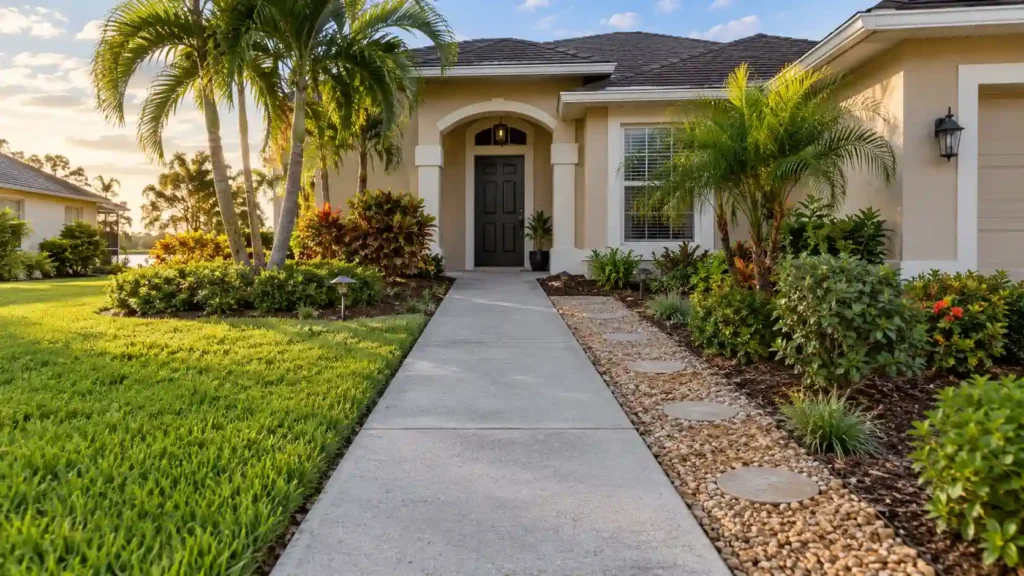
What is the cheapest type of walkway? Loose gravel costs the least to buy, at about $1.80 to $3.50 per square foot for pea gravel. Basic poured concrete is usually the cheapest walkway that stays put and needs little care. Pavers cost more up front, but you can fix one stone at a time.
Your final price depends on four things: the surface, site prep, labor, and upkeep. A low-cost surface on poor soil can cost more than concrete over time. Below you will find real price ranges, ways to save, and the best low-cost pick for Central Florida homes.
What Is the Cheapest Walkway Material?
Gravel is the cheapest walkway material to buy upfront, while poured concrete is the cheapest permanent option that lasts.
Gravel
Gravel is the most affordable walkway material on the market, with pea gravel costing just $20 to $80 per cubic yard and covering roughly 108 square feet at a 3-inch depth. While its casual look, excellent drainage, and low initial price make it highly appealing, it comes with long-term downsides.
Loose stones easily shift into the lawn, requiring protective edging and weed fabric, and the unstable surface presents accessibility challenges for strollers, wheelchairs, and high heels.
Basic Concrete
A basic concrete walkway is a permanent, plain gray slab poured 4 inches thick that provides a durable, low-maintenance path with a non-slick broom finish. It typically costs $6 to $12 per square foot (or $7 to $17 installed, according to HomeGuide), making it a highly cost-effective choice for straight, flat paths.
While it requires very little care and uses control joints to cleanly manage natural cracking, its main downside is repairability, as a damaged concrete section is much harder to fix or replace than a single, individual paver.
Concrete Pavers
Concrete pavers are pre-cast blocks locked together over a compacted base. They cost about $9 to $20 per square foot installed. Labor drives that price. Crews dig, pack the base, level the sand, set each stone, and sweep in joint sand.
You get many colors, shapes, and patterns. If one paver stains or cracks, you swap it and leave the rest alone. The base matters most. A weak base means a sinking walkway within a few seasons. More on that in the section on installing pavers on dirt below.
Stepping Stones
Stepping stones fit garden and backyard paths. They cover less ground, so you buy fewer stones. Space them to match a normal step, about 24 inches from center to center.
Set each stone level on a tamped bed of sand or fine gravel. A wobbly stone is a trip risk. Fill the gaps with gravel, mulch, or grass. This mix keeps cost low. It is not the best pick for a main entry with heavy daily traffic.
Is Gravel Cheaper Than a Concrete Walkway?
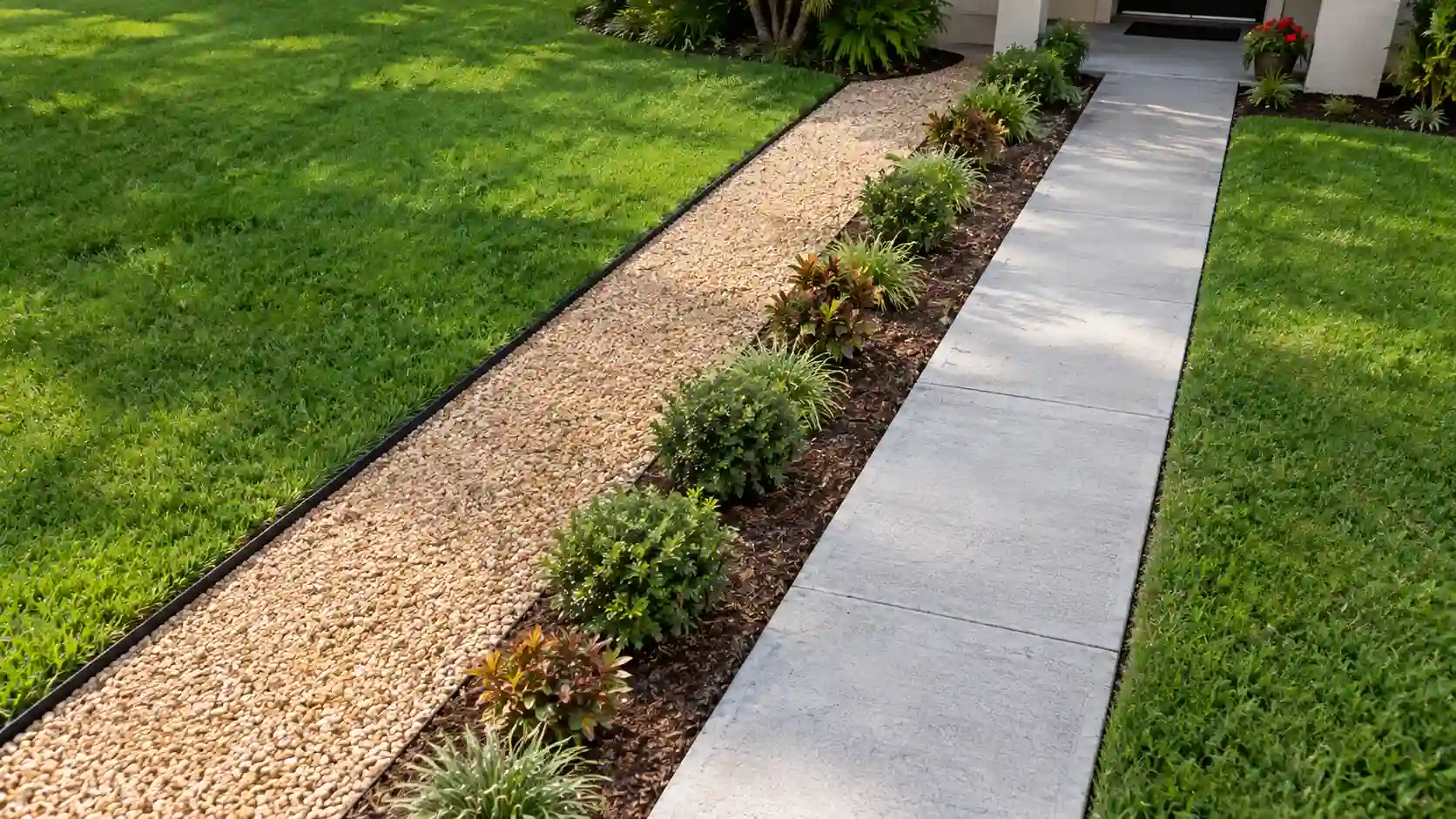
In most cases, yes. Gravel costs less to buy and to install. The gap is smaller than most people expect, though. HomeGuide lists gravel at $4 to $10 per square foot installed and concrete at $7 to $17. Those ranges overlap.
Material price and installed price are not the same thing. Gravel stone is cheap, but labor, edging, fabric, and base still add up. Concrete costs more at first, but it needs far less care afterward.
| Factor | Gravel | Basic Concrete |
| Initial material cost | Lower | Moderate |
| Installation | Simpler | More involved |
| Stability | Can shift | More stable |
| Maintenance | More frequent | Lower |
| Appearance | Casual | Clean and finished |
| Long-term use | Depends on traffic | Good for regular foot traffic |
Gravel wins on day one. Concrete often wins over the years if you walk the path daily. For a garden path you rarely use, gravel is a smart pick.
What Is the Cheapest Way to Build a Walkway?
Keep the design simple and the prep solid. That cuts cost without cutting corners.
- Keep the walkway straight. Straight runs need fewer forms, fewer cuts, and less time.
- Use a practical width. Three feet fits one person. Four feet fits two side by side. Going from 4 feet to 3 feet on a 30 foot path saves 30 square feet. At $6 to $12 per square foot, that is $180 to $360.
- Avoid extra curves. Curves add cuts, forms, and labor hours.
- Choose a simple finish. A broom finish costs less than stamped concrete, which runs $10 to $21 per square foot.
- Use local materials. Stone and sand from a nearby yard cut delivery fees. Ask about leftover or reclaimed pavers too.
- Plan drainage first. A slope of at least 2 percent is the standard advice. That is about 1/4 inch per foot.
- Do not skip the base. A little stone now saves you from tearing the walk out later.
5 Cheap Walkway Ideas for a Home
These are the five cheap walkway ideas for the home in Winter Spring, Fl.
Gravel Walkway
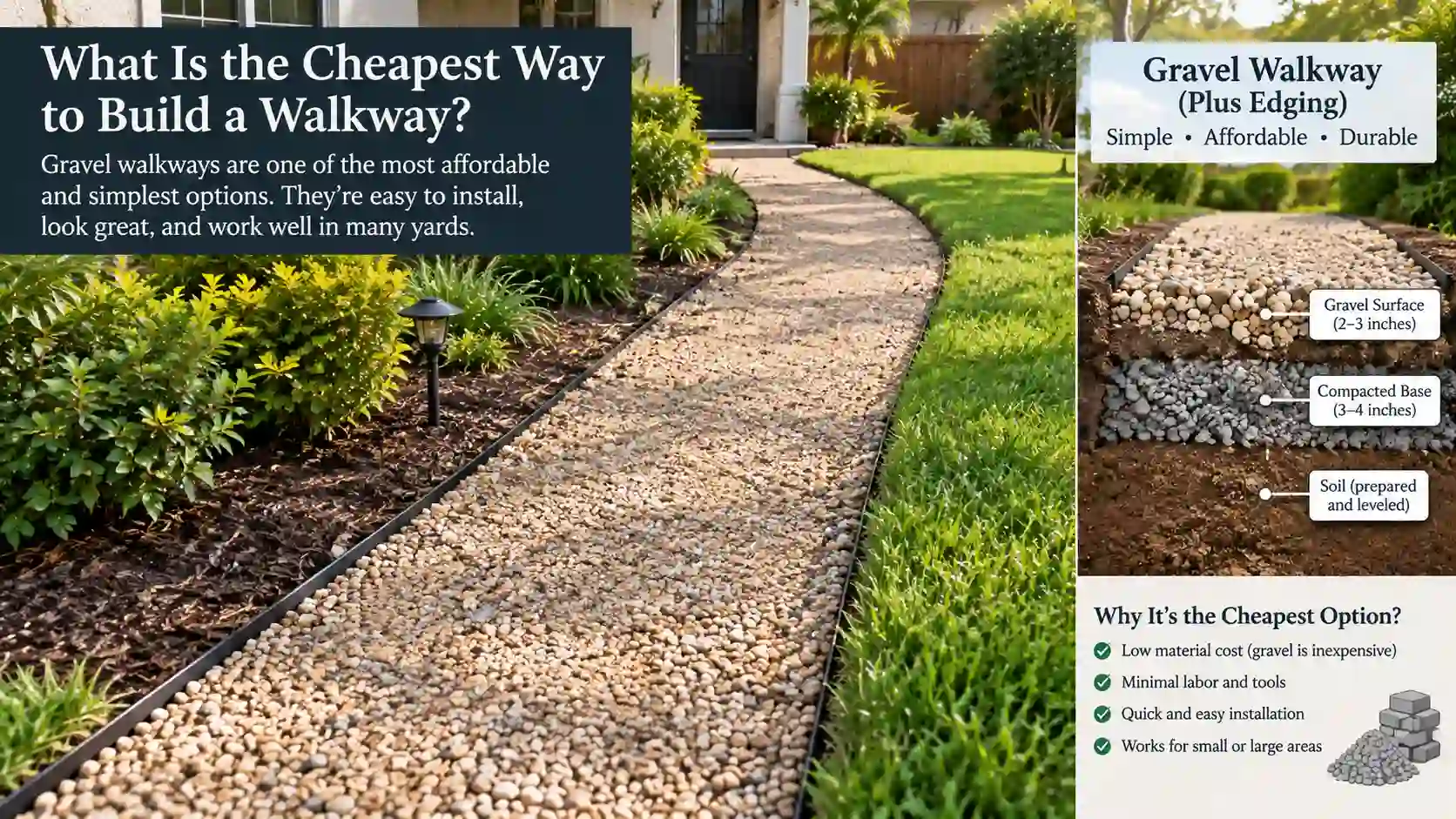
This is the best fit for garden paths. Lay weed fabric, add a packed crushed stone base, then top with pea gravel. Plastic or metal edging keeps the stone in place and costs less than stone borders.
Concrete Walkway
This is the best pick for front entries. A straight, plain slab with a broom finish is the lowest cost way to get a permanent path.
Stepping-stone Walkway
Mix flat stones or slabs with gravel or grass between them. You buy less new material, and the path looks natural.
Simple Concrete Paver Walkway
Pick plain gray pavers in a running bond pattern. Skip borders, inlays, and curves. Fewer cuts mean lower labor cost.
Reclaimed Brick or Paver Walkway
Used brick and pavers often cost little or nothing. Check yard sales, remodel leftovers, and Habitat for Humanity ReStores. Sizes vary, so setting them takes more time. Sort by thickness and use the same base steps as new pavers.
Can You Lay Pavers on Dirt to Save Money?
Installing pavers directly on Florida’s sandy soil risks structural failure because heavy rains easily shift loose sand, causing walkways to buckle or sink. Constructing a proper 4-inch compacted stone base using just 2 to 3 tons of crushed stone protects the investment and prevents costly repairs.
What Makes a Cheap Walkway More Expensive?
Surprise costs come from the ground, not the stone. Watch for these:
- Digging. Removing sod and topsoil takes time, and hauling it away adds to the bill.
- Poor soil. Soft or filled soil needs a deeper base or fabric.
- Grading. A sloped yard needs leveling. Steps cost $200 to $500 each in concrete and $300 to $900 in stone.
- Drainage. Water that pools needs a slope fix, a swale, or a pipe.
- Base stone. A thicker base means more stone and more compaction.
- Edging. Decorative edging costs $5 to $18 per linear foot.
- Hard access. No truck access means hand hauling, which adds labor.
- Tear-out. Removing badly cracked old concrete averages about $1,380.
- Curves and complex designs. These mean more cuts and more forms.
Ask every contractor if the quote covers each item on this list.
Cheapest Walkway vs. Best Value Walkway
Cheapest upfront does not mean cheapest over time. Use this simple formula:
Total walkway cost = material + preparation + installation + maintenance
Gravel scores low on the first three. It scores higher on upkeep, with new stone, weed control, raking, and edge repair. Concrete costs more at first and very little to keep. Pavers cost the most up front, but small repairs stay cheap.
So what is the cheapest type of walkway over many years? It depends on use. A path you walk every day favors concrete, or pavers on a solid base. A garden path you use twice a week favors gravel or stepping stones.
What Is the Best Low-Cost Walkway for Florida Homes?
For most Central Florida homeowners looking for the best low-cost path, plain poured concrete offers the lowest upfront installation cost at $8 to $12 per square foot. However, standard concrete pavers, which typically run between $12 to $25 per square foot, offer the highest long-term value.
While concrete is cheaper initially, Florida’s shifting sandy soil frequently causes solid slabs to crack, whereas interlocking pavers flex with the ground and are much less expensive to repair by section over time.
When Should You Choose Concrete Instead of Gravel or Pavers?
Concrete makes sense when you want:
- A stable, flat walking surface
- A defined, permanent path
- Low routine upkeep
- A clean, simple look
- Regular daily foot traffic
Pavers make sense when:
- Design flexibility matters
- You may need to replace single pieces later
- You want patterns or colors
- The walkway connects to an existing paver patio or driveway
Ron Hodges Inc builds Concrete Walkways in Winter Springs FL and serves Oviedo and Longwood too. Central Florida sand and summer rain shape every job, so base prep and slope get careful attention.
How Much Does a Walkway Cost?
Use this formula: length × width × price per square foot, plus site prep, drainage, and edging.
Based on your 4×30 foot (120 square feet) walkway dimensions, the estimated total project cost ranges from $1,524 to $3,810 for concrete, $2,484 to $6,570 for pavers, and $1,404 to $3,210 for pea gravel once site prep, drainage, and edging are factored in.
| Surface | Published range per sq ft | Example total (120 sq ft) |
| Gravel (installed) | $4 to $10 | $480 to $1,200 |
| Basic concrete | $6 to $12 | $720 to $1,440 |
| Concrete pavers | $9 to $20 | $1,080 to $2,400 |
Add extras on top. Permits can cost $50 to $200 where required. Sealing pavers adds $2 to $4 per square foot. Your real price depends on your soil, access, and drainage. A site visit is the only way to get an exact number.
The Bottom Line
So, what is the cheapest type of walkway? Gravel costs least on day one. Concrete is the cheapest walkway that lasts. Pavers cost more but repair easily. Match the surface to how you use the path, and never skip the base.
Contact us for concrete and pavers installation and repair in Winter Spring, FL, for homes and businesses all across FL.
FAQs
What is the cheapest material for a walkway?
Gravel is the cheapest to buy. Pea gravel runs about $1.80 to $3.50 per square foot. Poured concrete is the cheapest permanent surface. Pick based on how often you walk the path.
Is gravel cheaper than concrete for a walkway?
Usually yes, on day one. Published ranges overlap, though, and gravel needs more upkeep. For a daily-use path, concrete often costs less over time.
Are pavers cheaper than concrete?
Not often. Pavers run about $9 to $20 per square foot, and concrete about $6 to $12. Pavers can save money on repairs, since you replace one stone instead of a slab.
What is the cheapest way to build a backyard walkway?
Use stepping stones with gravel or mulch between them, set on a firm, level base. Keep the path straight and narrow. Reclaimed brick can cut cost even more.
Can I install a cheap walkway without a base?
Not for long. Gravel needs a thin base and fabric. Concrete needs firm, packed soil. Pavers need at least 4 inches of stone. Installing pavers on dirt might work for a light, temporary path, but expect sinking on busy walks.
What is the most affordable walkway for a Florida home?
A basic concrete walkway with a broom finish, or a simple gray paver walkway on a packed base. Both handle rain and sandy soil. Gravel works for light-use garden paths.